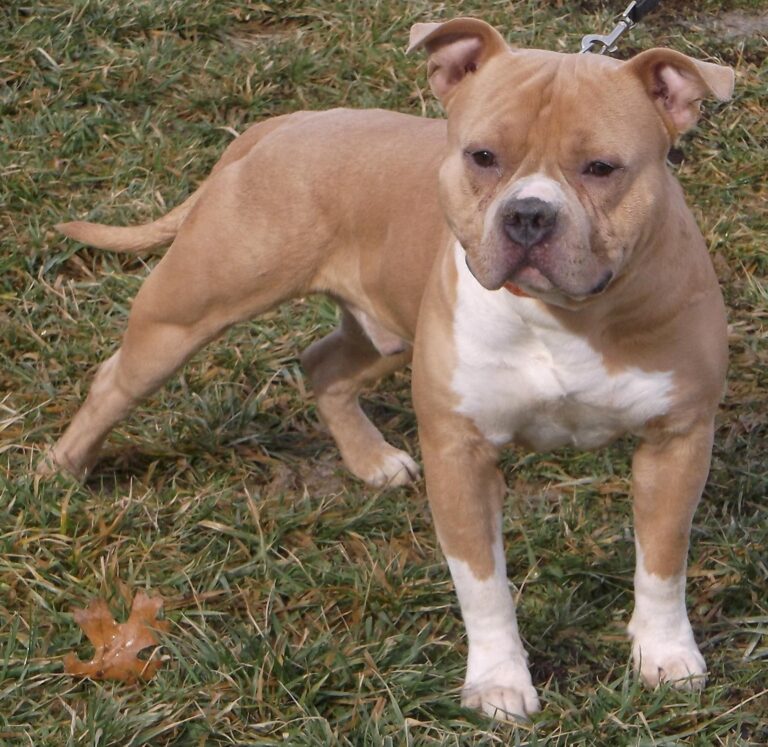
A new rule affecting banned dogs in the UK came into force on 1 November 2026, introducing stricter child safety requirements for owners of exempted dogs, including XL Bully types.
Under the legislation, owners must not leave a child under 12 in close contact with a banned dog in a private place, such as a home or garden, without appropriate adult supervision.
The requirement applies in England and Wales, with Northern Ireland introducing a corresponding measure on the same date.
It forms part of the conditions attached to a Certificate of Exemption, which allows eligible owners to keep dogs belonging to otherwise prohibited types.
The Department for Environment, Food & Rural Affairs (Defra) has published guidance explaining what appropriate supervision means and how families can manage everyday situations safely.
Here is what owners need to know about the new banned dog rules for 2026, including which dogs are affected, how to supervise children and what could happen if the requirements are breached.
What Is the New UK Rule on Children and Banned Dogs?
From 1 November 2026, owners of exempted banned dogs must ensure that children under 12 are not left in close contact with their dogs in private settings without adult supervision.
The rule applies to situations inside the home and in other private places, including gardens.
It is designed to reduce the risk of serious dog-related injuries involving young children.
According to Defra’s official guidance, appropriate supervision requires an adult to be physically present, attentive and able to intervene immediately.
The rule does not prohibit children from living in the same household as an exempted dog.
Instead, it places a legal responsibility on owners to prevent unsupervised close contact.
Key Facts About the New Rule
| Requirement | Details |
|---|---|
| Effective date | 1 November 2026 |
| Areas covered | England, Wales and Northern Ireland |
| Dogs affected | Exempted banned breed types |
| Children covered | Under 12 years old |
| Places covered | Homes, gardens and other private places |
| Adult supervisor | Aged 18 or over |
| Remote cameras | Not sufficient supervision |
| Possible consequences | Enforcement action, seizure and prosecution |
The rule applies as a condition of exemption. Owners must also continue following other legal requirements for their dogs.
Which Dog Breeds Are Affected?
The new child safety condition applies to dogs belonging to prohibited types under the relevant dangerous dog legislation.
In England and Wales, five dog types are banned.
These are:
- Pit Bull Terrier.
- Japanese Tosa.
- Dogo Argentino.
- Fila Brasileiro.
- XL Bully.
The restriction applies to the legally defined dog type, which is not always determined by the name recorded on a dog’s paperwork.
A dog’s physical characteristics may be relevant when authorities assess whether it belongs to a prohibited type.
Does the Rule Apply to XL Bully Dogs?
Yes.
Owners of exempted XL Bully dogs must comply with the child supervision requirement.
The rule applies even when the dog has never behaved aggressively and has lived peacefully with children.
The purpose is to establish a consistent safeguard rather than assess each dog’s temperament individually.
What About Other Dog Breeds?
The specific new exemption condition does not apply to ordinary, non-banned dog breeds.
However, government guidance emphasises that children should be supervised around dogs of every breed.
Any dog can react unexpectedly when frightened, stressed, unwell or overwhelmed.
The legal distinction should not be interpreted as meaning other dogs are automatically safe to leave alone with young children.
What Counts as Appropriate Adult Supervision?
Defra defines appropriate adult supervision as an adult aged 18 or over being present and able to take steps to keep children safe.
The supervising adult should remain close enough to monitor the interaction and intervene immediately if necessary.
This involves more than simply being somewhere in the same property.
What an Adult Supervisor Must Do
The adult should:
- Remain nearby.
- Observe both the child and the dog.
- Pay attention to their interaction.
- Recognise signs of discomfort or stress.
- Be able to separate them immediately.
The adult does not necessarily have to be the dog’s owner.
Another responsible adult aged 18 or over may supervise.
However, the supervision must be effective.
Do Security Cameras Count as Supervision?
No.
Defra specifically explains that cameras, baby monitors, video doorbells and similar devices cannot replace physical adult supervision.
For example, watching a child and dog through a camera while working in another room does not meet the guidance’s standard for appropriate supervision.
An adult must be physically present and able to intervene.
Can Children Be Left Alone With an XL Bully at Home?
A child under 12 must not be left in close contact with an exempted XL Bully without appropriate adult supervision.
This applies even if the dog is familiar with the child.
It also applies when the dog appears calm or is resting.
Everyday Situations That Need Planning
Defra highlights several situations where supervision may become difficult.
These include:
- Cooking dinner.
- Answering the front door.
- Using the bathroom.
- Taking a telephone call.
- Caring for another child.
- Moving between rooms.
Owners should plan how to prevent unsupervised contact before these situations arise.
For example, if an adult needs to leave the room, they can separate the dog and child using suitable barriers or secure rooms.
The aim is to prevent physical contact until appropriate supervision resumes.
How to Keep Children and Banned Dogs Safely Apart
Defra recommends practical separation methods that owners can adapt to their homes.
The safest arrangement depends on the layout of the property, the child’s age and the dog’s needs.
1. Use Separate Rooms
One straightforward option is to keep the child and dog in different rooms with the doors securely closed.
This can be useful when an adult is cooking, working or temporarily unable to supervise.
Make sure the child cannot easily open the door and reach the dog.
2. Install Secure Safety Gates
Stair gates and other physical barriers may help separate children and dogs.
However, the barrier must be suitable for the dog’s size and strength.
It should prevent the dog or child from moving over, under, through or around it.
Children should also be unable to reach through the barrier and touch the dog.
3. Use Different Areas of the Home
Some families may find it easier to keep the dog and child on separate floors.
Doors and suitable barriers should prevent contact between the areas.
4. Consider a Crate or Pen
A crate or pen may be suitable for temporary separation if the dog is already comfortable using it.
It should be appropriately sized and introduced through positive training.
A crate should never be used as punishment or as a substitute for meeting the dog’s welfare needs.
5. Separate Outdoor Spaces
The rule also applies to private gardens.
Owners can arrange for children and dogs to use the garden at different times or install secure barriers to create separate areas.
Any fencing must prevent physical contact and keep the dog safely contained.
Why Has the Government Introduced This Rule?
The government announced the measure in June 2026 as part of changes to the exemption requirements for banned dog types.
The aim is to reduce the risk of serious injuries to children in domestic settings.
Young children may be less able to recognise signs that a dog is uncomfortable or becoming distressed.
They may also make sudden movements, approach dogs while they are resting or attempt unwanted physical contact.
These situations can increase the risk of an adverse reaction.
What Did the Government Say?
When the measure was announced on 9 June 2026, Animal Welfare Minister Baroness Hayman emphasised the importance of protecting children from serious dog-related injuries.
The government also made clear that responsible ownership includes maintaining appropriate supervision even when a dog has a history of calm behaviour.
The requirement is intended to strengthen safeguards while allowing exempted dogs to remain with their owners where the legal conditions are met.
What Happens if Owners Break the New Rule?
Failing to comply with the child supervision condition may result in enforcement action.
In England and Wales, the relevant powers operate under the Dangerous Dogs Act 1991.
Possible consequences include:
- Investigation by the relevant authorities.
- Seizure of the dog.
- Prosecution.
- Legal consequences affecting the dog’s exemption status.
The outcome depends on the circumstances and the applicable enforcement process.
A breach does not mean that every dog will automatically be seized.
However, owners should treat the requirement seriously because the consequences can be significant.
Why the Certificate of Exemption Matters
A Certificate of Exemption allows an eligible owner to keep a dog belonging to a prohibited type, subject to specific conditions.
These conditions include requirements concerning public control, identification and other legal obligations.
The new child safety condition is now part of that framework.
Owners should ensure that they understand every condition attached to their dog’s exemption.
Does the Rule Also Apply in Northern Ireland?
Yes.
Northern Ireland introduced a corresponding child supervision requirement on 1 November 2026.
The Department of Agriculture, Environment and Rural Affairs (DAERA) announced the measure in June.
It applies to exempted prohibited dog types, including XL Bullies.
The Northern Ireland provisions operate under its own dangerous dog legislation rather than the Dangerous Dogs Act 1991 framework used in England and Wales.
According to DAERA, failure to comply may result in enforcement action, including seizure and potential prosecution.
Owners in Northern Ireland should consult the relevant local guidance and exemption requirements.
What About Scotland?
Scotland has separate arrangements for dangerous dogs and XL Bully exemptions.
The new November 2026 child supervision condition discussed in this article was introduced for England and Wales, with a corresponding measure in Northern Ireland.
Owners in Scotland should not assume that every exemption condition is identical across the UK.
They should consult the current Scottish Government guidance for their location.
Regardless of the legal differences, supervising young children around dogs remains an important safety precaution.
Another Important Change: Third-Party Liability Insurance
The child supervision requirement follows another significant change to banned dog exemption conditions.
From 1 July 2026, the legal requirement to maintain third-party public liability insurance as a condition of exemption was removed in England and Wales.
Northern Ireland introduced a corresponding change.
The government explained that the change followed the withdrawal of the only available provider and the absence of a suitable alternative product.
However, removing the insurance requirement does not remove an owner’s responsibility for harm caused by their dog.
Is Third-Party Liability Insurance Still Useful?
Third-party liability insurance may help with certain legal liabilities if a dog injures someone or damages property, depending on the policy.
Although it is no longer a mandatory exemption condition in the relevant jurisdictions, owners may still wish to understand whether suitable cover is available.
Our guide to XL Bully insurance in the UK explains the changes and the requirements owners must continue following.
You can also read our guide to third-party liability dog insurance for more information about this type of protection.
What Other Rules Must XL Bully Owners Follow?
The new supervision requirement does not replace existing restrictions.
Owners of exempted XL Bully dogs must continue complying with the conditions applicable to their jurisdiction.
In England and Wales, these include requirements relating to:
- A valid Certificate of Exemption.
- Microchipping.
- Neutering.
- Keeping the dog securely contained.
- Using a muzzle in public.
- Keeping the dog on a lead in public.
- Restrictions on selling, transferring or breeding banned dogs.
Some requirements have specific deadlines or administrative conditions.
Check the official GOV.UK guidance on XL Bully dogs for the latest details.
How to Recognise When a Dog Needs Space
Understanding canine body language can help reduce the risk of unsafe interactions.
Dogs may show signs of discomfort before reacting more strongly.
These signs can be subtle.
Possible Signs of Stress
A dog may:
- Turn its head away.
- Move away from a child.
- Become unusually still.
- Show the whites of its eyes.
- Lick its lips repeatedly.
- Growl.
- Display tense body posture.
These behaviours should be considered in context.
Not every individual signal means a dog is about to bite, but owners should take signs of discomfort seriously.
Situations That Require Extra Care
Defra advises particular caution when a dog is:
- Sleeping or resting.
- Eating or drinking.
- Playing with a toy.
- Injured or unwell.
- Recovering from treatment.
- Overwhelmed by noise or activity.
- Trying to move away.
Children should not be encouraged to disturb dogs in these situations.
If a dog appears uncomfortable, calmly separate the dog and child.
Do not punish warning signals such as growling, as they can communicate discomfort.
Seek advice from an appropriately qualified behaviour professional if you are concerned about your dog’s reactions.
Practical Child Safety Advice for Every Dog Owner
Although the new legal condition specifically concerns banned dog types, the broader safety principles are relevant to all households with children and dogs.
Supervise Young Children
Do not rely on a dog’s previous behaviour as a guarantee of safety.
Remain attentive during interactions.
Teach Children to Respect Dogs
Children should learn not to pull ears or tails, disturb sleeping dogs or take food and toys away.
Give Dogs a Quiet Space
Provide a comfortable area where your dog can rest without unwanted attention.
Use Physical Separation When Necessary
If supervision is not possible, separate children and dogs using suitable barriers.
Seek Help Early
If your dog shows repeated signs of stress, fear or aggression around children, contact your vet for advice.
A veterinary assessment can help identify pain or health problems that may affect behaviour.
Frequently Asked Questions
When did the new banned dog child safety rule start?
The requirement came into force on 1 November 2026 in England and Wales. Northern Ireland introduced a corresponding measure on the same date.
Can an XL Bully live in a home with children?
Yes, an exempted XL Bully can live in a household with children, provided the owner complies with the relevant legal requirements. Children under 12 must not be left in close contact with the dog in private places without appropriate adult supervision.
Does an adult have to be 18 or older?
Yes. Defra defines appropriate adult supervision as supervision by someone aged 18 or over who is present and able to intervene.
Can I supervise my dog and child using a baby monitor?
No. Cameras, baby monitors and similar devices do not replace physical adult supervision under Defra’s guidance.
Does the rule apply in private gardens?
Yes. The requirement covers homes, gardens and other private settings.
Does the new rule apply to every dog breed?
No. The specific legal exemption condition applies to banned dog types. However, the government advises supervising young children around dogs of all breeds.
What happens if an owner breaks the rule?
Non-compliance may result in enforcement action, including possible seizure of the dog and prosecution.
Do XL Bully owners still need third-party liability insurance?
The mandatory third-party liability insurance requirement for exempted banned dogs was removed in England and Wales from 1 July 2026, with a corresponding change in Northern Ireland. Other exemption conditions remain in force.
Conclusion
The new banned dogs UK rules introduce an important child safety requirement for owners of exempted prohibited dog types.
Since 1 November 2026, children under 12 must not be left in close contact with these dogs in private settings without appropriate adult supervision.
For owners, this means planning everyday activities carefully and ensuring that suitable separation arrangements are available whenever supervision is interrupted.
The change applies in England and Wales, with corresponding legislation in Northern Ireland.
Although the specific legal condition concerns banned dogs, the underlying safety advice is relevant to every household with children and pets.
Owners should review their exemption conditions, follow the latest official guidance and take practical steps to keep children and dogs safe.
For further information about XL Bully ownership requirements and dog liability insurance, explore PetCoverHQ.
This article provides general information about dog ownership rules and insurance. It is not legal or financial advice. Requirements may differ between UK jurisdictions and can change. Always consult the latest official guidance and seek professional advice when necessary.