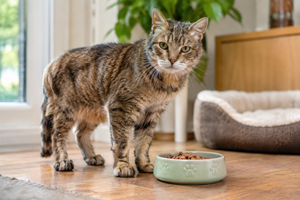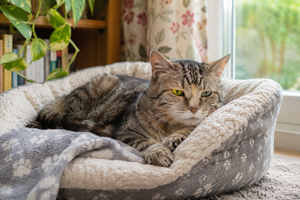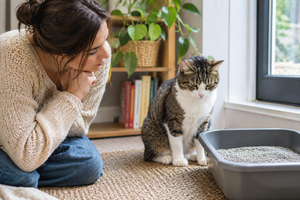
Kidney disease in cats is a common health concern, particularly among older cats. The condition can develop gradually, with early symptoms that owners may mistake for normal ageing. Increased thirst, larger urine clumps, unexplained weight loss and reduced appetite are among the changes that deserve veterinary attention.
Although chronic kidney disease cannot usually be cured, early diagnosis and appropriate management can help many cats maintain a comfortable quality of life. Treatment requirements depend on the severity of the condition and the cat’s overall health.
This guide explains kidney disease symptoms, diagnostic tests, treatment options, UK veterinary costs and practical home care. For more pet health information and UK pet insurance guidance, explore PetCoverHQ.

What Is Kidney Disease in Cats?
The kidneys perform several essential functions, including filtering waste products from the blood, regulating fluid balance and maintaining appropriate electrolyte levels.
When kidney function deteriorates, waste products can accumulate in the bloodstream. Cats may also lose their ability to concentrate urine effectively, resulting in increased urination and thirst.
Kidney disease can develop suddenly or progress over an extended period. Understanding this distinction is important because the treatment and potential outcomes can differ considerably.
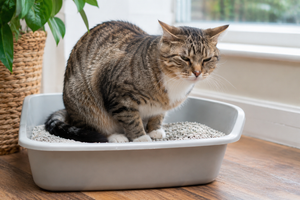
Acute Kidney Injury vs Chronic Kidney Disease
| Feature | Acute kidney injury (AKI) | Chronic kidney disease (CKD) |
|---|---|---|
| Onset | Sudden | Gradual |
| Development | Hours or days | Months or years |
| Possible causes | Poisoning, infection or reduced blood flow | Long-term kidney damage or inherited disorders |
| Recovery | Sometimes partially or fully reversible | Generally irreversible |
| Treatment | Often intensive and urgent | Long-term management |
| Monitoring | Frequent assessment during recovery | Regular lifelong veterinary checks |
Acute kidney injury requires prompt veterinary assessment. Some cats with chronic kidney disease may also experience a sudden deterioration in kidney function.
What Are the Early Signs of Kidney Disease in Cats?
Early-stage kidney disease in cats may produce few noticeable symptoms. As kidney function declines, changes in drinking, urination, appetite and body weight may become more apparent.
Owners who understand their cat’s normal daily habits are often better positioned to recognise these changes.
| Symptom | What owners may notice | Possible explanation |
|---|---|---|
| Increased thirst | More frequent drinking | Reduced ability to conserve water |
| Increased urination | Larger or more numerous urine clumps | Reduced urine concentration |
| Weight loss | Gradual loss of body condition | Reduced food intake or illness |
| Poor appetite | Unfinished meals | Nausea or general discomfort |
| Vomiting | Repeated episodes | Metabolic disturbances or other illness |
| Poor coat condition | Untidy or greasy fur | Reduced grooming |
| Lethargy | Less activity and interaction | Weakness or illness |
| Dehydration | Reduced hydration despite drinking | Excessive fluid loss |
The PDSA’s guide to chronic kidney disease in cats recommends early veterinary assessment when these changes develop. PDSA
Why Is My Cat Drinking More Water?
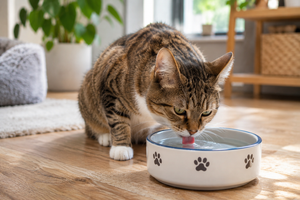
Increased thirst may occur when the kidneys struggle to retain water. Affected cats may compensate by drinking more frequently, but they can still become dehydrated.
However, excessive thirst can also occur with diabetes, hyperthyroidism and other medical conditions. Drinking behaviour alone cannot establish a diagnosis.
Never restrict your cat’s access to water in an attempt to reduce urination.
Why Is My Cat Losing Weight Despite Eating?
Unexplained weight loss deserves veterinary attention, even if your cat continues eating normally.
Kidney disease can contribute to loss of muscle mass and body condition. However, weight loss with a normal or increased appetite may also suggest other conditions, including hyperthyroidism or diabetes.
Regular weighing can help identify gradual changes that are difficult to notice visually.
What Causes Kidney Disease in Cats?
There is no single cause of feline kidney disease. In many older cats diagnosed with CKD, the original reason for kidney damage cannot be identified.
Other cases are associated with inherited conditions, toxins, infections or abnormalities affecting the urinary system.
Age-Related Kidney Changes
Chronic kidney disease becomes more common as cats grow older.
Age alone does not confirm kidney disease, and not every senior cat will develop it. Nevertheless, regular health examinations become increasingly valuable because subtle changes may appear before obvious illness develops.
Inherited Kidney Disorders
Polycystic kidney disease is an inherited condition that causes fluid-filled cysts to develop within the kidneys.
It is particularly associated with Persian cats and certain related breeds. Genetic testing and imaging may be appropriate for cats considered at risk.
Toxic Substances
Some household substances can cause severe kidney injury in cats.
Lilies, antifreeze and certain human medications are particularly dangerous. Even pollen from true lilies or water from a vase containing them can pose a serious risk.
Contact a vet immediately if exposure is suspected. Do not wait for symptoms or attempt to induce vomiting at home.
Kidney Infections
Bacterial infections can sometimes affect kidney tissue and interfere with normal kidney function.
Diagnosis may require urine testing, bacterial culture and imaging. Treatment depends on the underlying infection and the extent of kidney involvement.
Urinary Obstructions
Obstructions affecting urine flow can place the kidneys under significant stress.
A cat repeatedly attempting to urinate without producing a normal amount of urine needs emergency veterinary attention, particularly if it is male.
What Are the Four Stages of Kidney Disease in Cats?
The International Renal Interest Society (IRIS) provides a clinical staging system that helps veterinary professionals assess chronic kidney disease and plan appropriate treatment.
The system considers kidney function markers, with additional assessment of blood pressure and urinary protein loss. IRIS
The four IRIS stages of feline CKD
Stage 1 – Early kidney abnormalities
Kidney disease may be detectable despite relatively normal blood markers.
Stage 2 – Mild kidney impairment
Some cats begin showing changes in thirst, urination or body weight.
Stage 3 – Moderate kidney impairment
Clinical symptoms may become more noticeable and require additional management.
Stage 4 – Severe kidney impairment
More intensive symptom management and quality-of-life assessment may be necessary.
Educational illustration of CKD staging. Only a veterinary professional can determine the appropriate stage.
The official IRIS guidelines provide detailed clinical recommendations for staging and managing kidney disease.
A cat should generally be assessed when clinically stable and appropriately hydrated. A single abnormal blood test does not necessarily establish the stage of chronic kidney disease.
How Do Vets Diagnose Kidney Disease in Cats?
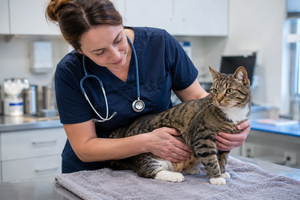
Veterinary diagnosis involves evaluating symptoms alongside physical examinations and laboratory findings.
Your vet may recommend several tests to establish whether kidney function is impaired, identify potentially treatable causes and determine an appropriate management plan.
Blood Tests
Blood tests measure substances associated with kidney function, including creatinine, urea and symmetric dimethylarginine (SDMA).
Results must be interpreted alongside hydration status, muscle condition and other clinical findings.
Additional measurements may help investigate electrolyte abnormalities, phosphorus concentrations and anaemia.
Urine Tests
Urinalysis helps evaluate the kidneys’ ability to concentrate urine.
It can also identify abnormalities such as protein, blood or evidence suggesting infection.
A urine protein-to-creatinine ratio may be recommended to assess abnormal protein loss.
Blood Pressure Measurement
High blood pressure can develop alongside chronic kidney disease.
Untreated hypertension may damage sensitive organs, including the eyes. Measuring blood pressure allows a vet to determine whether additional treatment is necessary.
Diagnostic Imaging
Ultrasound and X-rays may help investigate kidney size, structural abnormalities, stones or other problems affecting the urinary system.
Not every cat needs imaging. Your vet will recommend investigations based on the clinical findings.
When Is Kidney Disease in Cats an Emergency?
Cats with diagnosed kidney disease can sometimes deteriorate unexpectedly.
Contact a vet urgently if your cat develops significant vomiting, refuses food, becomes unusually weak or shows a sudden change in behaviour.
Seek emergency veterinary care if your cat:
- Suddenly collapses or cannot stand.
- Cannot pass urine despite repeated attempts.
- Develops seizures or breathing difficulties.
- Experiences sudden blindness.
- May have consumed a toxic substance.
- Becomes severely distressed or unresponsive.
Do not attempt to manage severe symptoms with leftover medication or by forcing your cat to drink.
Prompt treatment is particularly important when acute kidney injury is suspected.
How Is Kidney Disease in Cats Treated?
Treatment aims to support remaining kidney function, manage complications and maintain an acceptable quality of life.
Because cats respond differently to treatment, management plans should be adjusted according to veterinary findings and ongoing monitoring.
Prescription Renal Diets
Veterinary renal diets are specifically formulated to support cats with kidney disease.
They commonly contain controlled phosphorus levels, carefully selected protein content and other nutritional adjustments.
Your vet can advise whether a renal diet is appropriate and when to introduce it.
Avoid abruptly replacing your cat’s usual food if this causes it to stop eating. Maintaining adequate nutritional intake remains important.
Hydration Support
Cats with impaired kidney function may struggle to maintain sufficient hydration.
Providing accessible water sources and suitable moisture-rich food can form part of their management plan.
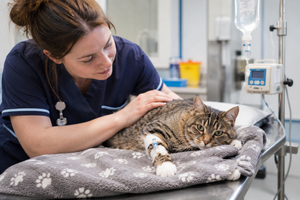
Some cats require intravenous fluids during hospitalisation. Others may benefit from prescribed subcutaneous fluids under veterinary supervision.
Fluid therapy must be tailored to the individual cat. Excessive fluid administration can also be harmful.
Nausea and Appetite Management
Kidney disease may affect appetite through nausea, metabolic changes or general discomfort.
A veterinarian may prescribe anti-nausea medication or appetite-supporting treatment when appropriate.
Persistent refusal to eat should always be reported to the veterinary team.
Phosphorus Management
Elevated phosphorus concentrations can complicate chronic kidney disease.
Veterinarians may recommend dietary management and, when necessary, prescribed phosphate-binding products.
Regular blood testing helps determine whether phosphorus management is effective.
Blood Pressure and Proteinuria Treatment
Cats with hypertension or abnormal urinary protein loss may require specific veterinary medication.
Treatment decisions depend on measured blood pressure, laboratory findings and the cat’s overall condition.
Anaemia Management
Advanced kidney disease can interfere with normal red blood cell production.
Affected cats may experience weakness, reduced activity or other clinical signs. Veterinary assessment helps determine whether specific treatment is required.
How Much Does Cat Kidney Disease Treatment Cost in the UK?
The cost of managing kidney disease in cats depends on diagnostic requirements, medication, dietary needs, disease severity and the frequency of follow-up examinations.
A stable cat receiving routine monitoring may have substantially different expenses from a cat requiring emergency hospitalisation.
Published UK Veterinary Price Examples
The following prices come from the Royal Veterinary College’s general practice fee list effective from 1 April 2026.
| Veterinary service | Published price |
|---|---|
| Veterinary consultation | £58 |
| Extended consultation | £105 |
| Urgent consultation | £87 |
| Out-of-hours consultation | £205 |
| Basic urine screen | £23.18 |
| Single-organ abdominal ultrasound | £128.17 |
| Pre-anaesthetic blood test | £132.35 |
Source: Royal Veterinary College veterinary price list. Royal Veterinary College, RVC
These are individual service prices from one provider, not national averages or a complete kidney disease treatment package. A dedicated renal blood profile may cost a different amount.
Example of an Initial Diagnostic Budget
The following calculation illustrates selected consultation and diagnostic expenses using the published prices above.
Illustrative veterinary bill
£241.35
Before kidney-specific blood tests, medication and additional services
Veterinary consultation
£58.00
Basic urine screen
£23.18
Single-organ ultrasound
£128.17
Subtotal of listed services
£209.35
The subtotal is £209.35. The final bill depends on the additional tests and care required; request a written estimate.
Long-Term Expenses to Consider
Unlike a one-off injury, chronic kidney disease may require ongoing expenditure.
Owners should budget for renal food, periodic laboratory testing, blood pressure checks, prescription medication and veterinary consultations.
The Royal College of Veterinary Surgeons’ guidance on fees and pricing explains why charges vary between UK veterinary practices. Royal College of Veterinary Surgeons
Ask your vet for an individual treatment estimate rather than assuming that every cat will require the same tests or medication.
Does Pet Insurance Cover Kidney Disease in Cats?
Some UK pet insurance policies cover eligible kidney disease investigations and treatment when the condition develops after the policy begins and applicable waiting periods have ended.
Coverage depends on the policy wording, exclusions and financial limits.
Lifetime policies may provide ongoing benefits for eligible chronic conditions when renewed in accordance with their terms. Time-limited policies may stop paying for a particular condition after a specified period.
What Should Owners Check Before Making a Claim?
| Policy feature | Why it matters |
|---|---|
| Pre-existing conditions | Previous kidney-related symptoms may affect eligibility |
| Annual vet fee limit | Determines available cover for eligible treatment |
| Condition-specific limit | May restrict payments for kidney-related care |
| Fixed excess | Amount the owner must contribute |
| Percentage co-payment | Additional contribution towards eligible costs |
| Prescription food exclusions | Renal diets may not be covered |
| Renewal conditions | Important for ongoing chronic illness cover |
Routine check-ups, preventive screening and therapeutic food may be excluded even when eligible illness treatment is covered.
Pet Insurance Claim Calculator
Use this illustrative calculator to understand how an excess, co-payment and available benefit limit can affect your contribution.Eligible veterinary bill (£)Fixed excess (£)Remaining insurance benefit (£)Percentage co-payment
10%
Potential insurer payment
£1,530.00
Your contribution
£270.00
Assumes the entire bill is eligible and the percentage co-payment is applied after the fixed excess. Actual policy calculations may differ.
How to Care for a Cat With Kidney Disease at Home
Daily care plays an important role in long-term management.
Small adjustments to your cat’s environment can help support hydration, nutrition and comfort while making behavioural changes easier to recognise.
Provide Several Water Sources
Place clean drinking bowls in quiet and accessible locations around the home.
Some cats prefer wide ceramic bowls or drinking fountains. Experiment with different arrangements while ensuring fresh water remains available at all times.
Monitor Food Intake
Record how much food your cat actually consumes rather than simply checking whether it approaches the bowl.
Contact your vet if appetite decreases significantly.
For cats receiving prescription renal diets, discuss any feeding difficulties before making substantial dietary changes.
Make Litter Trays Accessible
Older or weakened cats may struggle with high-sided trays or those located upstairs.
Provide easily accessible litter trays and monitor changes in urine production.
Create Comfortable Resting Areas
Offer warm bedding in quiet locations where your cat can rest without unnecessary disturbance.
Ensure food, water and litter trays are reasonably accessible, particularly if mobility is reduced.
Keep Veterinary Appointments
Regular monitoring allows your vet to identify changes in kidney function, blood pressure, nutrition and treatment response.
Follow-up frequency should be based on the individual cat’s condition rather than a fixed schedule for every patient.
A Practical Weekly Kidney Health Checklist
The following record can help owners describe meaningful changes during veterinary appointments.
Weekly monitoring checklist
0/8 completedRecord appetite and food intakeObserve changes in water consumptionMonitor litter tray use and urine clumpsCheck body weight when practicalRecord vomiting or other digestive symptomsObserve grooming and daily activityConfirm prescribed medication has been givenRecord any new symptoms for the vet
Reset checklist
This checklist supports routine observation but does not replace veterinary examinations. Never postpone treatment to complete a monitoring period.
Frequently Asked Questions
How long can a cat live with kidney disease?
Some cats with chronic kidney disease live for months or years following diagnosis. Prognosis depends on disease severity, response to treatment, complications and other health conditions.
Can kidney disease in cats be reversed?
Established chronic kidney damage is generally irreversible. However, some cats with acute kidney injury may recover kidney function when the underlying cause is treated promptly.
Do cats with kidney disease need special food?
Many cats benefit from veterinary renal diets, but dietary recommendations depend on the stage of disease, nutritional status and individual tolerance.
Can younger cats develop kidney disease?
Yes. Inherited abnormalities, infections, toxins and other conditions can affect younger cats.
Is kidney disease painful for cats?
Some causes of kidney disease may produce pain. Chronic disease can also cause nausea, weakness and discomfort. Veterinary treatment can help manage these problems.
Should cats with kidney disease drink more water?
Cats must have unrestricted access to fresh water. Your vet may recommend additional hydration strategies depending on the cat’s condition.
Can kidney disease cause bad breath?
Advanced kidney dysfunction may contribute to unusual breath odour. However, dental disease and other medical conditions can also cause persistent bad breath.
How often should a cat with kidney disease have blood tests?
Monitoring frequency depends on the disease stage, treatment response and clinical stability. Your vet will recommend an appropriate schedule.
Final Thoughts
Kidney disease in cats requires careful management, particularly when symptoms develop gradually and become difficult to distinguish from age-related changes.
Recognising increased thirst, altered urination, weight loss and appetite changes can help owners seek veterinary advice earlier. Appropriate nutrition, hydration support and regular monitoring may improve comfort and quality of life.
Understanding veterinary expenses and insurance exclusions can also help owners prepare for the financial demands of long-term treatment.
For more UK-focused pet health information, veterinary cost guides and pet insurance resources, visit PetCoverHQ.