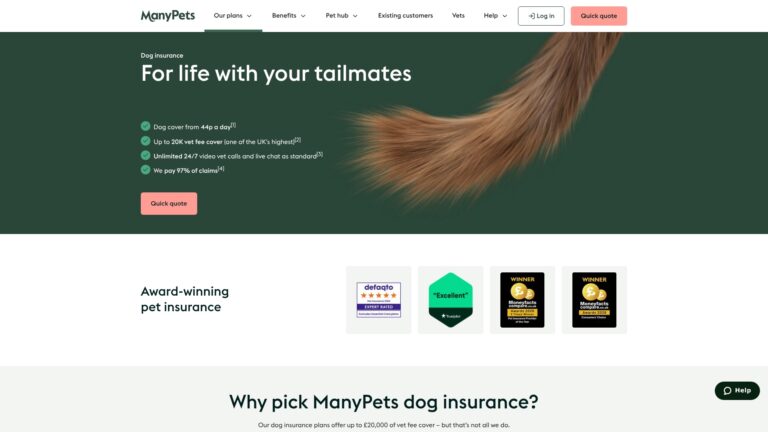
ManyPets is the stronger choice if you want a high limit or expect several different claims in a year. It pays up to £20,000 of vet fees a year and charges your excess once per policy year. Petplan suits owners who value its Claims Pricing Guarantee, which means it will not charge you more for claiming. It also suits rabbit owners. Petplan’s top limit is £12,000 a year, and it charges an excess for each condition.
The two also differ on co-payments. ManyPets requires a 20% co-payment from age seven. Petplan adds a 20% contribution as your pet gets older, but its website does not give the age. We checked every term in this comparison on petplan.co.uk and manypets.com on 16 October 2026.
Market Overview: Comparing Petplan and ManyPets in 2026
Petplan is the older name, and ManyPets has the higher limits and clearer rules on past conditions. Petplan says it has more than 45 years’ experience. Its policies are provided by Allianz Insurance plc. ManyPets says it was named Pet Insurance Provider of the Year at the 2026 Moneyfactscompare.co.uk Awards.
Both insurers publish high claim payment rates. Petplan says it paid over 97% of the claims it received in 2025, a total of 1,420,880 paid claims, according to its About us page. ManyPets also says it pays 97% of claims. These figures come from the insurers themselves. Treat them as a guide, not an independent measure.
Advantages of Choosing Petplan for Pet Insurance
Petplan’s clearest advantage is its Claims Pricing Guarantee. Petplan says it will never charge you more for claiming. That does not freeze your price. Other factors, such as your pet’s age, can still change it.
Petplan can pay your vet directly, so you do not have to find the money first. It says 90% of the claims it pays are paid within 5 working days. Its plans also include Pet Expert Chat, with free video consultations on health, behaviour and nutrition. Our Petplan pet insurance review covers its policies, co-payment rules and claims process in more detail.
For dogs, both Petplan plans include legal liability cover of up to £2 million for each incident. Our guide to third-party liability dog insurance explains what that pays for.
Advantages of Selecting ManyPets for Animal Coverage
ManyPets’ main advantages are its limits and its excess rule. Its Complete Care plan pays up to £20,000 of vet fees a year. Every ManyPets plan charges the excess once per policy year, not once per condition.
ManyPets includes unlimited 24/7 video vet calls and live chat as standard. It has no upper age limit for dogs, as long as your dog is over four weeks old. If you switch from another insurer, ManyPets says there is no waiting period. An optional add-on called MoneyBack returns 20% of your premium if you have not claimed in the policy year. Our ManyPets pet insurance review covers its plans, co-payment rules and claims process in more detail.
Core Coverage Limits and Policy Tiers Explained
ManyPets offers four lifetime plans, from £5,000 to £20,000 a year. Petplan offers three lifetime limits, from £4,000 to £12,000 a year, plus one time-limited plan. The table sets out the terms that matter most when you compare them.
Petplan and ManyPets compared (each insurer’s website, checked 16 October 2026)
Feature
Petplan
ManyPets
Lifetime vet fee limits
£4,000, £7,000 or £12,000 a year (Covered for Life)
£5,000, £7,000, £10,000 or £20,000 a year
Time-limited plan
Essential: £3,000 per illness or injury for 12 months
None; all plans are lifetime
Excess
Per condition, per year
Once per policy year
Co-payment
20% of treatment as your pet gets older (age not published)
20% required from age 7; optional 10% or 20% before then
Pre-existing conditions
Assessed when you apply
Covered if clear for 2 years; one plan covers some recent conditions
Multi-pet discount
£12 per pet per year
Up to 15%
Video vet
Pet Expert Chat video consultations
Unlimited 24/7 video calls and live chat
Pets
Dogs, cats and rabbits
Dogs and cats
Petplan Covered For Life Versus Essential Plans
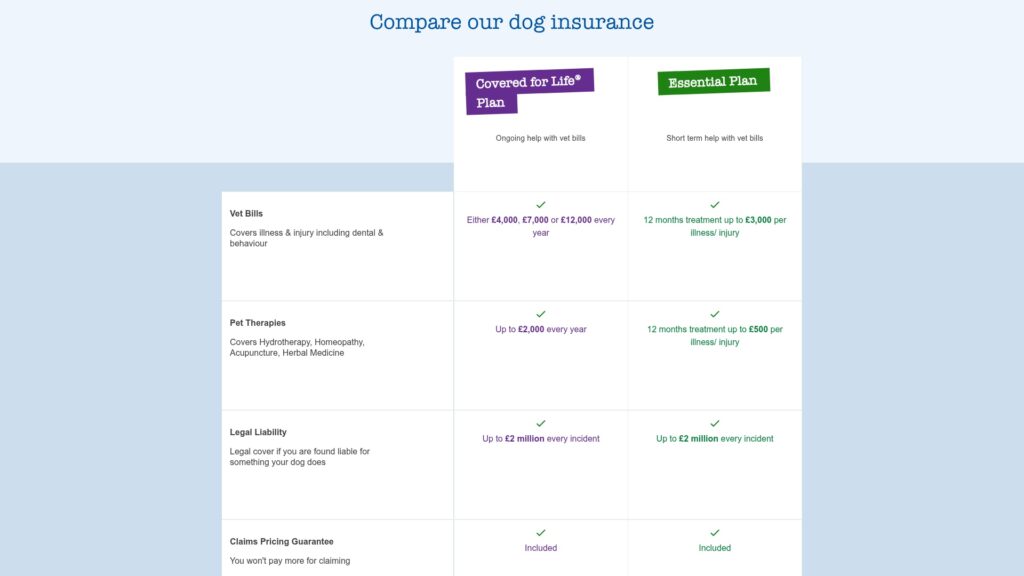
Petplan’s lifetime plan is called Covered for Life. You choose £4,000, £7,000 or £12,000 for vet bills every year. The limit refreshes each time you renew. You can keep claiming for the same condition year after year, as long as there is no break in cover.
Essential is Petplan’s time-limited plan. It pays up to £3,000 for each illness or injury, for 12 months from the first treatment. After that, the condition is no longer covered, but new conditions still are. Our guide to lifetime vs time-limited pet insurance explains when each type makes sense.
Petplan’s comparison of its Covered for Life and Essential dog plans on 16 October 2026. Screenshot: PetCoverHQ, shown for review purposes. Source: petplan.co.uk.
ManyPets Complete Care and Standard Plans
Every ManyPets plan is a lifetime plan. The vet fee limit refreshes each year you renew with no break in cover. For dogs and cats, the four plans are Complete Care at £20,000, Standard Care at £10,000, Standard Care Pre-existing at £7,000 and Essential Care at £5,000.
The plans differ in more than the limit. Only Complete Care covers vet-referred behaviour treatment. Essential Care caps CT and MRI scans and cruciate ligament surgery at £1,000. It also covers dental accidents only. Standard Care Pre-existing trades a lower limit for cover of some recent health problems.
Financial Breakdown: Premiums and Excess Fees
Neither insurer publishes a typical premium. ManyPets advertises dog cover from 44p a day, and Petplan gives 10% off your first year when you buy online. Your own quote depends on your pet, where you live and the cover you choose. The bigger difference shows up when you claim.
How Annual Deductibles Work Across Both Providers
An excess is the fixed amount you pay towards a claim. Petplan’s Covered for Life charges it per condition, per year. ManyPets charges it once per policy year on every plan.
Take a dog with two separate conditions in one policy year: a £400 ear infection and a £1,200 injury. Using an example excess of £100 at both insurers, you would pay two excesses with Petplan, £200 in total, and Petplan would pay £1,400. With ManyPets, you would pay one excess of £100, and ManyPets would pay £1,500. The gap grows with each new condition.
Real excess amounts vary by plan and pet. Compare the figures on your own quotes. Our guide to fixed and percentage excess explains both types.
Managing Cost Increases for Older Pets
Both insurers ask you to pay a share of each bill as your pet gets older, but only ManyPets publishes the age. ManyPets requires a 20% co-payment when your pet is seven or over at renewal. Before seven, you can choose a 10% or 20% co-payment to lower your price.
ManyPets works out the co-payment after the excess. On a £2,000 bill with a £100 excess, you pay the £100 first. You then pay 20% of the remaining £1,900, which is £380. ManyPets pays £1,520. You pay £480 in total.
Petplan says that as your pet gets older, you will pay 20% of all treatments on top of your fixed excess. It reminds you a year before this starts. Its website does not say at what age, so ask Petplan or check your policy documents. Our guide to why pet insurance goes up covers the other reasons premiums rise.
Claiming Process and Customer Experience Comparisons
Both insurers can pay your vet directly, and both offer video vet advice. Petplan publishes more detail on claims. In 2025 it paid 98% of Covered for Life claims and 90% of Essential claims. ManyPets gives a single 97% figure on its dog insurance page.
Both are rated Excellent on Trustpilot as of 16 October 2026, on Petplan’s page and ManyPets’ page. These ratings cover every kind of review, not only claims. Read the recent ones about claims if that is your main concern.
Direct Veterinary Payments and Settlement Times
Petplan can pay your vet directly, and it says 90% of the claims it pays are paid within 5 working days. ManyPets can pay your vet directly if your vet agrees. If not, you pay the bill and claim online. ManyPets does not publish a settlement time on its plan pages, so we do not quote one.
Before treatment, ask your practice whether it accepts direct claims from your insurer. Our guide to insurers that pay the vet directly explains how it works.
Specialist Coverage: Pre-Existing Conditions and Dental Care
ManyPets publishes clear rules for past conditions and sells a plan for recent ones. Petplan decides case by case. On dental cover, both expect regular check-ups and that you follow your vet’s advice.
Understanding Pre-Existing Condition Rules
ManyPets covers a past condition on any plan if your pet has had no signs, symptoms, treatment, medication or advice for it in the two years before the policy starts. For more recent problems, its Standard Care Pre-existing plan pays up to £1,500 for conditions that ended three months before the start date.
Petplan works differently. With every new application, it asks about your pet’s pre-existing conditions and then decides whether it can cover them. You will only know once you apply. Our guide to pre-existing conditions explains how insurers usually decide.
Dental Illness and Routine Preventive Care
Petplan covers dental conditions as standard. Your pet must have an annual dental check-up at the vet, and any recommended treatment must be carried out within six months. Keep your vet records.
ManyPets covers dental illness and accidents up to the vet fee limit on Standard Care and Complete Care, as long as you follow your vet’s recommendations. Essential Care covers dental accidents only, up to £1,000. ManyPets says routine maintenance of your pet’s teeth is not covered. It does offer discounted flea, tick and worming treatment through its Perks scheme. Our dental cover guide compares these rules with other insurers.
Final Verdict: Which Pet Insurance Policy Matches Your Needs?
Neither insurer is better for every pet. We compared them on five points: the vet fee limit, how the excess works, the co-payment rule, past conditions and dental cover. Your pet’s age and health decide which of those matter most.
Petplan may suit you better in these cases:
You want a guarantee that claiming will not raise your price.
You want to insure a rabbit as well as cats or dogs.
You want a time-limited option, such as Essential, for one-off accidents and illnesses.
ManyPets may suit you better in these cases:
You want a vet fee limit above £12,000 a year.
Your pet is likely to need treatment for more than one condition in a year.
Your pet has a past condition that has been clear for two years, or that ended at least three months ago.
Get quotes from both for the same limit and a similar excess. For a wider comparison, see our guide to the best pet insurance in the UK.
Frequently Asked Questions About Petplan and ManyPets
Does Petplan offer a multi-pet discount?
Yes, Petplan gives £12 off per pet every year when you insure more than one. Each pet can have a different level of cover. ManyPets offers up to 15% off for multiple pets, and each pet keeps its own vet fee limit and excess. Our guide to multi-pet insurance compares other insurers’ discounts.
What does lifetime pet insurance mean?
Lifetime pet insurance refreshes your vet fee limit every year you renew, so you can keep claiming for a long-term condition. It only works if you renew with no break in cover. Petplan’s Covered for Life and all four ManyPets plans work this way.
What types of pets can you insure with Petplan and ManyPets?
Petplan insures dogs, cats and rabbits. ManyPets’ UK website sells cover for dogs and cats. For any other kind of pet, you will need a specialist insurer.
Which insurer offers a higher annual veterinary fee limit?
ManyPets, with up to £20,000 a year on Complete Care. Petplan’s highest limit is £12,000 a year on Covered for Life. Both limits refresh each year you renew without a break.
Both insurers update their plans, so read the policy documents before you buy. PetCoverHQ is independent and is not paid by Petplan or ManyPets. If you notice a term that has changed, email [email protected] and we will update this comparison.
Content is provided for informational purposes only and does not constitute financial advice. Always read the full policy terms before purchasing.
Looking for a reliable Pet Protect insurance review before buying cover for your dog, cat or rabbit? Pet Protect offers lifetime pet insurance with annual veterinary fee limits...
Looking for a detailed Perfect Pet insurance review before choosing cover for your dog or cat? Perfect Pet offers four types of pet insurance, with lifetime veterinary fee...
Looking for a detailed Petgevity pet insurance review before buying cover for your dog or cat? Petgevity offers lifetime pet insurance with annual veterinary fee limits ranging from...
Pet insurance comparison sites are free for you because insurers pay them, usually when you buy. They show quotes from a panel of partner insurers, not from every...