PetCoverHQ is an independent website and is not affiliated with PDSA. PDSA sets prices at each Pet Hospital, so confirm the cost with your local Pet Hospital before treatment.
PDSA (People’s Dispensary for Sick Animals) is a UK veterinary charity that treats the pets of owners on qualifying benefits at more than 40 Pet Hospitals and Pet Clinics. PDSA does not publish a fixed national price list. Eligible owners receive free treatment for one pet and are asked for a contribution. Additional pets, and owners on other qualifying benefits, use a low-cost service that PDSA prices 20% to 30% below private vets. The PDSA Pet Care scheme, run through partner practices, costs £4.50 a month or £54 a year.
This guide covers what each PDSA service level costs and gives estimated low-cost prices for common dog and cat treatments. It also explains who qualifies for free care and compares PDSA with Blue Cross, Animal Trust, and private vets.
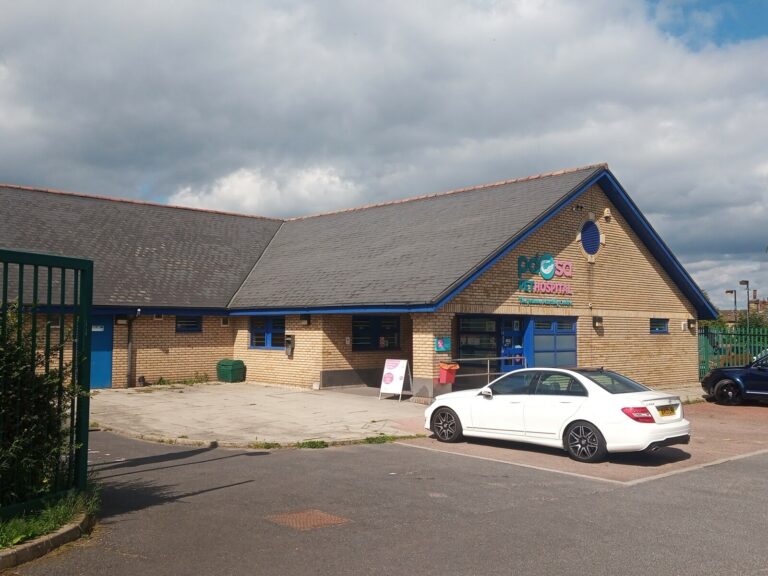
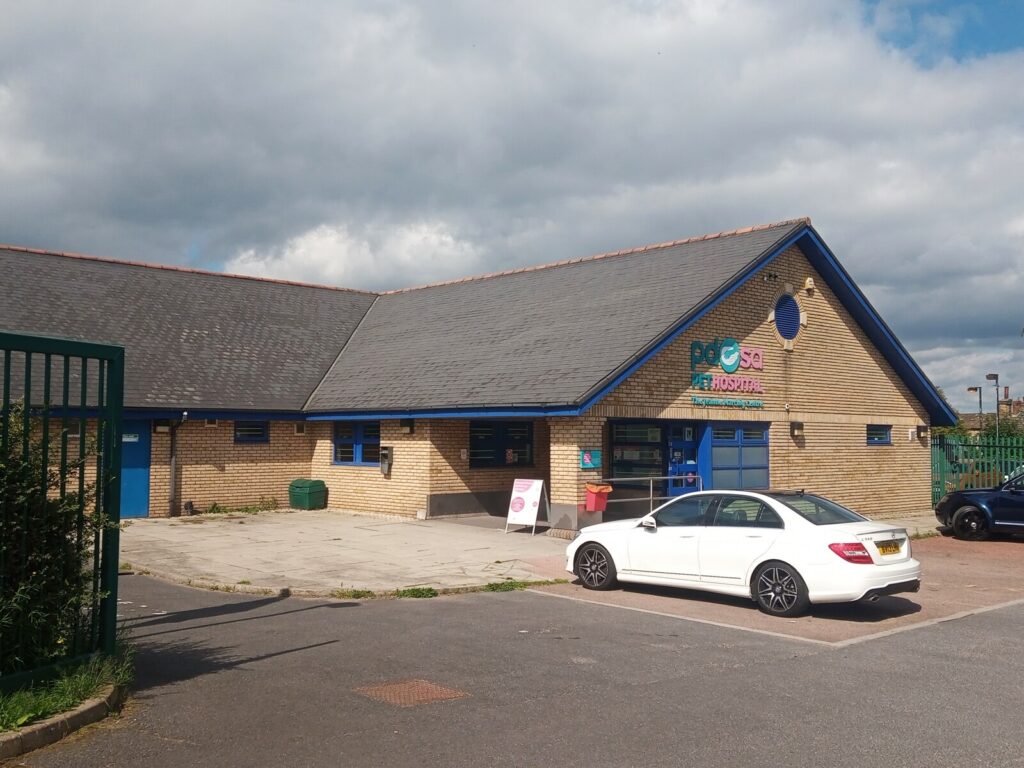
PDSA Pet Hospital, Lorne Street, Bradford. Prices for low-cost treatment are set by each Pet Hospital. Photo: Stephen Armstrong, CC BY-SA 2.0.
How much does PDSA charge in 2026?
PDSA charges no fixed fee for its free service and prices its low-cost service 20% to 30% below private vets. The exact amount depends on the treatment and on your local Pet Hospital, because PDSA does not publish a single national price list (PDSA).
PDSA runs three service levels. Your benefit, your postcode, and the number of pets you register decide which level you use.
Service level
Who it is for
What you pay
Pets covered
Where
Free service
Owners on Housing Benefit, Council Tax support, or Universal Credit with the housing element
No fixed fee; PDSA asks for a contribution
1 pet (2 if they are rabbits or small furries)
PDSA Pet Hospitals and Pet Clinics
Low-cost service
Additional pets of free-service owners, and owners on other qualifying benefits such as Pension Credit or PIP
Typically 20% to 30% below private-vet prices
No limit
PDSA Pet Hospitals and Pet Clinics
PDSA Pet Care scheme
Owners on qualifying benefits who live near a partner practice
£4.50 a month or £54 a year, plus discounted treatment
1 cat or dog per household
Partner private practices
Sources: PDSA services, PDSA eligibility FAQs, PDSA Pet Care.
Prices vary between Pet Hospitals because PDSA sets low-cost fees against private-vet prices in each area. PDSA receives no Government or National Lottery funding and relies on public donations and owner contributions (PDSA eligibility FAQs).
What does a “contribution” mean at PDSA?
A contribution is a payment you choose to make towards your pet’s free treatment. PDSA asks owners to give “whatever they can afford” (PDSA). PDSA does not publish a minimum contribution.
PDSA price list for dogs
PDSA does not publish dog treatment prices. The table below estimates low-cost prices for common dog treatments. Each estimate applies PDSA’s stated 20% to 30% discount to a named 2026 private-vet average.
Estimates are PetCoverHQ calculations (private average × 0.70 to × 0.80), not PDSA prices. Your Pet Hospital’s fee can be higher or lower.
Neutering costs more for larger dogs. ManyPets recorded an average spay price of £420.38 for a small dog and £554.03 for a large dog in January 2026 (ManyPets). Using the same 20% to 30% discount, a PDSA low-cost spay comes to about £294 to £336 for a small dog and £388 to £443 for a large dog.
PDSA does not fund breeding or breeding-related problems, so it does not help with costs such as a planned caesarean for a litter (PDSA services).
PDSA price list for cats
PDSA does not publish cat treatment prices either, and it applies the same 20% to 30% low-cost discount. No named 2026 national average exists for private-vet cat treatments, so the table shows published prices from two other not-for-profit vet providers as reference points.
Cat treatment
Blue Cross (published May 2024, checked 16 October 2026)
Animal Trust (checked 16 October 2026)
Castration
£50
Ask your nearest practice
Spay
£90
Ask your nearest practice
Full vaccination course
£70
£69
Booster
£35
£52.50
Euthanasia
£30 (with communal cremation)
£80
Sources: Blue Cross, Animal Trust. Blue Cross’s price page was published on 22 May 2024 and still showed these prices on 16 October 2026. We could not confirm Animal Trust’s current neutering prices on 16 October 2026, so ask your nearest practice.
Cat spays cost more than cat castrations because a spay is abdominal surgery and needs a longer anaesthetic. The same pricing gap applies at PDSA, at charities, and at private practices.
Does PDSA treat rabbits and other small pets?
Yes. On the free service, PDSA treats 2 rabbits or small furries instead of 1 pet (PDSA services). Guinea pigs and hamsters count as small furries. Any additional rabbits or small pets use the low-cost service.
Who gets free treatment and who pays low-cost prices at PDSA?
Owners on Housing Benefit, Council Tax support, or Universal Credit with the housing element qualify for free treatment. Owners on other qualifying benefits, such as Pension Credit, PIP, and income-based ESA, pay low-cost prices. In both cases you must also live in a PDSA postcode catchment area and be aged 16 or over (PDSA eligibility).
Benefit
PDSA service level
Housing Benefit
Free service (1 pet) + low-cost for other pets
Council Tax support or reduction
Free service (1 pet) + low-cost for other pets
Universal Credit with housing element
Free service (1 pet) + low-cost for other pets
Universal Credit without housing element
Low-cost service
Child Tax Credit and Working Tax Credit
Low-cost service
Pension Credit
Low-cost service
Income Support
Low-cost service
Jobseeker’s Allowance
Low-cost service
Employment and Support Allowance (income-based only)
Low-cost service
DLA, PIP, or Adult Disability Payment
Low-cost service
State-retired pensioner in Council Tax bands A to D
Low-cost service
Armed Forces Independence Payment or War Disablement Pension
Qualifying benefit (ask PDSA which service applies)
Sources: PDSA eligibility, PDSA eligibility FAQs.
You register in person with proof of benefits dated within the last 12 months and photo ID, such as a passport, driving licence, or bank card. Registration lasts 12 months, and you re-register when it ends. Full step-by-step instructions are in the guide to PDSA eligibility and registration.
How much does PDSA charge for a second pet?
PDSA treats a second pet on the low-cost service, not for free. The free service covers 1 pet per eligible owner, or 2 rabbits or small furries. PDSA sets no limit on the number of pets you register for the low-cost service (PDSA eligibility FAQs). A second dog therefore costs roughly 70% to 80% of the private-vet price for each treatment.
How much does the PDSA Pet Care scheme cost?
The PDSA Pet Care scheme costs £4.50 a month by Direct Debit or £54 a year paid upfront (PDSA Pet Care FAQs). It is for owners who live near a participating private practice rather than a PDSA Pet Hospital. It covers 1 cat or dog per household.
The fee includes:
1 vet health consultation a year
1 vaccination or booster a year, excluding rabies and travel vaccines
20% off the practice’s full price for treating illness and injury
15% off PDSA pet insurance in the first year
the PDSA 24/7 helpline, staffed by qualified vet nurses
The scheme excludes out-of-hours care, preventive neutering (charged at full price), extra vaccines, food, and breeding-related treatment (PDSA partner FAQs).
Is it worth £54 a year? For a dog, the included booster (£65 private average) and consultation (£40 to £60) are worth £105 to £125 at private prices. That is about double the £54 annual fee, before counting the 20% treatment discount. To join, you need Housing Benefit, means-tested Council Tax support, Universal Credit with the housing element, or Rate Relief in Northern Ireland.
How do PDSA prices compare with Blue Cross, Animal Trust, and private vets?
For neutering, PDSA’s estimated low-cost prices sit below private-vet averages but above the fixed prices that Blue Cross publishes. The difference comes from how each organisation prices. PDSA discounts local private prices, while Blue Cross and Animal Trust set one published fee.
Treatment
PDSA low-cost (estimate)
Blue Cross (May 2024 prices, checked 16 October 2026)
Animal Trust (checked 16 October 2026)
Private-vet average
Dog castration
£252 to £288
£150
Ask your nearest practice
£360.43 (ManyPets, Jan 2026)
Dog spay
£339 to £387
£200
Ask your nearest practice
£484.30 (ManyPets, Jan 2026)
Cat castration
Not estimated
£50
Ask your nearest practice
No national average
Cat spay
Not estimated
£90
Ask your nearest practice
No national average
Dog vaccination course
£66.50 to £76
£70
£69
£95 (Perfect Pet, Apr 2026)
Annual booster
£45.50 to £52
£35
£52.50
£65 (Perfect Pet, Apr 2026)
Standard consultation
£28 to £48
£20
£0
£40 to £60 (Confused.com, Sept 2025)
Each provider has its own access rules. PDSA only treats eligible owners inside its catchments. Blue Cross also requires you to live in a hospital catchment area and receive certain benefits. Animal Trust charges the same published prices at its 17 practices, which run from Glasgow to Shrewsbury. The cheapest published price only helps if you can register with that provider and reach its clinic.
What can you do if you don’t qualify for PDSA?
If PDSA cannot help, other charities, not-for-profit vets, payment plans, and insurance can lower or spread vet costs. Pick the option that matches your situation:
If you live near a Blue Cross animal hospital: check its published price list and eligibility rules.
If you are homeless or in a housing crisis: the Dogs Trust Hope Project helps with vet care for dogs, and PDSA supports it (PDSA eligibility FAQs).
If you need to neuter a cat on a low income: ask Cats Protection about local neutering support.
If you face one large bill: ask your vet about paying in instalments. See the guide to vet payment plans in the UK.
If your pet needs ongoing medicine: ask for a written prescription and compare online pharmacy prices. The Competition and Markets Authority’s order will cap written prescription fees at £21.40 for the first medicine, from March 2027 at large vet groups and September 2027 at smaller practices (GOV.UK).
No. PDSA is free for 1 pet, or 2 rabbits or small furries, when the owner receives Housing Benefit, Council Tax support, or Universal Credit with the housing element. PDSA asks these owners for a contribution. All other eligible pets use the low-cost service.
Does PDSA ask for a donation or minimum contribution?
Yes, PDSA asks for a contribution, but it does not publish a minimum amount. Owners on the free service give what they can afford towards treatment. Low-cost service owners pay the price for each treatment.
Does PDSA charge for puppy vaccinations?
Yes, on the low-cost service, where a puppy course costs an estimated £66.50 to £76 against a £95 private average. On the Pet Care scheme, 1 vaccination or booster a year is included in the £4.50 monthly fee.
Can I use PDSA if I’m not on benefits?
No. PDSA only treats pets of owners who receive a qualifying benefit and live in a PDSA catchment area, and it does not accept paying clients who are not eligible (PDSA eligibility FAQs).
Does PDSA offer payment plans?
PDSA does not publish a payment plan, and it does not provide financial aid (PDSA services). Ask your Pet Hospital directly about paying a larger low-cost bill. For private-vet options, see vet payment plans.
This guide is for information only and is not veterinary or financial advice. PDSA prices vary by Pet Hospital and change over time. Contact PDSA on 0300 3737 223 or your local Pet Hospital to confirm current costs.
For most owners, pet insurance is the safer bet for big vet bills, and savings work best for small, predictable costs. The problem with saving alone is timing....
The safest way to lower your pet insurance premium is to claim every discount you qualify for: online, multi-pet and loyalty-card offers. The next option is to take...
Few UK pet insurers offer a no claims discount. Petplan and Agria say they will not raise your premium because you claimed, and Direct Line says plainly that...
Cat insurance pays your vet bills if your cat becomes ill or injured after the policy starts, minus your excess and up to your limit. Before you buy,...