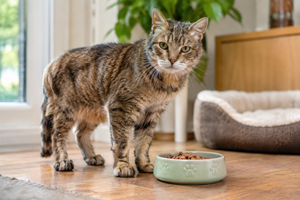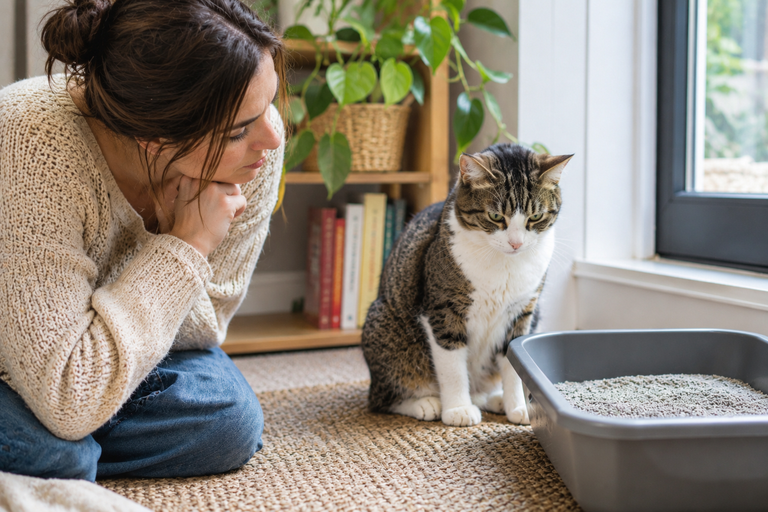
Constipation in cats occurs when a cat struggles to pass stools or produces unusually hard, dry faeces. Although occasional changes in bowel movements may seem minor, persistent constipation can cause considerable discomfort and lead to serious complications without appropriate treatment.
One of the most important challenges for cat owners is distinguishing difficulty passing stools from difficulty passing urine. Both can cause repeated litter tray visits, but a urinary blockage requires immediate emergency treatment.
This guide explains the symptoms, causes, treatment options, UK veterinary costs and practical prevention strategies. For more helpful pet health information and insurance guidance, explore PetCoverHQ.
What Is Constipation in Cats?
Constipation develops when stools become difficult to move through the large intestine. As faeces remain inside the colon, more moisture may be absorbed, making them increasingly dry and difficult to pass.
The condition can affect cats of any age, although older cats and those with underlying health problems may be particularly vulnerable.
Veterinarians distinguish between three related conditions based on severity and changes within the colon.
| Condition | Description |
|---|---|
| Constipation | Infrequent or difficult bowel movements |
| Obstipation | Severe constipation involving an extensive build-up of faeces |
| Megacolon | Abnormal enlargement of the colon associated with impaired function |
Repeated episodes deserve investigation because treating the immediate symptoms alone may not address the underlying problem.
What Are the Symptoms of Constipation in Cats?
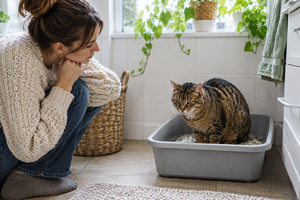
Changes in litter tray behaviour are often the first indication that something is wrong. However, cats that normally toilet outdoors may develop symptoms that are more difficult for owners to identify.
| Symptom | What owners may notice |
|---|---|
| Straining | Spending longer than usual in the litter tray |
| Reduced bowel movements | Fewer stools compared with normal habits |
| Hard stools | Small, dry pieces of faeces |
| Vocalisation | Signs of discomfort when attempting to poo |
| Reduced appetite | Leaving meals unfinished |
| Behavioural changes | Hiding or avoiding interaction |
| Vomiting | Digestive symptoms accompanying more serious illness |
| Abdominal discomfort | Reluctance to move or be handled |
Occasionally, liquid faeces may pass around retained hard stools. As a result, apparently loose stools do not always exclude constipation.
The PDSA’s veterinary guidance on cat constipation recommends contacting a vet promptly whenever a cat appears to struggle with bowel movements. PDSA
How Often Should a Healthy Cat Poo?
Bowel movement frequency varies according to age, food consumption, diet, activity and individual digestive habits.
Many healthy adult cats pass stools daily, although some do so more frequently.
Rather than relying exclusively on a fixed number of bowel movements, owners should monitor changes from their cat’s usual pattern.
A sudden reduction in stool production accompanied by discomfort or appetite changes deserves veterinary attention.
Cat Constipation vs Urinary Blockage
One of the most dangerous mistakes owners can make is assuming that every cat straining in the litter tray is constipated.
A urinary obstruction can produce similar behaviour while preventing the cat from emptying its bladder.
This is a potentially life-threatening emergency, particularly in male cats.
| Warning sign | Constipation | Urinary blockage |
|---|---|---|
| Repeated litter tray visits | Possible | Common |
| Straining | Common | Common |
| Hard, dry stools | May be present | Not characteristic |
| Little or no urine | Not typical | Major warning sign |
| Excessive genital licking | Less characteristic | May occur |
| Vomiting | Possible | Possible |
| Collapse | Possible in severe illness | Possible |
The two conditions cannot reliably be distinguished through behaviour alone.
If your cat repeatedly strains without producing urine, or you cannot establish whether it is passing urine, contact an emergency vet immediately.
Do not administer laxatives or attempt home treatment while waiting to see whether the problem resolves.
What Causes Constipation in Cats?
Constipation can result from several medical, dietary and environmental factors. Identifying the cause is particularly important when episodes occur repeatedly.
1. Dehydration
Insufficient hydration can contribute to harder stools that are more difficult to pass.
Cats with chronic kidney disease, diabetes or other conditions affecting fluid balance may be particularly susceptible.
Providing additional water sources can support hydration, but medically significant dehydration may require veterinary fluid therapy.
2. Arthritis and Reduced Mobility
Older cats may experience discomfort when climbing into litter trays or adopting their usual toileting position.
Consequently, they may postpone bowel movements, allowing stools to remain inside the colon for longer.
Low-entry litter trays can improve accessibility for cats with mobility difficulties.
3. Inappropriate Diet
Dietary composition influences stool consistency and bowel function.
However, increasing dietary fibre is not appropriate for every constipated cat. Some cats may benefit from fibre supplementation, while others require more digestible diets that produce less faecal material.
A veterinary assessment helps determine which nutritional approach is suitable.
4. Intestinal Obstruction
Swallowed objects, abnormal growths and narrowing within the digestive tract can interfere with normal bowel movements.
Cats experiencing vomiting, abdominal discomfort or a suspected swallowed object require urgent veterinary evaluation.
The Cats Protection digestive health guide explains why intestinal blockages require emergency treatment. Cats Protection
5. Litter Tray Problems
Cats may avoid using a litter tray when it is difficult to access, located in an uncomfortable environment or shared with other cats.
Changing the litter material or moving the tray unexpectedly can also influence toileting behaviour.
Environmental adjustments may help prevent recurrence when litter tray avoidance contributes to the problem.
6. Underlying Medical Conditions
Neurological disorders, electrolyte abnormalities, previous pelvic injuries and certain medications can interfere with normal bowel function.
Never discontinue prescribed medication without discussing the potential consequences with your vet.
What Is Megacolon in Cats?
Megacolon is a condition in which the large intestine becomes abnormally enlarged and loses its ability to move faeces effectively.
Affected cats may experience recurrent or severe constipation despite previous treatment.
The condition can develop alongside chronic problems affecting bowel function, although an identifiable cause is not always found.
Management may involve dietary changes, veterinary-prescribed medication and repeated procedures. Cats that do not respond adequately to medical treatment may require surgery to remove affected portions of the colon.
Further information is available from the Cornell Feline Health Center’s constipation guide. vet.cornell.edu
When Is Constipation in Cats an Emergency?
Owners should contact their vet when constipation is suspected rather than waiting for the condition to become severe.
Some warning signs require more urgent intervention.
| Situation | Recommended action |
|---|---|
| Noticeable change in bowel movements | Contact your vet for advice |
| Repeated difficulty passing stools | Arrange prompt veterinary assessment |
| Persistent vomiting | Seek urgent veterinary care |
| Painful or swollen abdomen | Seek urgent veterinary care |
| Severe weakness or collapse | Contact an emergency vet immediately |
| Repeated straining without urine | Contact an emergency vet immediately |
| Suspected swallowed object | Seek emergency veterinary assessment |
Do not wait for an arbitrary 48-hour or 72-hour period if your cat is already showing discomfort or other signs of illness.
Cats with existing kidney disease, diabetes or previous megacolon may require particularly careful monitoring.
How Do Vets Diagnose Constipation in Cats?
Veterinary investigations aim to establish the severity of retained stools and identify any condition preventing normal bowel movements.
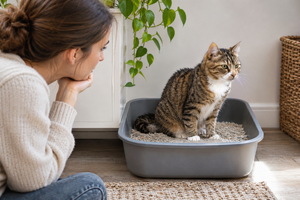
Physical Examination
The vet may examine the abdomen, hydration status, body condition and general mobility.
They may also ask about recent food consumption, medication, previous constipation episodes and changes in the household environment.
Abdominal X-Rays
X-rays can help identify accumulated faeces, abnormal colon enlargement and selected structural abnormalities.
They may also provide information about previous pelvic injuries or possible obstructions.
Blood Tests
Laboratory testing may identify kidney dysfunction, electrolyte abnormalities and other medical problems contributing to reduced bowel function.
Blood tests can also help establish whether a cat is medically suitable for sedation or general anaesthesia.
Ultrasound Examination
Ultrasound may help investigate abdominal organs, abnormal tissue and potential underlying digestive problems.
Not every constipated cat requires ultrasound. The veterinary team will recommend investigations according to the individual clinical findings.
Rectal Examination
A rectal examination may be appropriate when a problem affecting the lower digestive tract is suspected.
Sedation may be necessary to reduce discomfort and allow safe assessment.
How Is Constipation in Cats Treated?
Treatment depends on the underlying cause, hydration status and severity of retained faeces.
Veterinary-Prescribed Laxatives
Some cats benefit from medications that soften stools and help restore bowel movements.
Different products work in different ways, and the appropriate choice depends on the cat’s clinical condition.
Human laxatives should not be given without veterinary approval.
Fluid Therapy
Dehydrated cats may require prescribed fluid treatment to restore hydration and support recovery.
Fluid administration may take place at a veterinary practice, particularly when the cat is significantly unwell.
Veterinary Enemas
A veterinarian may administer a suitable enema when retained stools cannot pass normally.
Owners should never attempt to administer a human enema at home. Products containing sodium phosphate can cause life-threatening electrolyte disturbances in cats.
Removal of Impacted Faeces
Severe obstipation may require removal of retained faeces under general anaesthesia.
Additional hydration support, monitoring and treatment of underlying disease may also be necessary.
Medication to Improve Colon Function
Selected cats with chronic bowel motility problems may receive veterinary-prescribed medication that helps the colon move its contents.
These medicines are not appropriate for every patient, particularly when an obstruction is suspected.
Surgery for Severe Megacolon
When medical treatment repeatedly fails, surgery may be considered for cats with severe megacolon.
The veterinary team will assess the expected benefits, surgical risks, recovery requirements and long-term quality of life before recommending this option.
How Much Does Cat Constipation Treatment Cost in the UK?
The cost of treating constipation in cats varies considerably between straightforward outpatient cases and severe cases requiring diagnostic imaging, anaesthesia or hospitalisation.
Owners should request an itemised veterinary estimate before treatment whenever circumstances allow.
Published UK Veterinary Prices
Animal Trust publishes the following service prices.
| Veterinary service | Published price |
|---|---|
| Out-of-hours consultation | £80 |
| Referral consultation | £102.50 |
| Veterinary enema | £430 |
| X-rays including sedation | £430 |
| Detailed abdominal ultrasound | £430 |
| Day-patient admission | £535 |
Sources: Animal Trust procedure prices, diagnostic imaging prices and inpatient care prices. Animal Trust+2
These are published service prices from one UK veterinary provider, not national averages or guaranteed constipation treatment quotations.
Some hospital admission packages already include selected investigations, medications and fluids. Owners should establish what is included before adding individual charges together.
Example Constipation Treatment Budgets
The following scenarios illustrate how separately charged procedures could affect the total veterinary bill.
| Illustrative scenario | Calculation | Total |
|---|---|---|
| Emergency consultation and enema | £80 + £430 | £510 |
| Emergency consultation, X-rays and enema | £80 + £430 + £430 | £940 |
| Day-patient admission | Published package price | £535 |
The day-patient package is a separate pricing example, not an additional charge automatically applied to the other scenarios.
Actual bills may include further medication, laboratory testing, anaesthesia and follow-up care.
What Can Increase Constipation Treatment Costs?
Factors that may increase the final bill include:
- Repeated constipation or chronic megacolon.
- Additional diagnostic investigations.
- General anaesthesia.
- Prolonged hospitalisation.
- Treatment of underlying kidney or neurological disease.
- Specialist referral and surgery.
Owners managing recurrent constipation should also consider ongoing prescription food, medication and monitoring expenses.
Questions to Ask Your Vet About Treatment Costs
| Question | Why it matters |
|---|---|
| Is imaging necessary? | Helps establish likely diagnostic expenses |
| Does the procedure include anaesthesia? | Identifies possible additional charges |
| Are fluids and medication included? | Prevents unexpected treatment costs |
| Will my cat require hospitalisation? | Helps estimate inpatient expenses |
| Could treatment need repeating? | Supports longer-term financial planning |
| Can you process a direct insurance claim? | Helps determine upfront payment requirements |
Financial discussions should never delay emergency assessment when a urinary or intestinal obstruction is suspected.
Does Pet Insurance Cover Constipation in Cats?
UK pet insurance may cover medically necessary investigations and treatment associated with constipation when the condition meets the policy’s eligibility requirements.
However, coverage depends on exclusions, excesses, financial limits and previous medical history.
Pre-Existing Conditions
If a cat experienced recurring constipation before insurance cover began, related investigations or treatment may be excluded.
Insurers may consider previous symptoms and veterinary records even when a formal diagnosis had not yet been established.
Cover for Chronic Megacolon
Lifetime pet insurance may provide continuing financial support for eligible chronic conditions across annual renewals, subject to the policy terms.
Time-limited or maximum-benefit policies may restrict the duration or total amount of available cover.
This distinction can be important when cats require repeated treatment for megacolon.
Example Constipation Insurance Claim
Consider a hypothetical eligible veterinary bill of £940.
The insurance policy includes a £100 fixed excess and a 10% co-payment applied after the excess.
| Claim calculation | Amount |
|---|---|
| Eligible veterinary expenses | £940 |
| Fixed excess | £100 |
| Remaining eligible amount | £840 |
| Percentage co-payment | £84 |
| Potential insurer reimbursement | £756 |
| Total owner contribution | £184 |
This example assumes sufficient insurance benefits remain available and every listed expense is eligible.
Actual reimbursements depend on the insurer’s calculation method and policy wording.
What Expenses Might Not Be Covered?
Some insurance policies exclude therapeutic diets, routine preventive care, previous constipation-related conditions and expenses exceeding the available benefit limit.
Check the policy documents and speak with your insurer before assuming that long-term medication or specialist food will be covered.
How to Help a Constipated Cat at Home Safely
Home care can support veterinary treatment and reduce selected risk factors. However, it should not replace professional assessment when a cat is already struggling to pass stools.
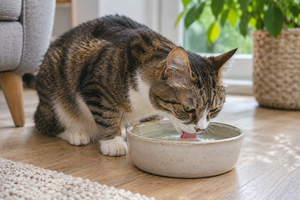
Encourage Water Consumption
Provide several clean water bowls in accessible areas around the home.
Some cats prefer drinking from wide ceramic bowls or water fountains.
A suitable wet-food diet may also contribute to daily moisture intake when recommended by your vet.
Improve Litter Tray Accessibility
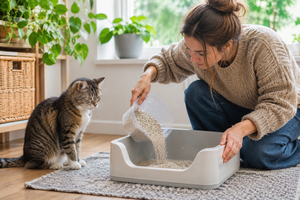
Choose a quiet location where your cat can toilet without being disturbed.
For older cats or those with arthritis, a low-entry litter tray may make access easier.
In multi-cat households, providing one tray per cat plus an additional tray can reduce competition.
Encourage Gentle Physical Activity
Regular movement may support general digestive health.
Short play sessions using appropriate toys can encourage activity without placing excessive strain on older cats.
Cats with mobility problems may require a modified exercise routine.
Brush Long-Haired Cats Regularly
Regular grooming helps remove loose fur and prevent matting around the hindquarters.
If matted fur develops close to the skin, ask a veterinary professional or experienced groomer for assistance rather than attempting to cut it away yourself.
Follow an Appropriate Feeding Plan
Discuss dietary fibre, moisture content and digestibility with your veterinary team.
A diet suitable for mild constipation may not be appropriate for severe megacolon or another underlying medical condition.
Home Remedies You Should Avoid
Some widely shared home remedies may be ineffective or dangerous for cats.
| Home remedy | Why it may be unsafe |
|---|---|
| Human enemas | Certain ingredients can cause serious poisoning |
| Human laxatives | Products and doses may be inappropriate |
| Milk | May cause digestive upset |
| Oral mineral oil | Can enter the lungs and cause serious complications |
| Abdominal massage | May cause discomfort or worsen an existing problem |
| Unsupervised fibre supplements | May be unsuitable for obstruction or poor colon function |
Never attempt to remove retained stools manually.
If your cat appears unable to pass faeces, contact your vet to establish an appropriate treatment plan.
A Practical Litter Tray Monitoring Record
Keeping a simple record can help identify gradual changes and provide useful information during veterinary appointments.
| Date | Stools passed | Stool consistency | Urination | Appetite | Behaviour |
|---|---|---|---|---|---|
| Monday | |||||
| Tuesday | |||||
| Wednesday | |||||
| Thursday | |||||
| Friday | |||||
| Saturday | |||||
| Sunday |
Owners can also record medication administration, changes in diet and unusual litter tray behaviour.
This record is particularly useful for cats receiving ongoing management for recurrent constipation.
Do not postpone veterinary treatment to complete the monitoring period.
How to Prevent Recurrent Cat Constipation
Prevention strategies should address the underlying cause rather than focusing exclusively on stool frequency.
Maintaining healthy hydration, suitable nutrition and accessible litter trays can support normal bowel function.
Regular veterinary examinations are particularly valuable for older cats and those with chronic health conditions.
Cats with previous severe constipation may require an individual prevention plan involving prescribed medication, dietary management and scheduled follow-up appointments.
Frequently Asked Questions
How long can a cat go without pooing?
There is no universally safe waiting period. If your cat’s bowel movements have changed significantly or it appears to struggle when toileting, contact your vet for advice.
Can constipation in cats resolve naturally?
Some mild changes in bowel movements may improve, but persistent constipation can become increasingly difficult to treat. Veterinary advice is recommended when symptoms develop.
Can wet food help a constipated cat?
Wet food can contribute to hydration and may be useful for some cats. However, the appropriate diet depends on the underlying cause and severity of constipation.
Can I give my cat olive oil for constipation?
Olive oil is not an established substitute for veterinary treatment. Giving oils or other home remedies may cause digestive upset or delay appropriate care.
Can stress cause constipation?
Stress may contribute to changes in toileting behaviour. Cats that avoid their litter trays may retain stools for longer than usual.
Can constipation cause vomiting in cats?
Yes. Vomiting can occur alongside significant constipation, but it may also indicate an obstruction or another serious medical condition requiring urgent assessment.
Is feline constipation painful?
Passing hard stools can cause discomfort, and severe faecal accumulation may be particularly distressing.
Can constipation become a permanent problem?
Some cats develop chronic bowel dysfunction or megacolon and require ongoing medical management. Early assessment of recurring symptoms can help establish an appropriate treatment plan.
Can a cat with constipation still urinate?
Yes. Constipation affects bowel movements rather than urine production directly. However, repeated straining without urine should always be treated as a potential urinary emergency.
Final Thoughts
Constipation in cats is a potentially serious digestive problem that should not be dismissed as a minor change in litter tray habits.
Recognising abnormal bowel movements, identifying possible urinary emergencies and obtaining appropriate veterinary treatment can help prevent avoidable complications.
A suitable feeding plan, adequate hydration and accessible litter trays may help reduce recurrence. Understanding veterinary expenses and insurance limitations also enables owners to prepare for unexpected treatment costs.
For more UK-focused pet health advice, veterinary cost guides and pet insurance information, explore PetCoverHQ.