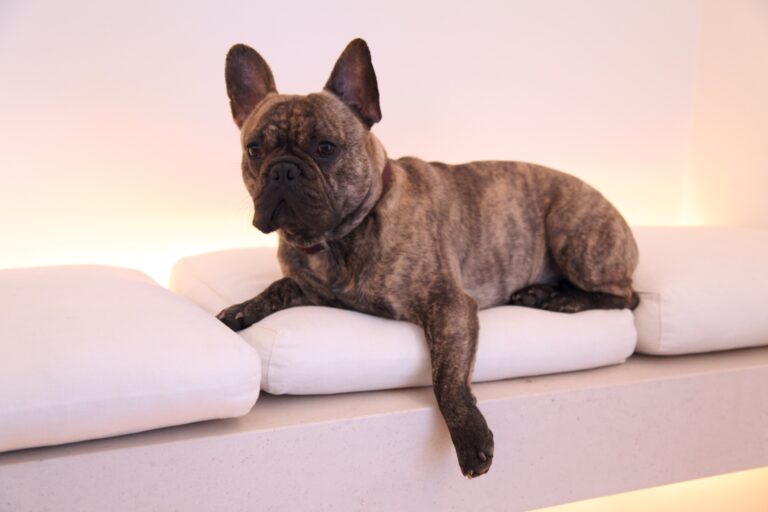
Flat-faced dogs pay for their looks in vet bills. Breathing problems lead the list, followed by eye ulcers, skin fold infections and back trouble. Animal Friends’ average claim for Brachycephalic Obstructive Airway Syndrome (BOAS) in French Bulldogs was £2,387 in 2024.
Insurance can cover these conditions, as long as your dog showed no signs before the policy started. That makes the timing of your cover, and the type of policy you choose, more important than for most breeds.
This guide covers the health problems seen in French Bulldogs, Pugs, Bulldogs and other flat-faced breeds, the breathing test to ask your breeder about, and what insurance costs and covers. It describes conditions and costs only. Your vet is the person to advise on your own dog’s health. Our guides to French Bulldog health problems and English Bulldog health problems go into more detail for each breed.
Every figure was checked on 25 October 2026.
Common Flat-Faced Dog Health Problems
Your dog’s short muzzle is the root of most of these problems. A large study by the Royal Veterinary College (RVC) compared 2,781 French Bulldogs with 21,850 other dogs. French Bulldogs had a higher risk of 20 of the 43 most common disorders.
Some of the gaps were very large. French Bulldogs were more than 42 times as likely to have narrowed nostrils, 30.9 times as likely to have BOAS and 11.2 times as likely to have skin fold dermatitis. Our breed health guide shows that flat-faced dogs also tend to live shorter lives.
The table shows what treatment can cost you, using Animal Friends’ claims for two of the most popular flat-faced breeds.
| Condition | Breed | Average claim |
|---|---|---|
| BOAS | French Bulldog | £2,387 |
| Eye ulcers | French Bulldog | £1,190 |
| Skin disease | French Bulldog | £931 |
| Eye ulcer | Pug | £1,071 |
| Tumour | Pug | £1,092 |
| Skin disease | Pug | £824 |
These are averages. Your bill could be higher. Many of these problems also come back.
The Financial Impact of Brachycephalic Obstructive Airway Syndrome (BOAS)
BOAS is a breathing disorder caused by the shape of a flat face, the PDSA explains. Narrow nostrils, a long soft palate and a crowded throat make it harder for your dog to move air. You may notice noisy breathing, snoring, or your dog struggling with exercise or hot weather.
It is the most expensive of the common problems. Animal Friends’ average BOAS claim for French Bulldogs was £2,387 in 2024, well above the £685 average for all pet claims that year, according to the Association of British Insurers.
BOAS is not limited to one breed. ManyPets says it is most often seen in English and French Bulldogs, and also affects Pugs, Boxers, Shih Tzus, Pekingese and Boston Terriers.
Your cover matters here. If your dog snored or struggled for breath before you bought the policy, the insurer may treat BOAS as pre-existing and exclude it.
Skin, Eye, and Spinal Conditions Driving Up Vet Bills
Beyond breathing, your three big costs are likely to be skin, eyes and the spine. Each can need treatment for years.
Skin fold dermatitis is soreness and inflammation in the wrinkles of your dog’s skin. The RVC study found French Bulldogs were 11.2 times as likely to have it. Animal Friends’ average skin disease claim was £931 for French Bulldogs and £824 for Pugs.
Eye ulcers are another common claim. Animal Friends’ average claim was £1,190 for French Bulldogs and £1,071 for Pugs.
The spine is the hidden risk. The PDSA lists back problems such as intervertebral disc disease among the conditions French Bulldogs may develop. Spinal surgery is expensive, and costs more again for flat-faced breeds.
Fitzpatrick Referrals, a specialist hospital, lists spinal decompression surgery (a hemilaminectomy) at £6,500, or £7,000 for brachycephalic breeds. That is £500 more for your dog.
Screening for Flat-Faced Breeds
The Respiratory Function Grading Scheme tests dogs for BOAS. It is run by the Royal Kennel Club and the University of Cambridge, and covers 17 breeds, including the French Bulldog, Bulldog, Pug, Boston Terrier and Boxer.
A trained vet listens to your dog’s breathing at rest. Your dog then moves at a brisk pace for three minutes, and the vet listens again. The result is one of four grades:
- Grade 0 or 1: clinically unaffected, though grade 1 has some breathing noise.
- Grade 2: moderate signs of BOAS that should be monitored.
- Grade 3: severe signs, and the dog should not be bred from.
Your dog can be tested from 12 months old, and the test should be repeated every two years. Each assessor sets its own fee. The Royal Kennel Club lists approved assessors.
If you are buying a puppy, ask for the grades of both parents. The PDSA also suggests looking for a Kennel Club Assured breeder, who must carry out extra health tests.
A good grade lowers the risk but does not remove it. BOAS can develop later in life, which is why repeat testing is advised.
Cost of Insuring a Flat-Faced Dog
Flat-faced breeds cost more to insure than most dogs. The median quote for a French Bulldog was £16.62 a month in MoneySuperMarket quote data for July to September 2026. A mongrel’s median quote was £9.43.
Those are quotes people were offered, not what you will pay. Your dog’s age, your postcode and the cover you choose all change the price.
French Bulldog Insurance Costs
At £16.62, the French Bulldog had the highest median quote of the dog breeds MoneySuperMarket published. That works out at about £199 a year, compared with £156.66 for the median dog.
The price you pay reflects the claims. With BOAS, eye ulcers and skin disease all common, insurers expect to pay out more often.
Your premium will also rise as your dog ages. Petplan says premiums increase every year as pets get older and treatment costs rise.
English Bulldog and Pug Insurance Costs
MoneySuperMarket does not publish median quotes for Bulldogs or Pugs. Get quotes from several insurers for your own dog before you decide.
Check your breed is accepted. Tesco says it does not insure some dog breeds, and Petplan only starts new lifetime cover for some breeds up to age 5, compared with 8 for most dogs.
Pug claims give you a guide to the risks. Animal Friends’ top three Pug claims in 2024 were tumours at £1,092, eye ulcers at £1,071 and skin disease at £824.
What Insurance Covers for Flat-Faced Dogs
Most insurers cover BOAS, ManyPets says, but the usual exclusions apply, including pre-existing conditions. The same goes for eye, skin and spinal problems. Check your policy wording for any exclusions that name your breed or a condition. Read it before you buy.
Lifetime vs. Maximum Benefit Cover
Lifetime cover gives you a vet fee limit that refreshes every year you renew. If your dog has skin fold infections every summer, you can claim each year.
Maximum benefit cover pays a fixed sum for each condition, with no time limit. Once that sum is spent, the condition is not covered again. For problems that keep coming back, that sum can run out quickly.
Our comparison of lifetime and time-limited cover explains each type in detail.
Handling Pre-Existing Condition Exclusions
A pre-existing condition is one your dog showed signs of before your cover started. Animal Friends does not cover them, and counts signs that appear during the waiting period too. Petplan asks about past conditions and then decides what it can cover.
With a flat-faced puppy, buy early. Animal Friends insures dogs from 4 weeks, Petplan from 6 weeks and Tesco from 8 weeks. A breeder may also give you free cover for the first few weeks.
Ask the breeder for your puppy’s vet records too. Any noisy breathing noted before your policy starts could be excluded. Our guide to pre-existing conditions explains how insurers decide.
Actionable Ways to Reduce Your Dog’s Insurance Premium
You can lower the cost, but avoid cutting the cover your dog is most likely to need. A low vet fee limit can save money on the premium and leave you short on a £2,387 BOAS bill. These steps help:
- Insure your puppy before any signs appear, so fewer conditions are excluded.
- Choose a higher excess if you could afford it on each claim.
- Compare quotes every year, as your renewal price will rise.
Watch for a co-payment as your dog gets older. Several insurers add one, usually 20% of each claim, from a set age: 5 or 8 at Tesco depending on breed, 7 at Churchill and 8 at Animal Friends. Our guide to lowering your premium has more ideas.
Frequently Asked Questions (FAQ)
Does pet insurance cover BOAS surgery?
Usually, yes, if your dog showed no signs before the policy started. ManyPets says most insurers cover BOAS, with the usual exclusions. If your dog had breathing problems first, expect BOAS to be excluded.
Why is French Bulldog insurance so expensive?
Because French Bulldogs claim more often, and for costly conditions. The RVC found they had a higher risk of 20 of 43 common disorders. Animal Friends’ average BOAS claim for the breed was £2,387.
What is the best insurance for an English Bulldog?
A lifetime policy with a high annual vet fee limit suits most Bulldogs. Breathing, skin and eye problems often need treatment year after year. Check that the insurer accepts the breed and look for any named exclusions. Our guide to hereditary conditions explains how they are treated.
Will insurers cover a flat-faced rescue dog?
Yes, but conditions in the dog’s records before your cover starts will usually be excluded. Ask the rescue centre for full vet records. Petplan says pets adopted from a rescue organisation can choose its lifetime cover with no upper age limit.
You know a flat-faced dog’s biggest risks from the start. Choose cover that will still pay for them in five years, not just this one.
Content is provided for informational purposes only and does not constitute veterinary or financial advice. Speak to your vet about your dog’s health.