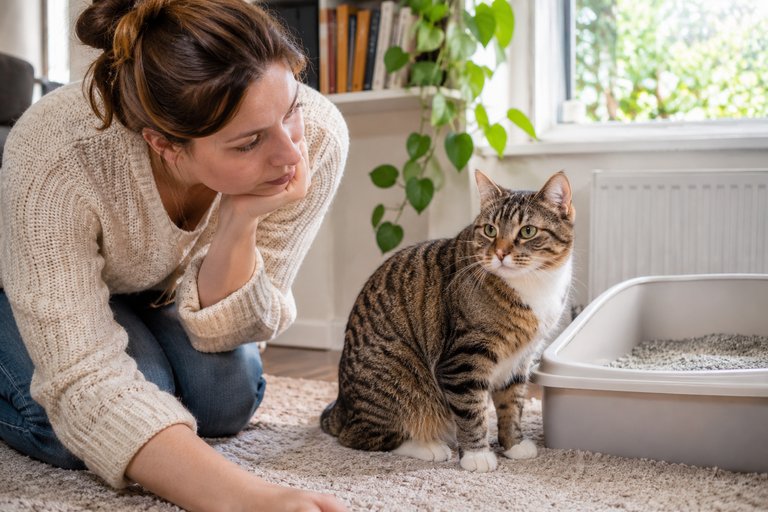
Urinary tract problems in cats can cause painful urination, frequent litter tray visits, blood in the urine and unexpected accidents around the home. Although some conditions are manageable with appropriate treatment, others can become life-threatening without immediate veterinary attention.
One particularly dangerous complication is urethral obstruction, which prevents a cat from emptying its bladder. Male cats are especially vulnerable because of the shape and size of their urethra.
This guide explains common urinary conditions, emergency warning signs, treatment options, UK veterinary costs and practical prevention strategies. For more independent pet health and insurance guidance, explore PetCoverHQ.
What Are Urinary Tract Problems in Cats?
Urinary problems can affect different parts of a cat’s urinary system, including the kidneys, ureters, bladder and urethra.
Feline lower urinary tract disease, commonly abbreviated to FLUTD, describes a group of conditions affecting the bladder and urethra. It is an umbrella term rather than a specific diagnosis.
Different underlying conditions can produce almost identical symptoms. This means owners cannot reliably determine whether a cat has an infection, bladder inflammation or urinary stones based on behaviour alone.
FLUTD vs UTI: What Is the Difference?
FLUTD should not be confused with a urinary tract infection, commonly called a UTI.
| Condition | Meaning |
|---|---|
| FLUTD | A group of lower urinary tract disorders |
| UTI | An infection affecting the urinary system |
| Cystitis | Inflammation of the bladder |
| Urolithiasis | Formation of urinary stones |
| Urethral obstruction | A blockage preventing normal urination |
A cat showing urinary symptoms does not necessarily have a bacterial infection. Antibiotics are therefore not appropriate for every case.
What Are the Symptoms of Urinary Tract Problems in Cats?
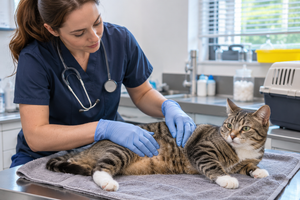
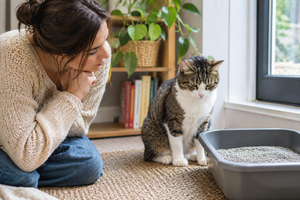
Changes in litter tray behaviour are often among the earliest warning signs.
Owners should pay particular attention to the amount of urine produced, rather than simply counting how often their cat visits the litter tray.
| Symptom | What you may notice | Recommended action |
|---|---|---|
| Frequent urination | More litter tray visits than usual | Contact your vet |
| Painful urination | Crying or discomfort while urinating | Prompt veterinary assessment |
| Blood in urine | Pink, red or brown urine | Contact your vet promptly |
| Urinating outside the tray | Wet patches on floors or furniture | Arrange a veterinary examination |
| Excessive grooming | Repeated licking around the genital area | Seek veterinary advice |
| Straining with little or no urine | Repeated unsuccessful attempts | Emergency veterinary care |
| Vomiting or collapse with urinary symptoms | Significant deterioration | Emergency veterinary care |
The Cats Protection guide to urinary problems provides additional information about recognising abnormal urination. Cats Protection
Why Is My Cat Suddenly Peeing Outside the Litter Tray?
A sudden change in toileting habits may indicate discomfort rather than a behavioural problem.
Some cats associate their litter tray with painful urination and begin using alternative locations.
Others may experience stress related to litter tray placement, household changes or competition with other pets.
Arrange a veterinary examination before assuming that inappropriate urination is simply a training issue.
Punishing a cat for urinating outside its tray can increase stress and may worsen the situation.
What Causes Urinary Tract Problems in Cats?
Several medical and environmental factors can contribute to urinary symptoms.
1. Feline Idiopathic Cystitis (FIC)
Feline idiopathic cystitis involves bladder inflammation without an identifiable specific cause.
Stress is an important contributing factor, and affected cats may experience recurring episodes throughout their lives.
Potential triggers include changes in household routines, moving home, conflict between cats and competition for essential resources.
PDSA provides a detailed guide to feline idiopathic cystitis, including its long-term management. PDSA
2. Bacterial Urinary Tract Infections
Bacterial infections occur when harmful bacteria multiply within the urinary system.
They may be associated with underlying conditions such as diabetes, kidney disease or urinary stones.
Older cats and those with certain medical conditions may require additional investigations when infections develop.
Urine testing helps determine whether bacteria are responsible for the symptoms.
3. Urinary Crystals and Bladder Stones
Minerals within urine can form crystals or larger stones.
Two commonly encountered types are struvite and calcium oxalate.
Not all urinary crystals cause clinical disease. However, some stones can irritate the bladder or obstruct normal urine flow.
Treatment depends on the type, size and location of the stones.
4. Urethral Obstruction
A urethral obstruction occurs when urine cannot pass normally through the urethra.
Inflammatory material, crystals, stones and urethral swelling may contribute to the blockage.
This condition requires emergency veterinary treatment because urine cannot leave the bladder effectively.
5. Reduced Water Intake
Cats that consume insufficient moisture may produce more concentrated urine.
Increasing water intake can form part of a veterinary management plan for certain urinary conditions.
Read our guide to dehydration in cats for practical information about hydration and recognising changes in drinking behaviour.
6. Other Medical Conditions
Diabetes, kidney disorders, abnormal growths and neurological problems can also affect urination.
Increased urine production should be distinguished from frequent attempts to pass small amounts.
The difference helps guide veterinary investigations.
When Are Urinary Tract Problems in Cats an Emergency?
A suspected urinary blockage requires immediate veterinary attention.
If your cat repeatedly attempts to urinate but produces little or no urine, contact an emergency vet immediately.
Do not wait until the following morning or until your cat stops eating.
Additional warning signs include:
- Severe discomfort around the litter tray.
- Repeated unsuccessful attempts to urinate.
- A painful abdomen.
- Vomiting or marked weakness.
- Sudden collapse.
An untreated blockage can damage the kidneys and cause dangerous changes in electrolyte levels, affecting the heart.
Read PDSA’s blocked bladder guidance for further information about this emergency. PDSA
Why Are Male Cats More Vulnerable?
Male cats have a longer, narrower urethra than female cats.
This anatomical difference increases their susceptibility to urinary obstruction.
However, female cats can also develop serious urinary conditions.
Any cat experiencing difficulty passing urine needs appropriate veterinary assessment.
Urinary Blockage vs Constipation
Urinary straining can resemble constipation because both conditions may involve repeated litter tray visits and unsuccessful attempts to eliminate waste.
| Observation | Urinary problem | Constipation |
|---|---|---|
| Urine output | May be reduced or absent | May remain normal |
| Stool output | May remain normal | Often reduced |
| Stool consistency | Not necessarily affected | May be hard and dry |
| Repeated straining | Common | Common |
| Emergency risk | Potentially life-threatening blockage | Depends on severity and cause |
These differences are not sufficient for a home diagnosis.
If you cannot determine whether your cat is passing urine, seek urgent veterinary advice.
For additional information about bowel-related symptoms, read our constipation in cats guide.
How Do Vets Diagnose Urinary Problems?
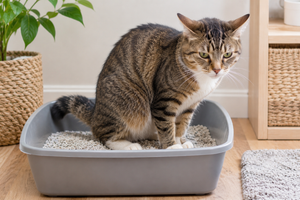
Veterinarians investigate urinary symptoms by combining the cat’s medical history, physical examination and appropriate diagnostic tests.
Your vet may ask when symptoms started, whether your cat is producing urine and whether similar episodes have occurred previously.
| Diagnostic test | What it helps investigate |
|---|---|
| Physical examination | Bladder size, discomfort and general health |
| Urinalysis | Urine concentration, blood and crystals |
| Urine culture | Bacterial infection and antibiotic susceptibility |
| Blood tests | Kidney function and electrolyte abnormalities |
| X-rays | Certain urinary stones and structural changes |
| Ultrasound | Bladder abnormalities, stones and surrounding tissues |
The choice of tests depends on the suspected condition.
Cats experiencing an obstruction may need emergency stabilisation before all investigations can be completed.
Can You Collect a Cat Urine Sample at Home?
A vet may ask you to collect a urine sample using non-absorbent litter.
However, home-collected samples may become contaminated and are not suitable for every diagnostic test.
Follow your practice’s instructions about collection, storage and delivery.
Never delay emergency veterinary care while attempting to obtain a sample.
How Are Urinary Tract Problems in Cats Treated?
Treatment depends on the underlying diagnosis. There is no single medication or diet suitable for every urinary disorder.
Prescription Pain Relief
Bladder inflammation and urinary stones can cause significant discomfort.
Your vet may prescribe appropriate medication to manage pain.
Never give a cat human painkillers, including paracetamol or ibuprofen.
Antibiotics for Bacterial Infections
Antibiotics may be prescribed when bacterial infection is identified or strongly suspected.
They are not routinely appropriate for non-bacterial cystitis.
The PDSA guide to bladder infections in cats explains why underlying conditions may also need investigation. PDSA
Prescription Urinary Diets
Certain therapeutic diets can help manage specific urinary conditions.
Some struvite stones can be dissolved through an appropriate veterinary dietary programme.
Calcium oxalate stones generally cannot be dissolved through dietary treatment.
A prescription diet should be chosen according to the diagnosis rather than the presence of urinary symptoms alone.
Urinary Catheterisation
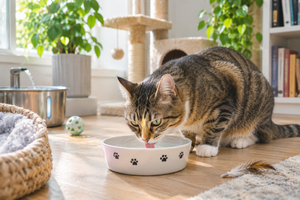
A cat with an obstructed urethra may need a urinary catheter to restore urine flow.
Treatment can also involve intravenous fluids, medication and hospital monitoring.
The veterinary team may recommend keeping the catheter in place during the initial recovery period.
Surgery
Surgery may be necessary to remove selected bladder stones or manage recurring obstructions.
One possible procedure for selected male cats is perineal urethrostomy, which creates a wider urinary opening.
Although surgery may reduce the risk of certain future obstructions, it does not eliminate every underlying urinary condition.
How Much Does Cat Urinary Treatment Cost in the UK?
The cost of treating urinary tract problems in cats depends on the diagnosis, severity and level of veterinary care required.
A routine consultation for bladder inflammation may cost considerably less than emergency hospitalisation for a urinary obstruction.
Published UK Veterinary Prices
The following figures are examples from published UK veterinary price lists, not estimated national averages.
| Veterinary service | Published price | Provider |
|---|---|---|
| Standard consultation | £58 | Royal Veterinary College |
| Basic urine screening | £23.18 | Royal Veterinary College |
| Single-organ abdominal ultrasound | £128.17 | Royal Veterinary College |
| Lower urinary investigation without cystoscopy | From £2,000 | Langford Vets |
| FLUTD investigation and medical management | From £3,900 | Langford Vets |
| Stable blocked cat treatment | £1,500–£2,500 | Dragon Veterinary Referrals |
| Unstable blocked cat treatment | £1,750–£6,000 | Dragon Veterinary Referrals |
Sources: Royal Veterinary College price list, Langford Vets internal medicine prices and Dragon Veterinary Referrals pricing. Royal Veterinary College, RVC+2
These services differ in complexity and are not directly comparable. Referral hospital packages may include several investigations and inpatient care.
£0£1,5 N£3 N£4,5 NConsultationBasic urine screenUltrasoundLower urinary inves…FLUTD management (f…
What Should a Veterinary Estimate Include?
Before agreeing to non-emergency investigations, ask whether the estimate includes consultation fees, laboratory tests, sedation, imaging, medication, hospitalisation, follow-up appointments and VAT.
For emergency cases, ask the veterinary team to explain the initial stabilisation costs and how the estimate might change during treatment.
Read our UK emergency vet costs guide to understand how out-of-hours care can affect veterinary bills.
Does Pet Insurance Cover Urinary Tract Problems in Cats?
UK pet insurance may cover eligible investigations and treatment for urinary conditions, depending on the policy terms.
A policy might cover urine testing, prescription medication, catheterisation, surgery and hospitalisation when the condition qualifies for cover.
However, exclusions and financial limits can affect how much an insurer pays.
What About Recurring Cystitis?
Recurring bladder problems can create ongoing veterinary expenses.
If urinary symptoms were documented before a policy began, the insurer may classify subsequent related treatment as a pre-existing condition.
Our guide to pet insurance and pre-existing conditions explains why previous symptoms and medical records matter.
Example: How an Insurance Excess Affects Your Claim
Consider an illustrative £2,000 veterinary bill for an eligible urinary condition.
| Item | Amount |
|---|---|
| Eligible veterinary bill | £2,000 |
| Fixed excess | £100 |
| Remaining eligible amount | £1,900 |
| Additional 10% co-payment | £190 |
| Potential insurer payment | £1,710 |
| Total owner contribution | £290 |
This example assumes the percentage co-payment is calculated after the fixed excess, with no other exclusions or limits.
Actual claim calculations depend on the insurance policy.
Do not delay emergency treatment while waiting for an insurer to confirm coverage.
How to Reduce Urinary Tract Problems in Cats
Although not every urinary condition is preventable, changes to diet, hydration and the home environment may help reduce selected risk factors.
Increase Water Availability
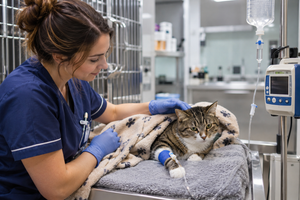
Provide fresh water in several accessible locations.
Some cats prefer wide bowls, while others are more interested in moving water from a fountain.
Keep drinking areas away from litter trays and clean water containers regularly.
Consider Moisture-Rich Food
Wet food can contribute substantially to total water intake.
If your cat requires a therapeutic urinary diet, discuss suitable wet-food options with your vet before changing its food.
Provide Enough Litter Trays
A useful starting point is one litter tray per cat, plus one additional tray.
For example:
| Number of cats | Suggested starting number of trays |
|---|---|
| 1 cat | 2 trays |
| 2 cats | 3 trays |
| 3 cats | 4 trays |
| 4 cats | 5 trays |
Place the trays in separate, quiet locations rather than grouping them together.
Individual household needs may vary.
Reduce Environmental Stress
Provide comfortable hiding places, separate resting areas and predictable daily routines.
Cats living together should have opportunities to eat, drink and rest without competing directly for resources.
Introduce significant household changes gradually whenever possible.
Maintain a Healthy Weight
Regular play and appropriate feeding can support healthy body condition.
Ask your vet to recommend an individual weight-management plan if your cat is overweight.
Follow Veterinary Treatment Plans
Cats with previous urinary disease may require long-term dietary management or periodic investigations.
Even when symptoms improve, continue the agreed management programme and attend recommended follow-up appointments.
A Practical Urinary Health Monitoring Checklist
For healthy cats or cats recovering under veterinary supervision, recording normal habits can help identify meaningful changes.
| Observation | What to record |
|---|---|
| Litter tray visits | Frequency compared with normal |
| Urine clumps | Number and approximate size |
| Urine appearance | Any visible colour changes |
| Toileting behaviour | Straining, crying or unusual posture |
| Water intake | Increased or reduced drinking |
| Appetite | Normal, reduced or absent |
| Grooming | Excessive licking around the genital area |
| Environmental changes | New pets, visitors or household disruption |
| Previous episodes | Dates, treatments and recovery |
In households with several cats, shared litter trays can make individual urine output difficult to assess.
If you suspect an obstruction, contact a vet immediately rather than spending additional time monitoring.
Frequently Asked Questions
Can urinary tract problems in cats go away on their own?
Some episodes of bladder inflammation may improve temporarily, but similar symptoms can indicate an obstruction or another serious condition. Veterinary assessment remains important.
Why is my cat producing only drops of urine?
Small amounts of urine may indicate bladder inflammation, urinary stones or a partial obstruction. Seek urgent veterinary advice.
Can stress cause urinary problems in cats?
Stress is associated with feline idiopathic cystitis and may contribute to recurring symptoms in susceptible cats.
Are urinary tract infections contagious between cats?
Typical bacterial UTIs are not generally spread through ordinary contact between household cats.
Can dry food cause urinary problems?
Dietary moisture and urine concentration can influence urinary health. However, dry food alone does not explain every case, and individual dietary needs vary.
Can a cat have urinary problems without blood in its urine?
Yes. Visible blood is not present in every urinary condition. Changes in litter tray behaviour or urine output may be the first noticeable signs.
Does neutering prevent urinary blockage?
Neutering does not eliminate the risk of urinary obstruction. Neutered male cats can still develop serious urinary disease.
Can urinary blockage happen again after treatment?
Yes. Some cats experience repeated obstructions and may require ongoing dietary, environmental or medical management.
Final Thoughts
Urinary tract problems in cats range from manageable bladder inflammation to life-threatening urinary obstruction.
Recognising changes in urine output, litter tray behaviour and general health can help owners seek appropriate veterinary treatment earlier.
Good hydration, suitable litter tray arrangements and reduced environmental stress may support long-term urinary health. However, difficulty passing urine should never be managed through home remedies alone.
For more UK-focused pet health advice, veterinary cost guides and independent insurance information, visit PetCoverHQ.