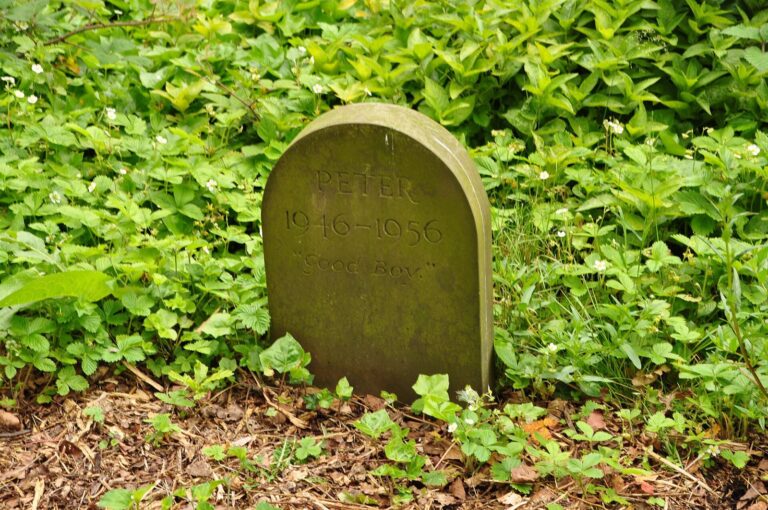
Losing a beloved pet can be one of the most difficult experiences in an owner’s life. Whether your dog or cat has died suddenly, passed away after an illness or been put to sleep, you may be feeling overwhelmed, confused or unsure what to do next.
If you need someone to talk to, pet bereavement support UK services are available through charities such as Blue Cross and Cats Protection.
Blue Cross operates a Pet Loss Support service on 0800 096 6606, while Cats Protection offers its free Paws to Listen service on 0800 024 94 94.
You do not need to make every decision immediately. Your veterinary practice can explain what happens next and help you understand your options for cremation, burial and any necessary arrangements.
This PetCoverHQ guide explains where to find confidential support, what to do when a pet dies, how to arrange a farewell and whether pet insurance can help with the costs.
Where Can You Get Pet Bereavement Support in the UK?
Several UK charities provide emotional support for people grieving the loss of an animal.
These services recognise that pets are important companions and that their loss can have a profound emotional impact.
You can contact them whether your pet has recently died or you are still struggling with a loss that happened some time ago.
Blue Cross Pet Loss Support
Blue Cross provides a confidential Pet Loss Support service for people grieving an animal.
<box> **Blue Cross Pet Loss Support**
Telephone: 0800 096 6606
Opening hours: Every day, 8.30am–8.30pm
Other support: Webchat, email, online contact form and moderated Facebook community
</box>
The service is intended for people experiencing grief following the death of a pet.
It can also support owners facing difficult decisions about an animal’s health or end-of-life care.
Blue Cross offers several ways to get in touch.
You can speak to someone by telephone or webchat during its published opening hours.
Email support is also available, with the charity stating that it aims to respond within 48 hours.
Visit the Blue Cross pet bereavement support page for current contact details.
Cats Protection Paws to Listen
Cats Protection operates Paws to Listen, a free and confidential telephone service for people grieving a cat.
<box> **Cats Protection Paws to Listen**
Telephone: 0800 024 94 94
Opening hours: Monday to Friday, 9am–5pm, excluding bank holidays
Other support: Online contact form and callback arrangements when available
</box>
The service supports people whose cats have died, gone missing or been rehomed.
Volunteers provide a compassionate listening service rather than professional counselling.
You do not need to have experienced a recent loss to get in touch.
Visit Cats Protection’s grief support page for more information.
Samaritans: Support at Any Time
Grief can feel particularly difficult during evenings, nights or weekends.
If you need emotional support outside the specialist pet bereavement helpline hours, Samaritans is available.
Telephone: 116 123
The service is free and available 24 hours a day, every day.
Samaritans is not specifically a pet loss service, but its volunteers can listen when you are struggling emotionally.
If you or someone else is in immediate danger, call 999.
UK Pet Bereavement Helplines Compared
The following table summarises the services described above.
| Service | Telephone | Opening Hours | Who It Supports |
|---|---|---|---|
| Blue Cross Pet Loss Support | 0800 096 6606 | Daily, 8.30am–8.30pm | People grieving the loss of a pet |
| Cats Protection Paws to Listen | 0800 024 94 94 | Weekdays, 9am–5pm | People grieving a cat, including missing or rehomed cats |
| Samaritans | 116 123 | 24 hours, every day | Anyone needing emotional support |
Contact details and hours were recorded in October 2026. Check the charities’ official websites for changes.
You can use these services even if friends or family members do not fully understand what your pet meant to you.
What to Do When Your Dog or Cat Dies
When a pet dies, it can be difficult to think clearly about practical arrangements.
There is no need to handle every decision immediately.
The next steps depend partly on whether your pet died at home or at a veterinary practice.
Step 1: Contact Your Veterinary Practice
If your pet dies unexpectedly at home, contact your vet for advice.
If you are uncertain whether your pet has died, seek urgent veterinary guidance.
Your vet can explain the available arrangements and may be able to care for your pet’s body while you decide what to do.
If your pet dies at the veterinary practice, the team can discuss the options with you.
Step 2: Consider Cremation or Burial
You may choose cremation, burial or another arrangement permitted in your area.
This is a personal decision.
Some owners want their pet’s ashes returned, while others prefer a communal cremation or a private burial.
Step 3: Decide Whether You Want the Ashes Returned
Individual cremation generally allows your pet’s ashes to be returned.
Communal cremation usually does not.
Ask the crematorium or veterinary practice to explain its procedures.
Step 4: Ask About Costs
Your vet can provide information about cremation services and associated charges.
Prices depend on the animal’s size, the provider and the service selected.
Our guides to dog cremation costs in the UK and dog euthanasia costs explain the financial considerations.
Step 5: Take Time Before Making Other Decisions
You may not feel ready to put away your pet’s belongings, photographs or favourite toys.
There is no universal timetable for these decisions.
You can keep meaningful items, create a memorial or wait until you feel ready.
What Happens If Your Pet Dies at Home?
A pet dying at home can be especially distressing when the death is unexpected.
Contact your veterinary practice for advice about what happens next.
Your vet may recommend bringing your pet to the practice or arranging collection through an appropriate service.
Can Your Vet Keep Your Pet’s Body?
Veterinary practices can often arrange appropriate temporary care while owners consider cremation or burial.
Ask what services are available and whether any storage or collection charges apply.
What If the Death Was Unexpected?
Your vet may discuss whether further examination is appropriate, particularly if the cause of death is unknown.
If you have concerns about poisoning, infectious disease or another unusual circumstance, tell the veterinary team.
They can advise on safe handling and whether further investigation is needed.
Pet Cremation Options in the UK
Cremation is a common choice for owners who do not want or cannot arrange a burial.
There are two main options.
Individual Pet Cremation
With individual cremation, your pet is cremated separately under the provider’s procedures.
The ashes can usually be returned to you.
Owners may choose an urn, casket or another memorial container.
Communal Pet Cremation
With communal cremation, several animals are cremated together.
Individual ashes are not normally returned.
This may be a less expensive option, depending on the provider.
How Long Does It Take to Receive the Ashes?
The timeframe varies.
Your vet or crematorium can explain when the ashes are likely to be available.
Cats Protection notes that providers will often look after ashes until owners feel ready to collect them.
You do not have to make that decision before you are emotionally prepared.
Can You Bury a Dog or Cat in Your Garden?
In England, owners can generally bury their own pet dog or cat on their own land without obtaining specific permission, subject to relevant environmental and safety requirements.
However, rules and circumstances can differ across the UK.
Garden Burial Considerations
Before arranging a burial, check:
- Whether you own the land or have the necessary permission.
- Whether the location is suitable.
- Whether the grave is sufficiently deep.
- Whether the burial could affect water sources.
- Whether your pet received medication that creates a risk.
- Whether infectious disease precautions are required.
The RSPCA advises that a pet’s grave should be sufficiently deep, commonly around four feet or 1.2 metres, and located away from water sources.
Can You Bury a Pet on Public Land?
Do not assume you can bury a pet in a public park, woodland or other land you do not own.
Permission and local rules may apply.
What About Pets That Received Chemotherapy?
Some veterinary treatments can affect whether home burial is appropriate.
PDSA advises that pets recently treated with chemotherapy or affected by certain contagious diseases may require special arrangements.
Ask your vet before taking your pet home for burial.
Are the Rules the Same Across the UK?
No. Burial and environmental requirements may differ between England, Scotland, Wales and Northern Ireland.
Check the relevant local authority or environmental guidance before proceeding.
For England, consult the government’s animal burial and groundwater protection guidance.
Does Pet Insurance Pay Out When a Pet Dies?
Some pet insurance policies provide financial benefits when an insured animal dies.
However, these benefits vary considerably.
A policy may cover certain veterinary expenses without providing compensation for the animal’s death.
Other policies include separate benefits for death from accident, death from illness, euthanasia, cremation or burial.
Common Pet Insurance Benefits
| Benefit | What It May Cover |
|---|---|
| Death from illness | A payment following an eligible illness-related death |
| Death from accident | A payment following an eligible accidental death |
| Euthanasia | Eligible veterinary costs for putting a pet to sleep |
| Cremation | A contribution towards eligible cremation expenses |
| Burial | A contribution towards eligible burial expenses |
| Bereavement helpline | Emotional support through a dedicated service |
Not all policies include these benefits. Age restrictions, exclusions and financial limits may apply.
Pet Insurance Providers and Bereavement Benefits
The following examples are based on policy information reviewed in October 2026.
Petplan
Petplan’s reviewed policy information includes eligible euthanasia costs under its veterinary fee benefits.
Whether the policy also pays a death benefit depends on the selected cover and the animal’s age.
Owners should check the relevant policy wording.
Tesco Pet Insurance
Tesco’s reviewed policies include death benefits of up to £1,500 for eligible circumstances.
Its Saying Goodbye benefit also provides up to £200 towards eligible cremation or burial costs.
However, age-related restrictions apply.
For example, certain illness-related death benefits do not apply to cats over ten years old.
Our Tesco pet insurance review explains the policy in more detail.
ManyPets
The original policy comparison identifies death benefit limits ranging from £500 to £6,000, depending on the selected plan.
Eligibility and the reason for death affect whether a payment is available.
Read our ManyPets insurance review for further details.
Churchill
Churchill’s reviewed pet insurance benefits include access to a 24-hour bereavement helpline.
Other assistance services may include veterinary information and pet-related legal guidance.
These support services are different from financial benefits for cremation or death.
How to Claim on Pet Insurance After Your Pet Dies
Making an insurance claim may be one of the last things you want to deal with while grieving.
However, policy deadlines and documentation requirements can apply.
Step 1: Find Your Policy Documents
Check the policy schedule and wording.
Look for sections covering death from illness, death from accident, euthanasia and cremation or burial.
Step 2: Contact Your Insurer
Tell the insurer what happened and ask which benefits may apply.
The insurer can explain its claims procedure and required documents.
Step 3: Gather Supporting Documents
Depending on the claim, you may need:
- Your policy number.
- Veterinary records.
- A veterinary statement confirming the death.
- Euthanasia invoices.
- Cremation or burial invoices.
- Proof of purchase or ownership where required.
Step 4: Check the Claim Deadline
Different insurers apply different time limits.
The original policy information reviewed for this guide identifies a 12-month treatment-related deadline for Petplan and a six-month claims deadline for ManyPets.
However, these may not apply in the same way to every death benefit.
Confirm the deadline for your specific claim directly with the insurer.
Step 5: Submit the Claim
Follow the insurer’s instructions and retain copies of documents.
If the insurer requests more information, your veterinary practice may be able to help.
Step 6: Ask About the Policy’s End Date
When your pet dies, contact the insurer to confirm when the policy ends and whether any premium refund or further payment is due.
Do not assume the policy will automatically stop charging premiums without notification.
Our guides to claiming on pet insurance and documents needed for a pet insurance claim explain the process.
How Grief After Losing a Pet Can Feel
The relationship between a person and their pet can be deeply meaningful.
A dog or cat may have been part of everyday routines for many years.
When that companionship ends, the absence can affect daily life in unexpected ways.
Common Feelings After Pet Loss
You may experience:
- Sadness.
- Loneliness.
- Anger.
- Guilt.
- Shock.
- Numbness.
- Difficulty concentrating.
- Changes in sleep or appetite.
- A sense that your home feels different.
These reactions can vary from person to person.
Some people experience intense grief immediately, while others notice their feelings changing over time.
Feeling Guilty After Euthanasia
Owners sometimes question whether they made the right decision about euthanasia.
You may wonder whether you acted too soon or waited too long.
These questions can be particularly painful when your pet had a serious illness.
If you are struggling with the decision, consider speaking with your vet about the medical circumstances and the reasons treatment or euthanasia was recommended.
You can also contact a pet loss support service.
What If Other People Do Not Understand?
Not everyone understands the emotional significance of losing a pet.
Some people may minimise the loss or expect you to recover quickly.
Their response does not determine how important your relationship was.
Talking with someone who understands pet bereavement may help you feel less isolated.
How to Cope With the Loss of a Dog or Cat
There is no single correct way to grieve.
However, some practical approaches may provide comfort.
Talk About Your Pet
You might find it helpful to share memories with friends, relatives or a pet bereavement volunteer.
You can talk about your pet’s personality, routines and the moments you enjoyed together.
Create a Memorial
Some owners choose to create a small memorial.
Ideas include:
- A framed photograph.
- A memory box.
- A favourite collar or toy.
- A written tribute.
- A scrapbook.
- A plant or tree in a suitable location.
You do not need to create a memorial unless it feels meaningful to you.
Maintain Gentle Daily Routines
The loss of a pet can disrupt everyday habits.
Walks, feeding times and evening routines may suddenly feel unfamiliar.
Maintaining regular meals, sleep and social contact may help provide structure during a difficult period.
Give Yourself Time
Grief does not follow a fixed timetable.
Some days may feel easier than others.
Anniversaries, familiar places or photographs can bring back strong emotions.
Seek Additional Support When Needed
If grief is making it difficult to manage daily life, consider speaking to your GP.
Professional mental health support may be appropriate when distress is persistent or significantly affecting your wellbeing.
Helping Children Cope With Pet Bereavement
For some children, the death of a pet is their first experience of bereavement.
They may have questions about what happened and whether the pet will return.
Use Clear, Age-Appropriate Language
Explain what happened in a way the child can understand.
Avoid confusing expressions that may lead younger children to believe the pet is simply sleeping or temporarily away.
Encourage Questions
Children may ask the same question several times.
Answer gently and honestly, according to their age and understanding.
Allow Different Reactions
A child may cry, become quiet, seem angry or return to playing soon afterwards.
Their reaction may change over time.
Include Them in Remembering the Pet
If appropriate, children may want to draw a picture, choose a photograph or participate in a small memorial.
Participation should be optional.
Supporting Another Pet After a Loss
If you have more than one pet, the surviving animal may notice changes in the household.
Some animals appear unsettled after a companion disappears.
You might notice:
- Changes in appetite.
- Increased attention-seeking.
- Reduced activity.
- Changes in sleeping habits.
- Searching behaviour.
- Different social interactions.
However, these changes can also have medical causes.
If your remaining pet stops eating, becomes unwell or shows persistent behavioural changes, contact your vet.
Maintaining familiar routines and providing appropriate attention may help.
When Should You Consider Getting Another Pet?
Some people feel ready to welcome another animal relatively soon.
Others prefer to wait months, years or indefinitely.
There is no correct timetable.
A new pet will have its own personality and needs.
It should not be expected to replace the animal you lost.
Before adopting, consider whether you have the time, emotional capacity and resources to care for another pet.
Frequently Asked Questions
Is there a free pet bereavement helpline in the UK?
Yes. Cats Protection offers its free Paws to Listen service on 0800 024 94 94. Blue Cross also provides Pet Loss Support on 0800 096 6606.
What are the Blue Cross pet loss helpline hours?
The reviewed service information lists opening hours of 8.30am–8.30pm every day. Check the Blue Cross website for current availability.
Can I speak to someone about losing my cat?
Yes. Cats Protection’s Paws to Listen service supports people grieving a cat that has died, gone missing or been rehomed.
What should I do if my dog dies at home?
Contact your veterinary practice for advice. Your vet can explain arrangements for your dog’s body and help you understand cremation or burial options.
Can I bury my dog or cat in my garden?
In England, burial of your own pet on your own land is generally permitted, subject to relevant environmental and safety requirements. Rules can differ elsewhere in the UK, so check local guidance.
Does pet insurance cover cremation?
Some policies provide a contribution towards eligible cremation or burial expenses. For example, the reviewed Tesco Saying Goodbye benefit provides up to £200, subject to policy terms.
Does pet insurance pay out when a dog dies?
Some policies include death from illness or accident benefits. Payments depend on the selected cover, the dog’s age, the cause of death and any exclusions.
How long does pet grief last?
There is no fixed duration. Grief varies between people and may change over time. If distress is persistent or significantly affecting daily life, consider speaking to your GP.
Is it normal to feel guilty after putting a pet to sleep?
Guilt and uncertainty can be part of grieving, particularly after a difficult euthanasia decision. Speaking with your vet or a pet loss support volunteer may help you process what happened.
Who can I call if I need emotional support at night?
Samaritans is available free on 116 123, 24 hours a day. If you or someone else is in immediate danger, call 999.
Conclusion
Finding pet bereavement support UK services can make a difficult time feel less isolating.
Blue Cross and Cats Protection offer confidential listening services for people grieving the loss of a pet.
If your dog or cat has recently died, your veterinary practice can explain the immediate arrangements and help you consider cremation or burial.
Some pet insurance policies may also provide financial assistance with eligible death, euthanasia or cremation expenses, although benefits and age restrictions vary.
Most importantly, there is no single correct way to experience the loss of an animal companion.
You can seek support, remember your pet in a way that feels meaningful and take practical decisions at your own pace.
For further information about pet care costs, insurance benefits and end-of-life arrangements, explore PetCoverHQ’s UK pet care guides.
This article provides general information and does not replace veterinary, legal, financial or mental health advice. Helpline hours, burial requirements and insurance benefits can change. Always check official guidance and the latest policy documents before making arrangements or submitting a claim.