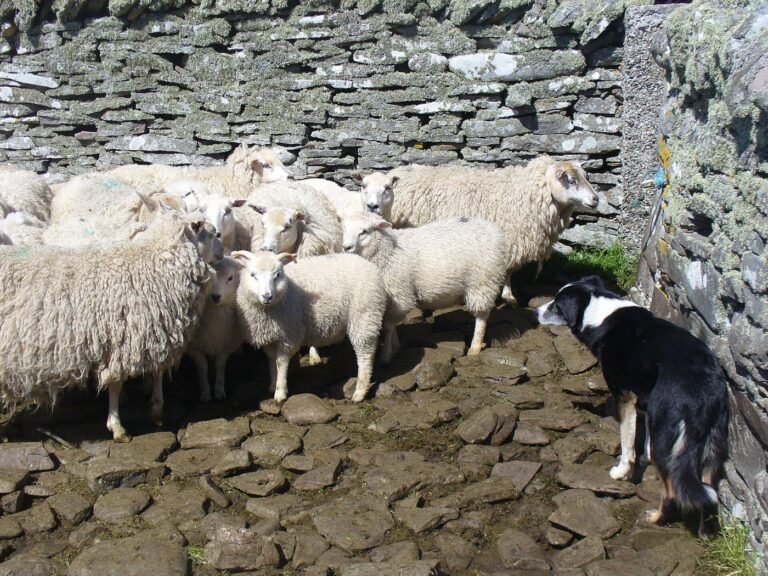
Finding suitable working dog insurance UK cover can be more complicated than buying an ordinary pet insurance policy. Many insurers exclude dogs used for professional, agricultural or sporting activities, even when those dogs also live as family pets.
This matters for gundogs, sheepdogs, farm dogs, security dogs and other animals that regularly perform work-related tasks.
For example, Tesco excludes dogs used for certain working purposes, including gundogs and farm dogs. Other providers have narrower restrictions that depend on the activity involved.
Specialist options are available. BASC Dog Insurance, provided by Agria, offers lifetime veterinary fee cover for eligible gundogs, including while working on a shoot. NFU Mutual also provides insurance for working dogs, subject to its policy limits and conditions.
However, cover varies considerably between insurers.
A policy may protect your dog during everyday activities but exclude injuries sustained while working, training or participating in particular events.
This PetCoverHQ guide explains which insurers may cover working dogs, how gundog and farm dog policies differ, what exclusions to check and why third-party liability protection is important.
What Is Working Dog Insurance UK?
Working dog insurance is insurance designed to protect dogs used for activities beyond ordinary companionship.
Depending on the insurer, it may provide cover for veterinary treatment, accidental injuries, third-party liability and certain losses associated with a working dog.
The most important feature is whether the policy explicitly accepts the dog’s working activities.
What Counts as a Working Dog?
Working dogs can include:
- Gundogs: Dogs used for retrieving, flushing or locating game during shoots.
- Farm dogs: Dogs used for livestock management and other agricultural tasks.
- Sheepdogs: Dogs trained to herd or control livestock.
- Security dogs: Dogs used for guarding or protection work.
- Search and rescue dogs: Dogs trained to locate missing people.
- Detection dogs: Dogs trained to identify particular substances or objects.
- Other professional dogs: Animals used in specialised working roles.
Not every insurer uses the same definition.
A dog that occasionally accompanies its owner into the countryside may be treated differently from one regularly used on commercial shoots.
Similarly, a dog living on a farm is not necessarily classified as a working dog if it does not perform agricultural duties.
The insurer’s definition and the actual activities undertaken are what matter.
Does Standard Pet Insurance Cover Working Dogs?
Standard pet insurance often restricts working or commercial use.
Some providers exclude particular activities, while others exclude entire categories of working dogs.
This means owners should not assume that ordinary dog insurance will provide protection during work.
Tesco Working Dog Exclusions
According to the insurer information reviewed for this guide, Tesco excludes dogs used for work-related activities, including:
- Gundog work.
- Farm work.
- Guarding.
- Racing.
- Emergency rescue work.
Owners should check Tesco’s current eligibility requirements before applying.
Petplan Working Dog Restrictions
Petplan’s reviewed policy wording excludes certain uses, including security work, guarding, track racing and coursing.
However, these restrictions should not be interpreted as a blanket exclusion of every type of working dog.
Owners should ask Petplan whether their dog’s specific activity is accepted.
Other Mainstream Insurers
ManyPets has highlighted commercial use as a common restriction in pet insurance.
Activities such as security work, racing and commercial breeding may fall outside standard cover.
However, different providers use different eligibility criteria.
Our guide to what pet insurance does not cover in the UK explains other exclusions owners should understand.
Working Dog Insurance UK: Providers Compared
Two options worth investigating are BASC Dog Insurance, provided by Agria, and NFU Mutual.
Their products use different approaches to veterinary fee limits.
Working Dog Insurance Comparison
| Provider | Working Dog Eligibility | Vet Fee Cover | Important Details |
|---|---|---|---|
| BASC Dog Insurance (Agria) | Eligible gundogs, including work on shoots | £3,000–£20,000 annually | Lifetime cover; third-party liability up to £3 million |
| NFU Mutual | Certain working dogs, subject to conditions | £2,000 per condition, with higher options of £3,000 or £4,000 | Time-limited condition cover; restrictions on loss benefits |
| Tesco | Excludes specified working uses | Not available for excluded activities | Includes gundogs and farm dogs among exclusions |
| Petplan | Excludes certain activities | Depends on eligibility | Restrictions include security, guarding, track racing and coursing |
Comparison based on insurer information supplied and checked in October 2026. Eligibility, cover limits and terms should be reconfirmed directly before purchase.
The table shows why comparing premiums alone is not enough.
An insurer that accepts a working dog may still exclude particular duties, training activities or competitive events.
BASC Gundog Insurance: Cover Provided by Agria
BASC Dog Insurance is a specialist option for gundog owners.
The product is provided by Agria and is designed to cover eligible gundogs, including when they are working on shoots.
This is a significant distinction from standard policies that exclude working use.
BASC Gundog Vet Fee Limits
The reviewed product information lists annual veterinary fee limits from £3,000 to £20,000.
BASC Dog Insurance provides lifetime cover.
This means eligible veterinary fee allowances are replenished each policy year, subject to renewal and policy conditions.
Why Lifetime Cover Matters for Gundogs
A gundog may suffer an injury requiring ongoing treatment.
For example, an eligible ligament injury might require surgery followed by physiotherapy and further veterinary appointments.
Lifetime cover may continue contributing towards eligible treatment in subsequent policy years.
However, each policy year remains subject to its own limits and exclusions.
Does BASC Cover Gundogs While Working?
According to the reviewed product information, the BASC policy includes eligible gundogs while working on a shoot.
Owners should still confirm cover for their particular activities, including:
- Driven shoots.
- Rough shooting.
- Picking-up.
- Retrieving.
- Training.
- Field trials or competitions.
- Commercial work.
Do not assume every activity is covered simply because the policy accepts gundogs.
BASC Third-Party Liability
The reviewed BASC Dog Insurance product includes up to £3 million in third-party liability cover.
A £250 liability excess is listed in the supplied information.
BASC membership may also provide separate first-resort liability protection for qualifying gundog activities.
However, membership protection and pet insurance are different arrangements, with potentially different eligibility conditions.
Check how they interact before relying on both.
For more information about Agria’s wider products, read our Agria pet insurance review.
NFU Mutual Working Dog Insurance
NFU Mutual is another provider worth considering for certain working dogs.
Its dog and cat insurance product includes provisions relating to working dogs.
However, the policy differs from BASC’s lifetime structure.
NFU Mutual Veterinary Fee Limits
According to the reviewed policy information, NFU Mutual offers:
| Cover Option | Veterinary Fee Limit |
|---|---|
| Standard | £2,000 per condition |
| Higher option | £3,000 |
| Higher option | £4,000 |
The reviewed cover provides eligible treatment for each condition for up to 12 months, subject to the applicable financial limit.
This differs from lifetime insurance.
What Does the 12-Month Limit Mean?
Suppose a farm dog develops an eligible medical condition requiring repeated veterinary treatment.
A time-limited policy may contribute towards treatment until the applicable financial or time limit is reached.
Once the relevant period expires, further treatment for that condition may no longer be covered.
By comparison, lifetime cover may continue providing an allowance in subsequent policy years.
Our guide to lifetime versus time-limited pet insurance explains these differences.
Loss Cover for Working Dogs
NFU Mutual’s reviewed terms limit certain loss benefits for working dogs.
The insurer may pay the lower of the selected insured amount and the dog’s market value.
This is important because a trained working dog may have a value that differs substantially from its original purchase price.
Owners should ask how the insurer determines market value and what evidence may be required.
Gundog Insurance vs Farm Dog Insurance
Although both fall within working dog insurance, gundogs and farm dogs face different risks.
Gundog Insurance
Gundogs may be exposed to hazards such as:
- Injuries while retrieving.
- Cuts from vegetation or rough terrain.
- Accidents near water.
- Strains and ligament injuries.
- Collisions or falls.
- Injuries during training.
Owners should check whether the policy covers work on shoots and relevant training activities.
Farm Dog Insurance
Farm dogs may face hazards associated with agricultural environments, including:
- Livestock-related injuries.
- Farm machinery.
- Vehicles.
- Fencing.
- Uneven ground.
- Working over long distances.
For farm dogs, the insurer should understand whether the animal actively works livestock, performs other duties or simply lives on agricultural property.
Key Differences to Compare
| Consideration | Gundogs | Farm Dogs |
|---|---|---|
| Main working activity | Shooting and retrieving | Livestock and agricultural duties |
| Working location | Shoots, fields and woodland | Farms, fields and livestock areas |
| Training cover | Check shoot and retrieval training | Check herding and farm training |
| Third-party risks | People, dogs and property | Livestock, people and property |
| Specialist eligibility | Gundog-specific products may be available | Farm use must be explicitly accepted |
Neither category should automatically be assumed eligible under a general working dog policy.
What Should Working Dog Insurance Cover?
The right working dog policy should reflect the risks associated with the dog’s actual duties.
Several features deserve particular attention.
1. Veterinary Treatment While Working
Check whether injuries sustained during work are covered.
A policy that excludes working activities may not respond to a claim arising during a shoot or farm task.
Ask whether cover applies during training as well as active work.
2. A Suitable Veterinary Fee Limit
Working dogs may experience injuries requiring surgery, hospitalisation or rehabilitation.
A low veterinary fee limit could leave the owner paying substantial additional costs.
Compare the available annual or per-condition limits and any inner restrictions.
3. Third-Party Liability
Working dogs may interact with members of the public, livestock, other dogs and property.
Liability insurance can be important if an incident results in a covered legal claim.
However, not every liability policy covers every working activity.
4. Death and Loss Benefits
Some insurers provide benefits if a dog dies, is stolen or goes missing.
Working dogs may be subject to specific limits based on market value.
Check whether the policy covers death or loss associated with working activities.
5. Ongoing Treatment
A dog injured during work may require follow-up treatment over an extended period.
Lifetime cover can be useful for eligible conditions that continue beyond one policy year.
6. Rehabilitation
Check whether the policy includes eligible physiotherapy, hydrotherapy or other rehabilitation.
These treatments may be relevant after orthopaedic injuries.
7. Excesses and Co-Payments
A policy may require owners to pay a fixed excess or percentage of eligible veterinary expenses.
These costs can become significant following a large claim.
Why Third-Party Liability Matters for Working Dogs
Third-party liability protection is particularly important when dogs work around people, animals and property.
For example, a dog might injure someone or cause property damage during a working activity.
Depending on the circumstances, the owner or person responsible for the dog could face legal liability.
What Does Third-Party Liability Insurance Do?
An eligible liability policy may help with certain compensation claims and associated legal costs.
However, coverage depends on the policy’s definitions, exclusions and applicable law.
Does the Law Apply to Working Dogs?
In England and Wales, laws concerning dogs that are dangerously out of control can apply in public and private places, including homes.
However, legal rules and exceptions differ across UK jurisdictions and circumstances.
Working status does not automatically remove an owner’s responsibilities.
How Much Liability Cover Is Enough?
The appropriate amount depends on the dog’s activities and the owner’s exposure to risk.
The reviewed BASC product provides up to £3 million in third-party liability cover.
However, the amount alone is not sufficient to establish suitability.
Owners must confirm that the relevant activity and potential liability are included.
Our guide to third-party liability dog insurance in the UK explains the main considerations.
Does Working Dog Insurance Cover Training?
Training cover is one of the most important questions to ask before purchasing.
A dog may be injured while learning or practising the skills required for its work.
However, insurers may distinguish between:
- Recreational training.
- Professional training.
- Working activities.
- Organised competitions.
- Racing or coursing.
- Commercial training services.
For example, a gundog policy may accept training connected with shooting but have separate conditions for organised competitions.
A farm dog policy may treat ordinary livestock work differently from commercial training activities.
Ask the insurer to confirm the exact activities covered and retain the written response.
Are Working Dogs Covered When They Are Off Duty?
A working dog may also spend much of its time as a household pet.
Some specialist policies provide protection for eligible illness and injury outside working hours as well as during accepted working activities.
However, the precise scope varies.
For example, a dog used for farm work might develop an illness unrelated to its duties.
Whether treatment is covered depends on the veterinary fee benefits and exclusions, not simply the dog’s working status.
Check both everyday pet cover and working activity cover before buying.
Why You Must Tell Your Insurer That Your Dog Works
When applying for insurance, answer questions about your dog’s use accurately and completely.
Do not describe a working dog as a household pet if the insurer asks about working activities.
What Happens if You Do Not Disclose Working Use?
Incorrect or incomplete information can affect insurance claims and policy validity, depending on the circumstances and applicable rules.
For example, a policy that expressly excludes gundogs may not cover an injury sustained during a shoot.
The insurer may also need to consider whether the information provided during the application was accurate.
What Should You Tell the Insurer?
Explain:
- What work the dog performs.
- Whether the work is paid or unpaid.
- How often the dog works.
- Whether it participates in training.
- Whether it attends competitions.
- Where the activities take place.
- Whether the dog is used for breeding, security or other commercial purposes.
Ask the insurer to confirm eligibility in writing.
Our guide to why pet insurance claims are rejected explains common problems to avoid.
How Much Does Working Dog Insurance Cost in the UK?
There is no single standard premium for working dog insurance.
The cost depends on the insurer, the dog and the activities being insured.
Factors That May Affect the Price
These can include:
- Breed and age.
- Type of working activity.
- Frequency of work.
- Veterinary fee limit.
- Policy structure.
- Location.
- Excess.
- Claims history.
- Additional benefits.
Specialist cover may cost more than standard pet insurance because the insured activities can involve additional risks.
However, the cheapest quotation is not necessarily the best value.
A lower premium offers little benefit if the policy excludes the activity most likely to cause an injury.
How to Compare Quotes
Request quotations using the same information about your dog’s work.
Compare the veterinary fee limit, liability benefits, excess, exclusions and renewal conditions.
If the policies have different structures, consider how they would respond to both a single serious injury and a condition requiring ongoing treatment.
How to Choose the Best Working Dog Insurance
Use the following process when comparing providers.
Step 1: Describe Your Dog’s Duties
Identify exactly what your dog does.
Do not rely on a broad label such as working dog.
Step 2: Confirm Eligibility
Ask whether the insurer accepts the specific activity.
For example, a gundog policy may not be suitable for a security dog.
Step 3: Check When Cover Applies
Confirm protection during work, training, travel and time off duty.
Step 4: Compare Veterinary Fee Limits
Look beyond the headline amount.
Check whether limits apply annually, per condition or for a fixed treatment period.
Step 5: Review Liability Protection
Confirm whether the policy covers relevant working activities and whether separate professional or business liability insurance is needed.
Step 6: Check Death and Loss Benefits
If your dog’s training or working value is important, examine how the insurer calculates compensation.
Step 7: Read the Policy Wording
Review exclusions, excesses, waiting periods, co-payments and claims requirements.
Step 8: Keep Written Confirmation
If an insurer confirms that your dog’s work is accepted, retain the response with your policy documents.
Frequently Asked Questions
Can I get working dog insurance in the UK?
Yes. Specialist options are available for certain working dogs, including gundogs and farm dogs. Eligibility depends on the insurer and the dog’s activities.
Can I insure a gundog?
Yes. BASC Dog Insurance, provided by Agria, advertises cover for eligible gundogs while working on shoots, with annual veterinary fee limits ranging from £3,000 to £20,000.
Does pet insurance cover farm dogs?
Some policies may cover farm dogs, but many standard pet insurers exclude working use. NFU Mutual is one provider worth investigating, subject to its current eligibility rules.
Does Tesco insure working dogs?
The reviewed Tesco eligibility information excludes specified working dogs, including gundogs, farm dogs and guard dogs. Confirm current terms directly before applying.
Does Petplan cover gundogs?
Petplan excludes certain activities, including guarding, security, track racing and coursing. Owners should ask whether their specific gundog activities are accepted rather than assuming all working dogs are excluded.
Does working dog insurance cover injuries during training?
Some specialist policies may cover eligible training activities. However, training definitions and exclusions vary, so written confirmation is important.
Do working dogs need third-party liability insurance?
Third-party liability protection is worth considering because working dogs may interact with people, livestock and property. The cover must explicitly include the relevant activities.
Is lifetime insurance better for working dogs?
Lifetime insurance may be useful when an eligible injury or illness requires treatment over multiple years. However, suitability depends on the annual limit, exclusions and premium.
Does working dog insurance cover theft or death?
Some policies provide theft, loss or death benefits. Working dogs may have specific payout restrictions, including limits based on market value.
What is the difference between working dog and standard dog insurance?
The main difference is eligibility for working activities. Standard pet policies may exclude injuries connected with work, while specialist policies may expressly cover specified duties.
Conclusion
Choosing suitable working dog insurance UK cover requires more than comparing premiums.
Gundogs, farm dogs and other working animals face risks that standard pet insurance may exclude.
BASC Dog Insurance, provided by Agria, offers a specialist option for eligible gundogs, including work on shoots. NFU Mutual also provides cover for certain working dogs, although its policy structure and benefit limits differ.
The most important step is to confirm that your dog’s actual duties are accepted.
Check protection during work and training, veterinary fee limits, third-party liability, death and loss benefits, and any restrictions on ongoing treatment.
If your dog performs more than one type of work, disclose every relevant activity before purchasing.
For further guidance on policy types, exclusions and claims, explore PetCoverHQ’s UK dog insurance resources.
This article provides general insurance information and does not constitute financial or legal advice. Working dog eligibility, benefits and exclusions vary between insurers and can change. Always check the latest policy wording and obtain written confirmation that your dog’s activities are covered before purchasing.