If you cannot afford a vet bill, tell the vet straight away and ask what can be done within your budget. Most of the options below start with that one conversation: a cheaper treatment plan, a payment arrangement or finance. If you receive certain benefits, a charity such as PDSA or Blue Cross may treat your pet for free or at a reduced price.
Bills can arrive with no warning. The Association of British Insurers says treating a pet that has eaten something poisonous can cost around £4,000. Even Blue Cross, which charges heavily discounted prices, lists operations at £150 to £1,000.
This guide covers eight ways to pay, starting with the ones that cost you least. Each charity rule and lender term below comes from the organisation’s own website, checked on 20 October 2026.
1. Negotiate A Payment Plan Directly With Your Vet
A payment plan with your own vet lets you split a large bill over several months without borrowing from a lender. Not every practice offers one. Those that do may keep it for clients they already know. Ask the practice manager before treatment starts, not when the bill arrives.
Ask for a written estimate at the same time, so you know what you are agreeing to. Under the Competition and Markets Authority’s order, made in September 2026, large vet groups must give a written estimate for treatment expected to cost £500 or more. The rule starts in June 2027, and in September 2027 at smaller practices. You can ask for one now.
Before you agree a plan, check three things:
- The total you will repay, including any fee.
- The amount and date of each payment.
- What happens if you miss a payment.
Our guide to
which vets let you pay in instalments compares the options at the large UK vet groups.
2. Access UK Animal Charity Clinics
Animal charities treat pets of owners on low incomes, but only if you meet their rules. Most ask for proof of a means-tested benefit and an address in their catchment area. Check eligibility online before you travel. Our guides to
help with vet bills on benefits,
charities that help with vet bills and
RSPCA help compare the options.
PDSA’s free service, for example, needs you to live in a Pet Hospital catchment area and receive one of these:
- Housing Benefit.
- Means-tested Council Tax support.
- Universal Credit with a housing element.
PDSA (People’s Dispensary For Sick Animals) Eligibility
The
PDSA runs Pet Hospitals across the UK. Its free service covers one pet per household. If you receive Universal Credit without a housing element, Pension Credit or Personal Independence Payment, you may qualify for its low-cost service instead. Prices there are typically 20% to 30% lower than at private vets.
PDSA does not give money towards a private vet’s bill. Our
PDSA price list shows what low-cost treatments cost, and the
guide to PDSA free vet services explains how to register.
Blue Cross And RSPCA Voucher Schemes
Help from these two charities depends on where you live. Blue Cross has animal hospitals in London and Grimsby. To register, you must live in a catchment area and receive certain benefits. Its
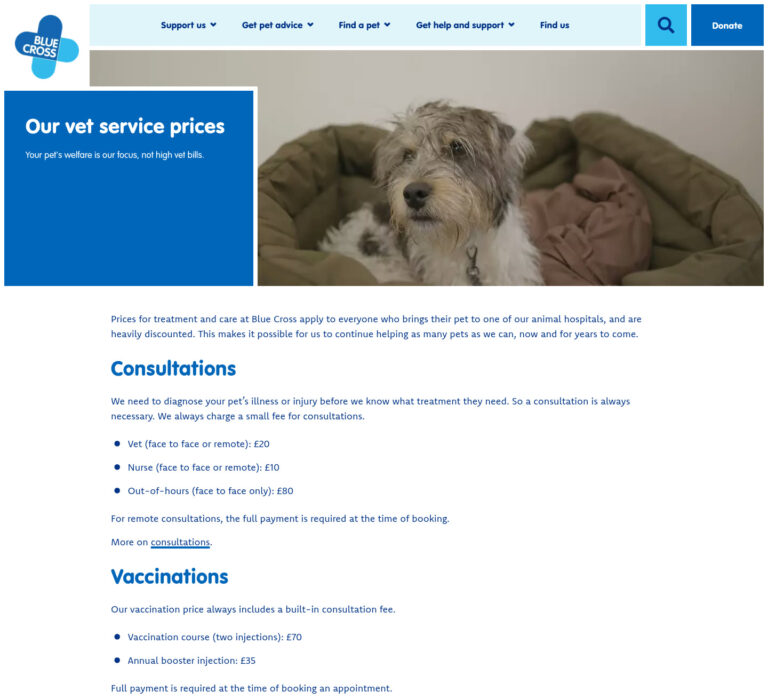
published prices include a £20 vet consultation and operations from £150 to £1,000.
Blue Cross says that if treatment is urgent, it might be able to offer a short-term Direct Debit payment plan. The
RSPCA says your local branch or hospital may be able to offer financial help. Contact the branch nearest to you.
3. Transfer To A Not-For-Profit Veterinary Practice
A not-for-profit practice puts its income back into its services instead of paying it out as profit.
Animal Trust is one example. It is a Community Interest Company and has no eligibility criteria, so anyone can register.
Animal Trust does not charge for consultations. It publishes fixed prices, such as £69 for a full vaccination course, and says they apply at all 17 of its practices. If one is near you, compare its price for your pet’s treatment with the private quote.
4. Apply For Specialist Veterinary Finance
Vet finance spreads a bill over months, but it is credit. You pay interest unless the deal is 0%. You apply through a practice that works with the lender, and the lender pays the practice.
CarefreeCredit, for example, says the vet is paid within 3 working days and your repayments are collected by Direct Debit.
Check the APR before you sign. CarefreeCredit’s own example is a £660 loan over 18 months at 9.9% APR representative. That costs £39.48 a month and £710.66 in total. Some practices offer its finance at 0%, so ask. Expect a credit check.
Some practices also offer buy now, pay later deals. The Financial Conduct Authority has regulated these since 15 July 2026.
5. Request A Cheaper Alternative Treatment Plan
Requesting an alternative treatment plan reduces the final clinical cost while still providing necessary pain relief. Veterinary surgeons routinely offer a “gold-standard treatment” which represents the most comprehensive, and most expensive, medical option. You must actively ask the vet for a pragmatic, budget-friendly approach.
For example, a vet might quote £2,500 for a specialist MRI scan and spinal surgery. A pragmatic alternative involves prescribing strict cage rest and a £100 monthly palliative pain management plan. The clinical outcome differs, but the animal remains comfortable.
6. Launch A Pet Crowdfunding Campaign
A crowdfunding page asks friends, family and strangers to give towards your pet’s treatment. Platforms such as GoFundMe and JustGiving let you share the appeal on social media. People give when they trust an appeal, so be clear about what the money is for.
Upload the vet’s written estimate to the page. It shows donors the real cost of treatment. Check each platform’s fees before you set a target.
7. Check Existing Non-Pet Insurance Policies
Your existing insurance is worth a quick check before you borrow. Some packaged bank accounts and home insurance policies include extras, and a few may include pet cover. Many do not.
Read the policy wording, or call the provider and ask whether vet fees are covered.
8. Borrow Money From Family Or Friends
Borrowing from family or friends can be the quickest way to cover a bill, and it is usually interest-free. It can also strain a relationship if repayments slip.
Agree the terms in writing before you take the money. Set a monthly amount you can keep up, such as £50, and a date for each payment.
Frequently Asked Questions About Uninsured Vet Bills
Can a vet refuse to treat my pet if I cannot pay?
A vet does not have to carry out ongoing treatment you cannot pay for, but should not delay first aid and pain relief. The
RCVS guidance on emergency care says immediate first aid and pain relief should not be delayed while payment is agreed. It also says vets are not obliged to carry out ongoing treatment the owner cannot pay for. Talk about cost early.
What is economic euthanasia?
Economic euthanasia means putting a pet to sleep because the owner cannot afford treatment that might help. It is one of the hardest decisions you can face. Before it comes to that, ask your vet whether a cheaper treatment plan exists, and contact the charities above. Blue Cross says its vets will talk you through the range of treatments you can afford.
Which charities help with vet bills?
PDSA, Blue Cross and the RSPCA are the main ones, and each has its own rules. PDSA and Blue Cross treat eligible pets at their own hospitals. RSPCA help depends on your local branch. Cats Protection can help owners on means-tested benefits with the cost of neutering a cat. Its
C4 scheme inside the M25 offers neutering and microchipping for £10.
Is a vet payment plan cheaper than a credit card?
Usually, if the plan charges no interest. An in-house plan at 0% costs you only the bill itself. A credit card or a finance deal adds interest. Compare the APR and the total you will repay. CarefreeCredit’s example above is 9.9% APR, and your card statement shows your own rate.
Final Thoughts: Managing Veterinary Financial Emergencies
The cheapest option is the one you arrange before treatment starts. Tell your vet what you can pay, ask for a written estimate and check whether you qualify for charity care. Once this bill is dealt with, our guide to
whether pet insurance is worth it can help you plan for the next one.
Charities change their eligibility rules from time to time. If a rule here has changed, tell us at
[email protected] and we will correct the guide.
Content is provided for informational purposes only and does not constitute financial advice. Always read the full policy terms before purchasing.