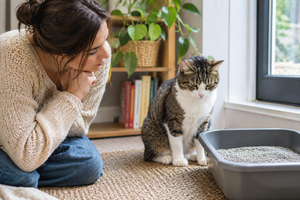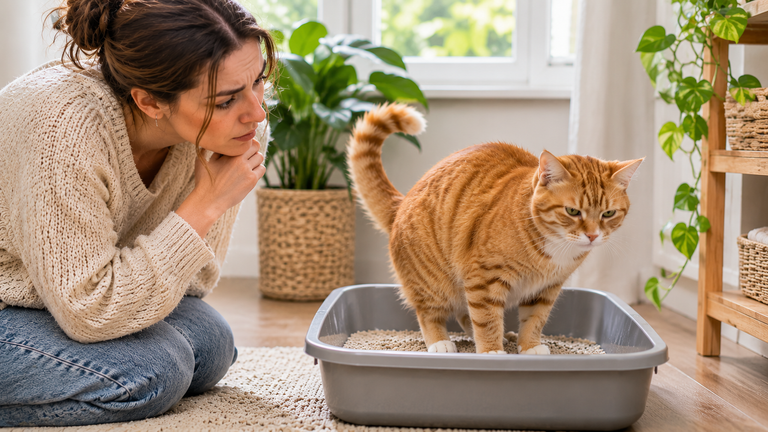
Cat constipation can make visiting the litter tray painful and frustrating. A constipated cat may strain repeatedly, produce small, hard stools or stop passing faeces altogether. Some cats also become less active, lose their appetite or vomit.
Although constipation may begin as a relatively mild problem, it can become serious without appropriate treatment. More importantly, a cat struggling in the litter tray might actually have a urinary blockage, which is a life-threatening emergency.
This guide explains the symptoms of cat constipation, common causes, safe treatment options and when to contact a vet. For more practical UK pet health and veterinary cost advice, explore PetCoverHQ.
What Are the Signs of Cat Constipation?
Constipation occurs when faeces become difficult to pass, often because they remain in the large intestine for too long and become dry and hard.
Some cats continue passing small amounts of stool, while others cannot pass any.
Common symptoms include:
- Repeatedly visiting the litter tray without producing normal stools.
- Straining or crying while trying to poo.
- Passing small, dry or unusually hard stools.
- Producing only a little liquid stool around retained hard faeces.
- A painful or tense abdomen.
- Reduced appetite or reluctance to move.
- Vomiting or unusual tiredness.
- Excessive grooming around the bottom.
According to PDSA’s guidance on constipation in cats, owners should contact their vet whenever constipation is suspected, as untreated cases can become serious.
What Does Constipated Cat Poo Look Like?
Normal cat stools are usually formed, moist enough to pass comfortably and relatively consistent in appearance.
Constipated stools may be unusually dry, hard or broken into small pieces.
| Stool appearance | Possible significance |
|---|---|
| Formed, normal-sized stools | Usually consistent with normal bowel movements |
| Small, hard pellets | Possible constipation |
| Very dry, crumbly stools | May indicate prolonged retention or reduced moisture |
| Small amounts of liquid stool | Can sometimes pass around retained hard faeces |
| Blood on stools | May indicate irritation or another problem requiring veterinary assessment |
Stool appearance alone cannot establish the diagnosis.
If your cat strains frequently or appears uncomfortable, seek veterinary advice.
Cat Constipation or Urinary Blockage: How Can You Tell?
This is one of the most important distinctions for cat owners.
A cat repeatedly entering the litter tray may appear constipated when it is actually struggling to urinate.
A blocked bladder prevents urine from leaving the body and can become fatal without emergency treatment. Male cats are particularly susceptible, although urinary obstruction can affect females too. PDSA+1
| Observation | Possible constipation | Possible urinary blockage |
|---|---|---|
| Repeated straining | Yes | Yes |
| Small, hard stools | Common | Not a defining sign |
| Little or no urine | Not explained by constipation alone | Major warning sign |
| Crying in the litter tray | Possible | Possible |
| Vomiting or weakness | Possible in severe cases | Possible as condition worsens |
| Painful abdomen | Possible | Possible |
Important: These symptoms overlap. You cannot reliably distinguish constipation from urinary obstruction by watching the cat’s posture.
If your cat repeatedly strains and you cannot confirm that it is passing urine normally, contact an emergency vet immediately.
Do not wait overnight or try constipation remedies first.
What Causes Constipation in Cats?
Cat constipation can develop for several reasons, including dehydration, painful movement, changes in toileting behaviour or underlying intestinal disease.
Understanding the cause matters because treatment that helps one cat may be unsuitable for another.
1. Dehydration
Water helps maintain normal stool consistency.
When a cat does not receive enough fluid, faeces can become harder and more difficult to pass.
Dehydration may occur because of reduced water intake, increased fluid loss or an underlying medical condition.
Cats with kidney disease or certain other illnesses may be particularly vulnerable.
If you have noticed changes in drinking habits, our Cat Not Drinking Water guide explains hydration warning signs and ways to encourage healthy fluid intake.
2. Arthritis and Painful Movement
Older cats sometimes develop arthritis affecting the hips, spine or other joints.
Squatting in a litter tray may become uncomfortable, causing them to delay passing stools.
A tray with high sides may also become difficult to enter.
Providing an accessible litter tray can help, but pain management should be discussed with a vet.
3. Hairballs and Swallowed Objects
Cats naturally swallow some fur while grooming.
Occasionally, swallowed material may contribute to digestive problems.
Objects such as string, small toys and other foreign materials can cause intestinal obstruction, which is a different and potentially life-threatening condition.
Vomiting, abdominal pain and inability to pass stools after swallowing an object require urgent veterinary attention.
4. Stress and Litter Tray Problems
Cats are sensitive to changes in their environment.
They may avoid using a litter tray if it is dirty, placed in a noisy area or shared with another cat that makes them feel threatened.
Changes in litter type, moving house or introducing a new pet can also affect toileting behaviour.
PDSA recommends providing at least one litter tray per cat, plus an additional tray, positioned in separate locations. PDSA
5. Megacolon
Megacolon is a condition in which the large intestine becomes enlarged and loses its ability to move faeces effectively.
Stools accumulate, leading to persistent or recurring constipation.
Some cats develop megacolon without an identifiable underlying cause.
Treatment may require medication, dietary management and, in severe cases, surgery.
6. Other Medical Conditions
Additional causes of cat constipation may include:
- Pelvic injuries or narrowing.
- Certain medications.
- Neurological problems.
- Intestinal masses.
- Chronic kidney disease.
- Pain around the anus or rectum.
Recurring constipation should be investigated rather than repeatedly treated with home remedies.
How Long Can a Cat Go Without Pooing?
Most cats pass stools approximately one to three times daily, although normal patterns vary between individuals.
Some healthy cats may occasionally go longer between bowel movements.
However, a sudden change from your cat’s normal routine is more informative than a universal time limit.
If your cat has not passed stools for around 24–48 hours, contact your vet for advice. Do not use this as a waiting period if your cat is straining, painful, vomiting or otherwise unwell.
When Should You See a Vet?
| Situation | Recommended action |
|---|---|
| Slightly less frequent stools, otherwise well | Contact your vet for advice if this is a new change |
| Hard stools or repeated straining | Arrange prompt veterinary assessment |
| No stools with vomiting, abdominal pain or lethargy | Seek urgent veterinary care |
| Possible ingestion of string or another foreign object | Contact a vet immediately |
| Repeated straining with little or no urine | Emergency veterinary care immediately |
Kittens, elderly cats and cats with existing medical conditions may need assessment sooner.
How to Help a Constipated Cat Safely
If you suspect cat constipation, contact your vet before starting treatment.
Some supportive measures can help maintain healthy bowel movements, but they are not substitutes for diagnosing a painful or persistent problem.
1. Encourage Healthy Water Intake
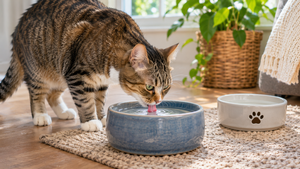
Make fresh water available in several quiet locations.
Some cats prefer wide ceramic bowls, while others may drink more readily from a water fountain.
Wet food can also contribute to total fluid intake.
If your cat is dehydrated, simply providing more water may not be sufficient. Veterinary fluid therapy may be required.
2. Keep Litter Trays Clean and Accessible
Remove waste regularly and provide enough trays for every cat in the household.
Place them away from noisy appliances, busy walkways and areas where another pet could block access.
Older cats may benefit from trays with lower entrances.
3. Encourage Gentle Activity
Regular movement can support normal digestive function.
Short play sessions, climbing opportunities suited to your cat’s mobility and environmental enrichment may be helpful.
Do not force exercise if your cat appears painful or unwell.
4. Discuss Dietary Changes With Your Vet
Some cats benefit from diets containing particular types or amounts of fibre.
Others, including cats with certain forms of megacolon, may need a different nutritional approach.
Adding fibre without understanding the cause can be inappropriate, particularly when dehydration or obstruction is possible.
Ask your vet before introducing pumpkin, psyllium or fibre supplements.
5. Avoid Unsafe Home Remedies
Never give your cat human laxatives, enemas or suppositories without veterinary direction.
Some human enema preparations, particularly those containing sodium phosphate, can be extremely dangerous to cats.
Do not administer mineral oil by mouth or attempt to remove retained stools yourself.
A suspected intestinal obstruction requires veterinary treatment, not home constipation remedies.
How Do Vets Diagnose Cat Constipation?
A vet will usually begin by asking about your cat’s normal bowel movements, diet, drinking habits and medical history.
They may examine the abdomen to assess whether faeces have accumulated.
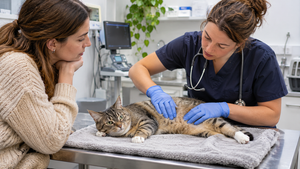
Depending on the findings, further investigations can include:
| Investigation | Purpose |
|---|---|
| Physical examination | Assess discomfort, hydration and possible retained faeces |
| Rectal examination | Investigate problems around the rectum when appropriate |
| X-rays | Assess stool accumulation, colon size and some structural problems |
| Blood tests | Investigate dehydration and underlying illness |
| Urine tests | Assess related health conditions |
| Ultrasound | Examine selected abdominal abnormalities |
Not every cat needs every investigation.
A cat with a first mild episode may require a different approach from one with repeated severe constipation.
How Is Cat Constipation Treated?
Veterinary treatment depends on the severity and underlying cause.
Prescription Laxatives
For some mild cases, a vet may prescribe a suitable laxative or stool-softening medication.
The dose and product must be appropriate for cats.
Never use medication prescribed for another animal without veterinary approval.
Fluid Therapy
Dehydrated cats may require fluids to restore normal hydration.
This can help support recovery while the underlying cause is addressed.
Veterinary Enemas
In selected cases, a vet may administer a cat-safe enema to help soften retained faeces.
This is a veterinary procedure and should not be attempted using household products.
Removal of Impacted Faeces
Severe constipation may require manual removal of accumulated faeces under anaesthesia.
The veterinary team will also investigate why the problem developed.
Long-Term Management
Cats with recurring constipation may need ongoing medication, dietary adjustments and monitoring.
For severe megacolon that does not respond adequately to medical treatment, surgery may be considered.
How Much Does Cat Constipation Treatment Cost in the UK?
The cost of treating cat constipation varies depending on the severity of the problem and whether additional investigations are necessary.
A consultation and prescription may cost considerably less than treatment requiring imaging, anaesthesia or hospitalisation.
| Possible expense | When it may be needed |
|---|---|
| Veterinary consultation | Initial assessment |
| Blood tests | Checking hydration and underlying conditions |
| X-rays | Investigating stool accumulation or megacolon |
| Prescription medication | Managing constipation |
| Fluid therapy | Treating dehydration |
| Sedation or anaesthesia | Severe faecal impaction or examination |
| Hospitalisation or surgery | Complex cases or serious complications |
There is no single reliable UK-wide treatment price. Ask your veterinary practice for an itemised estimate based on your cat’s condition.
Does Pet Insurance Cover Cat Constipation?
Some UK pet insurance policies may cover eligible treatment when constipation results from an insured illness.
However, coverage depends on the policy’s wording, limits and exclusions.
Important factors include:
- Pre-existing medical conditions.
- Waiting periods.
- Veterinary fee limits.
- Policy excess and co-payments.
- Diagnostic tests and hospitalisation benefits.
- Restrictions affecting recurring or chronic conditions.
For example, a cat with a documented history of chronic constipation before a new policy begins may have related treatment excluded.
Read our guide to what pet insurance does not cover to understand common exclusions.
If your cat needs urgent treatment, do not delay care while checking insurance eligibility.
How Can You Prevent Constipation in Cats?
Not every case is preventable, particularly when an underlying disease is involved.
However, several daily habits may help support normal bowel function.
Maintain Good Hydration
Provide clean drinking water and a nutritionally appropriate diet.
If your cat consistently drinks very little, discuss its total water intake with your vet.
Keep Your Cat at a Healthy Weight
Excess body weight can make movement more difficult and may contribute to reduced activity.
Ask your vet about an appropriate feeding and exercise plan.
Groom Long-Haired Cats Regularly
Brushing removes loose fur and can help prevent matting around the bottom.
Regular grooming may also reduce the amount of hair swallowed.
Make Toileting Comfortable
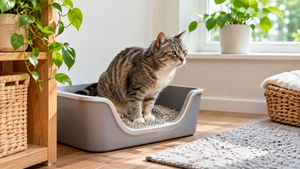
Use accessible litter trays in quiet locations.
For cats with arthritis, a low-entry tray may make squatting and entering the tray easier.
Monitor Bowel Habits
Pay attention to changes in stool frequency, size and consistency.
In multi-cat households, identifying which cat has produced which stool can be difficult. Separate observation periods or veterinary advice may help.
A Simple Litter Tray Monitoring Checklist
If your cat has recently experienced constipation, keeping a short record can help your vet assess progress.
| What to record | Example |
|---|---|
| Date and time | Monday, 8:30 am |
| Stool passed | Small amount |
| Consistency | Hard and dry |
| Straining | Yes, approximately one minute |
| Urination | Normal-sized urine clump observed |
| Appetite | Ate usual breakfast |
| Other symptoms | No vomiting |
This is a sample record, not a diagnosis.
If you cannot confirm that your cat is urinating normally and it is repeatedly straining, seek emergency veterinary advice.
Frequently Asked Questions
Can cat constipation go away on its own?
A mild episode may improve, but suspected constipation should be discussed with a vet. Persistent or severe cases can become dangerous without treatment.
Is olive oil safe for a constipated cat?
Do not use olive oil as a treatment without veterinary advice. It is not a reliable substitute for diagnosing the cause or using an appropriate prescribed treatment.
Can wet food help with cat constipation?
Wet food can increase dietary moisture and may support hydration. However, it cannot reliably resolve severe constipation or an intestinal obstruction.
Can cat constipation cause vomiting?
Yes. Vomiting can occur with severe constipation, but it may also indicate intestinal obstruction or another illness. Seek urgent veterinary advice if your cat is constipated and vomiting.
Why is my cat straining but nothing is coming out?
Your cat may have constipation, a urinary problem or another condition. If little or no urine is being passed, this may be a life-threatening urinary blockage and requires emergency care.
Is cat constipation more common in older cats?
Constipation can occur at any age, but older cats may be more susceptible because of reduced mobility, arthritis, dehydration or underlying medical conditions.
Final Thoughts
Cat constipation can cause significant discomfort and may become serious when stools accumulate or an underlying condition goes untreated.
The most important steps are to recognise changes in litter tray habits, monitor both bowel movements and urination, and seek veterinary advice before trying home treatments.
Remember that repeated straining with little or no urine is an emergency, not something to manage as ordinary constipation.
For more practical cat health guides, veterinary cost information and independent UK pet insurance advice, visit PetCoverHQ.