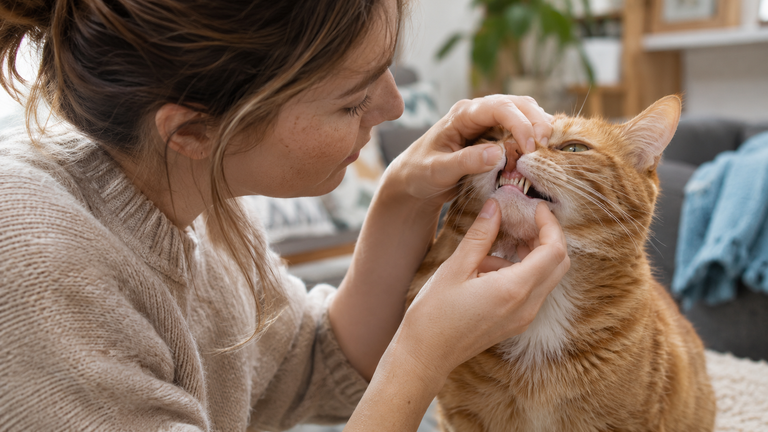
Cat dental disease is one of the most common health problems affecting adult cats. It can begin with plaque and inflamed gums, then progress to painful infections, loose teeth or damage beneath the gumline. Unfortunately, cats often hide dental pain, making early symptoms easy to miss.
Bad breath, drooling, difficulty chewing and changes in eating habits may all indicate an oral health problem. Some cats continue eating despite significant discomfort, so a normal appetite does not always mean their teeth are healthy.
This guide explains the signs of cat dental disease, common conditions, veterinary treatment, UK cost considerations and practical prevention. For more independent pet health and insurance information, visit PetCoverHQ.
What Is Cat Dental Disease?
Cat dental disease refers to several conditions affecting the teeth, gums and surrounding tissues. The most common include gingivitis, periodontal disease and tooth resorption.
According to PDSA’s guide to dental disease in cats, dental problems become increasingly common as cats age, and affected animals may conceal pain until the condition is advanced. PDSA
How Dental Problems Develop
Plaque is a sticky film containing bacteria that accumulates on teeth. Without effective cleaning, it can harden into tartar, also called calculus.
Plaque along the gumline can trigger inflammation. Over time, periodontal disease may damage the structures supporting the teeth.
However, not every feline dental condition begins with plaque. Tooth resorption, for example, involves destruction of tooth tissue and can occur even when the visible tooth looks relatively normal.
Is Dental Disease Common in Older Cats?
Yes. Dental disease becomes more common with age, although younger cats can also develop problems.
VCA Animal Hospitals reports that more than half of cats over three years old have some form of dental disease. This reinforces the importance of regular oral examinations rather than waiting for obvious symptoms. VCA Animal Hospitals
What Are the Signs of Cat Dental Disease?
Early cat dental disease can be difficult to recognise. A cat may continue eating, playing and behaving normally while experiencing oral discomfort.

Watch for changes in the mouth, eating habits and grooming behaviour.
| Symptom | What it may indicate | Recommended action |
|---|---|---|
| Persistent bad breath | Plaque, gum disease or another oral problem | Arrange a dental examination |
| Red or bleeding gums | Gingivitis or other inflammation | Contact your vet |
| Drooling | Oral pain, inflammation or another illness | Seek veterinary advice |
| Dropping food | Difficulty chewing | Arrange prompt assessment |
| Chewing on one side | Pain affecting particular teeth | Contact your vet |
| Loose or broken tooth | Dental injury or advanced disease | Prompt veterinary examination |
| Facial swelling | Possible tooth root abscess or another serious problem | Urgent veterinary assessment |
| Reduced appetite | Dental pain or another medical condition | Contact your vet promptly |
Why Does My Cat Have Bad Breath?
Persistent unpleasant breath is not something owners should dismiss as normal.
Bacteria associated with plaque and dental inflammation can produce a noticeable odour. However, bad breath can also have other causes, including certain systemic illnesses.
A veterinary examination is needed to identify the problem.
Why Is My Cat Drooling?
Excessive drooling may occur with dental pain, gingivitis, tooth resorption or inflammation inside the mouth.
It can also result from poisoning, nausea or a foreign object.
If drooling begins suddenly, especially with weakness, vomiting or suspected toxin exposure, seek urgent veterinary advice.
Can Cats Have Toothache Without Stopping Eating?
Yes. Some cats continue eating despite painful dental conditions.
You may notice subtle changes, such as swallowing dry food without chewing, preferring wet food, eating more slowly or approaching the food bowl and walking away.
These behaviours deserve attention even when your cat has not completely lost its appetite.
Common Types of Dental Disease in Cats
Understanding the different conditions helps explain why dental treatment is not always limited to cleaning teeth.
1. Gingivitis
Gingivitis is inflammation of the gums.
Signs may include redness along the gumline, swelling and occasional bleeding.
Plaque is a common trigger, although other medical conditions can contribute.
Early gingivitis may improve with appropriate veterinary treatment and dental hygiene. More advanced disease requires a careful assessment.
2. Periodontal Disease
Periodontal disease affects the tissues supporting the teeth.
As inflammation progresses, the gum attachment and surrounding bone may become damaged.
Advanced cases can result in painful, loose teeth and tooth loss.
Unlike early gingivitis, destruction of supporting tissues may be irreversible.
3. Tooth Resorption
Tooth resorption is a particularly important cause of dental pain in cats.
The condition gradually destroys tooth tissue, sometimes affecting the roots before visible changes appear above the gumline.
Affected teeth can become extremely sensitive.
The VCA guide to tooth resorption explains why dental X-rays are important for identifying lesions and planning appropriate treatment. VCA Animal Hospitals
4. Feline Stomatitis
Feline stomatitis involves severe inflammation inside the mouth.
Affected cats may experience intense pain, drooling, difficulty eating and weight loss.
The condition can be challenging to manage and sometimes requires extensive dental extractions alongside other treatment.
5. Broken Teeth and Tooth Root Abscesses
A fractured tooth may expose sensitive internal structures, causing pain and increasing the risk of infection.
A tooth root abscess can lead to facial swelling and discomfort.
Both problems require veterinary assessment rather than home treatment.
When Is Cat Dental Disease an Emergency?
Not every dental problem requires emergency treatment, but some symptoms should be assessed urgently.
Contact a vet promptly if your cat:
- Stops eating or cannot eat comfortably.
- Has a broken tooth or significant mouth pain.
- Develops swelling around the jaw, cheek or eye.
- Has bleeding from the mouth.
- Drools excessively or appears distressed.
- Shows rapid weight loss or marked behavioural changes.
Seek emergency care if your cat has difficulty breathing, collapses or experiences severe facial trauma.
A cat that has stopped eating may develop serious complications, particularly if overweight. Do not wait several days hoping the problem will resolve.
How Do Vets Diagnose Dental Disease in Cats?
Your vet will usually begin with a physical examination and an initial assessment of the mouth.
However, an awake examination cannot reliably reveal every dental problem, especially disease affecting tooth roots.
A complete dental assessment often requires general anaesthesia.

What Happens During a Dental Examination?
Depending on your cat’s condition, the veterinary team may recommend:
- A pre-anaesthetic health assessment.
- Blood tests when clinically appropriate.
- Examination of the teeth and gums under anaesthesia.
- Dental probing to assess periodontal pockets.
- Dental X-rays to examine roots and surrounding bone.
- A treatment plan based on the findings.
Dental radiographs are particularly useful because significant disease may exist beneath apparently healthy gums.
Why Is Anaesthesia Necessary?
General anaesthesia allows the vet to examine and treat the mouth thoroughly while controlling pain and preventing movement.
It also enables cleaning beneath the gumline and obtaining dental X-rays.
The VCA explanation of veterinary dental cleaning outlines why anaesthesia-free cleaning cannot replace a complete dental procedure. Vca
Although anaesthesia carries risks, veterinary teams assess each cat individually and use monitoring and supportive care to reduce those risks.
How Is Cat Dental Disease Treated?
Treatment depends on the diagnosis and severity.
Professional Dental Cleaning
A veterinary scale and polish removes plaque and tartar from accessible tooth surfaces, including beneath the gumline.
Polishing helps smooth the tooth surface after scaling.
This treatment may be appropriate for selected cats with plaque accumulation or periodontal disease.
Tooth Extraction
Extraction may be necessary when a tooth is severely damaged, loose, infected or affected by painful resorption.
Although owners may worry about tooth removal, eliminating a painful diseased tooth can substantially improve a cat’s comfort.
Cats often adapt well after extractions.
Pain Relief
Your vet may prescribe cat-appropriate pain medication before or after treatment.
Never give human painkillers such as paracetamol or ibuprofen to a cat. These can cause life-threatening poisoning.
Antibiotics
Antibiotics may be appropriate for certain infections, but they do not replace treatment of diseased teeth.
They are not automatically required for every dental procedure.
Treatment for Severe Stomatitis
Cats with severe stomatitis may require specialist assessment, medication and extraction of multiple teeth.
Long-term monitoring may be necessary because some cats continue experiencing inflammation after surgery.
How Much Does Cat Dental Treatment Cost in the UK?
The cost of treating cat dental disease varies considerably between practices.
Factors include the severity of the condition, anaesthetic requirements, dental X-rays, the number of extractions and whether specialist treatment is necessary.
| Potential cost | What to ask your vet |
|---|---|
| Initial consultation | Is the dental assessment included in the procedure estimate? |
| Pre-anaesthetic blood tests | Are these recommended for my cat? |
| General anaesthesia | Are monitoring, fluids and recovery care included? |
| Scale and polish | Does the quote cover cleaning above and below the gumline? |
| Dental X-rays | Are full-mouth radiographs included? |
| Tooth extraction | How will additional extractions be priced? |
| Medication | Are pain relief and take-home medicines included? |
| Follow-up appointment | Is a post-operative check included? |
Why Can the Final Bill Be Higher Than the Initial Estimate?
Some dental problems only become apparent during examination under anaesthesia or after dental X-rays.
A cat initially booked for cleaning may also need one or more teeth extracted.
Before the procedure, ask your vet how unexpected findings will be handled.
You can request an estimate showing the likely minimum cost and a higher scenario if extractions are required.
Does Pet Insurance Cover Cat Dental Disease?
Some UK pet insurance policies provide dental illness cover, but the terms vary significantly.
An insurer may require evidence of regular dental checks, prompt treatment of recommended problems or appropriate preventive care.
Other policies may cover dental injuries but restrict or exclude dental illness.
Important conditions to review include:
- Whether dental illness and dental accidents are both covered.
- Pre-existing condition exclusions.
- Annual veterinary fee limits.
- Excesses and co-payments.
- Routine cleaning exclusions.
- Requirements for dental examinations.
- Restrictions relating to delayed treatment.
Routine scale and polish performed solely as preventive care is commonly excluded.
For a wider explanation of exclusions, see our guide to what pet insurance does not cover.
Never assume a dental claim will be accepted without checking the policy wording.
How to Prevent Cat Dental Disease at Home
Prevention cannot eliminate every dental condition, especially tooth resorption, but consistent oral care can reduce plaque-related problems.

1. Brush Your Cat’s Teeth
Daily tooth brushing is one of the most effective ways to control plaque.
Use a cat-specific toothbrush or suitable finger brush and toothpaste formulated for cats.
Do not use human toothpaste.
The Cats Protection dental care guide provides practical advice on recognising dental problems and maintaining oral hygiene. Cats Protection
2. Introduce Brushing Gradually
Begin by allowing your cat to become familiar with the toothpaste and handling around the mouth.
Progress to gently touching the outer teeth and gums, then short brushing sessions.
Reward calm behaviour and keep sessions positive.
If your cat becomes distressed, stop and try a gentler approach later.
Do not attempt brushing when the mouth is painful or inflamed without veterinary advice.
3. Consider Veterinary Dental Products
Certain dental diets, treats and oral care products may help reduce plaque or tartar.
However, effectiveness varies.
Look for products supported by appropriate veterinary evidence and ask your vet which options suit your cat.
Dental treats should complement, not replace, brushing and professional care.
4. Schedule Regular Dental Checks
Ask your vet to examine your cat’s mouth during routine health appointments.
Cats with previous dental disease may need more frequent assessments.
5. Monitor Changes in Eating and Grooming
Watch for bad breath, food dropping, unusual chewing, drooling and reduced grooming.
Small changes may be early clues that your cat is uncomfortable.
A Simple Weekly Dental Health Checklist
This checklist can help owners recognise changes between veterinary visits.
| What to check | Normal or reassuring observation | Warning sign |
|---|---|---|
| Breath | No persistent strong odour | New or worsening bad breath |
| Gums | No obvious redness or bleeding | Swelling, redness or bleeding |
| Eating | Comfortable, familiar eating pattern | Dropping food or chewing differently |
| Saliva | No unusual drooling | Excessive or blood-stained saliva |
| Behaviour | Normal grooming and activity | Pawing at mouth or withdrawing |
| Face | No unusual swelling | Swelling near jaw or cheek |
Do not force your cat’s mouth open to complete the checklist. A visual observation while your cat is relaxed is sufficient.
Frequently Asked Questions
Can cat dental disease be cured?
Some early plaque-related gum inflammation can improve with treatment. However, advanced periodontal damage and tooth resorption may require extraction or ongoing management.
Can a cat still eat with dental disease?
Yes. Cats sometimes continue eating despite significant dental pain, so appetite alone cannot rule out oral disease.
Does dry cat food clean teeth?
Ordinary dry food does not reliably replace tooth brushing. Some specially formulated veterinary dental diets may help reduce plaque or tartar.
Is cat dental cleaning safe for older cats?
Age alone does not automatically prevent dental treatment. Your vet will assess your cat’s overall health and anaesthetic risks before recommending a procedure.
Why does my cat need dental X-rays?
Dental X-rays reveal problems affecting tooth roots and surrounding bone that may not be visible during a routine examination.
Can cat dental disease cause weight loss?
Yes. Painful chewing or reduced appetite can contribute to weight loss, although many other medical conditions can cause the same symptom.
Does pet insurance pay for cat tooth extraction?
It may, depending on whether the extraction is medically necessary, the reason for treatment and the policy’s dental coverage and exclusions.
Final Thoughts
Cat dental disease can cause significant pain even when obvious symptoms are absent. Persistent bad breath, inflamed gums, changes in eating habits and excessive drooling should never be dismissed.
Regular veterinary examinations, appropriate dental treatment and consistent home care can help protect your cat’s oral health and quality of life.
For more UK-focused cat health information, veterinary cost guidance and independent pet insurance resources, explore PetCoverHQ.