Hot spots on dogs are painful, inflamed patches of skin that can appear surprisingly quickly. A small area of irritation may become a red, moist sore after repeated scratching, licking or chewing. The affected skin may also develop an unpleasant smell, discharge or matted fur.
Although hot spots are usually treatable, they can spread rapidly and cause considerable discomfort. Early veterinary care helps protect the skin and identify the irritation that started the problem.
This guide explains what hot spots on dogs look like, their common causes, safe steps to take before a vet appointment and how to reduce the risk of recurrence. For more practical UK pet health and veterinary cost advice, explore PetCoverHQ.

What Are Hot Spots on Dogs?
Hot spots, medically known as acute moist dermatitis or pyotraumatic dermatitis, are localised areas of inflamed skin caused or worsened by repeated scratching, biting or licking.
They often develop when something initially irritates the skin. The dog responds by scratching or chewing, damaging the surface and allowing moisture and microorganisms to accumulate.
The result can be a painful, wet-looking lesion that becomes noticeably larger within hours.
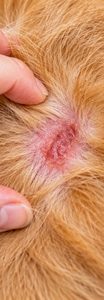
According to PDSA’s veterinary guide to hot spots, these sores commonly appear red, moist, painful and sometimes smelly. PDSA recommends contacting a vet as soon as a hot spot is suspected. PDSA
What Do Hot Spots on Dogs Look Like?
Common signs include:
- Bright red or inflamed skin.
- Moist, sticky or weeping patches.
- Hair loss around the affected area.
- Matted fur covering a sore.
- Swelling or tenderness.
- An unpleasant smell.
- Persistent scratching, licking or chewing.
- Scabs or crusts as the lesion changes.
A hot spot may initially be hidden beneath thick fur, especially in long-haired breeds.
Not every red patch is a hot spot. Other conditions, including fungal infections, allergies and deeper bacterial infections, can produce similar symptoms.
Where Do Dogs Commonly Develop Hot Spots?
Hot spots on dogs can appear almost anywhere, but some locations are more common because they are easy to scratch, lick or chew.
| Location | Possible underlying trigger | What owners may notice |
|---|---|---|
| Behind or below ears | Ear irritation or infection | Head shaking, scratching |
| Neck and cheeks | Allergies, ear problems, insect bites | Matted fur, painful patches |
| Lower back and tail base | Fleas or flea allergy | Chewing, hair loss |
| Hips and thighs | Local irritation or underlying discomfort | Repeated licking |
| Legs and paws | Allergies, irritation or injury | Persistent chewing |
For example, a dog with an uncomfortable ear may repeatedly scratch the surrounding skin until a hot spot develops beneath the ear.
The Blue Cross guide to hot spots identifies the head, limbs and hips as common locations and explains why a veterinary diagnosis is important. Blue Cross
What Causes Hot Spots on Dogs?
Hot spots are often the result of an underlying problem rather than a disease that begins without warning.
Identifying the trigger is important because treating the visible sore alone may not prevent another episode.
1. Fleas and Other Parasites
Flea bites can cause significant itching.
Some dogs develop flea allergy dermatitis, meaning even limited flea exposure can trigger intense discomfort.
Repeated chewing around the lower back or tail base may damage the skin and lead to a hot spot.
You may not find live fleas when examining the coat.
2. Environmental Allergies
Dogs with allergic skin disease may react to environmental allergens such as pollen or house dust mites.
Itching can lead to repeated scratching and skin damage.
Some dogs experience seasonal flare-ups, while others have symptoms throughout the year.
Allergic skin disease may require ongoing management rather than a single treatment.
3. Ear Infections
An uncomfortable ear can cause a dog to shake its head or scratch repeatedly.
This may damage nearby skin, particularly beneath the ear flap.
If your dog also has an unpleasant ear smell, discharge or frequent head shaking, read our Dog Ear Infection guide for additional information about ear-related symptoms.

4. Moisture Trapped in the Coat
Dogs with thick or long coats may be more vulnerable when moisture remains trapped against their skin.
Swimming, bathing and wet weather can contribute to damp, matted fur.
Moisture alone does not automatically cause a hot spot, but it may worsen irritation and create conditions that favour microbial overgrowth.
The Cornell University College of Veterinary Medicine highlights the importance of drying thick coats properly after swimming. vet.cornell.edu
5. Insect Bites and Minor Injuries
An insect bite, small graze or local irritation may trigger scratching.
If a dog repeatedly licks the same area, the initial problem can develop into a larger lesion.
6. Other Sources of Discomfort
Anal gland problems, painful joints and other conditions may cause dogs to lick or chew particular areas.
If hot spots keep appearing in the same location, your vet may investigate whether pain or another underlying condition is contributing.
Are Hot Spots on Dogs Dangerous?
Most uncomplicated hot spots are treatable, but they should not be ignored.
The main concerns are pain, worsening inflammation, damage from repeated scratching and the possibility of deeper infection.
Hot spots can progress quickly, particularly when a dog continues chewing the affected area.
When Should You Contact a Vet?
Contact your veterinary practice as soon as you suspect a hot spot.
Seek particularly prompt assessment if:
- The lesion is spreading rapidly.
- The area is very painful.
- There is significant swelling or discharge.
- Your dog refuses food or seems unusually lethargic.
- Several sores appear.
- The skin becomes severely damaged.
- The problem repeatedly returns.
If your dog collapses, has difficulty breathing or becomes severely unwell, seek emergency veterinary care.
What Should You Do If Your Dog Has a Hot Spot?
The first priority is to stop further skin damage while arranging veterinary advice.
Step 1: Prevent Licking and Scratching
A properly fitted Elizabethan collar or another suitable protective device may prevent your dog from reaching the sore.
This is important because continued licking can enlarge the lesion and delay healing.
Make sure any protective clothing does not rub against or trap moisture over the affected skin.
Step 2: Keep Your Dog Comfortable
Avoid unnecessary handling of the painful area.
Provide a calm place to rest and prevent rough play that may aggravate the lesion.
If your dog reacts strongly when the area is touched, stop examining it.
Step 3: Do Not Cut Matted Fur With Scissors
Hair may need to be clipped to expose the lesion, but this is often best done by a veterinary professional.
Inflamed skin is fragile, and scissors can cause accidental cuts.
Some dogs require pain relief or sedation before a painful area can be clipped safely.
Step 4: Avoid Unprescribed Products
Do not apply essential oils, alcohol, hydrogen peroxide, human steroid creams or household disinfectants.
Products intended for people may irritate damaged skin or be harmful if swallowed during grooming.
Ask your vet before using any medicated shampoo, antiseptic or topical treatment.
Step 5: Photograph the Lesion
A clear photograph can help document changes in size and appearance.
Record when the sore first appeared and whether your dog has been scratching, swimming or showing signs of ear discomfort.
Do not delay veterinary care simply to collect photographs.
How Do Vets Treat Hot Spots on Dogs?
Treatment depends on the severity of the lesion and the underlying cause.
A veterinary examination helps distinguish a superficial hot spot from a deeper skin infection or another condition.

Clipping and Cleaning
The vet may clip fur around the affected area to expose the lesion and allow appropriate cleaning.
This can also help identify the full extent of the problem.
Topical Treatment
A vet may recommend an antiseptic wash, medicated spray or another topical preparation.
The product and frequency depend on the condition of the skin.
Anti-Inflammatory Medication
Medication may be prescribed to reduce inflammation, itching or discomfort.
The choice depends on your dog’s health and whether infection or another condition is present.
Antibiotics
Not every hot spot requires oral antibiotics.
The 2025 International Society for Companion Animal Infectious Diseases guidelines favour appropriate topical treatment for many superficial bacterial skin conditions, reserving systemic antibiotics for situations where they are indicated. DOI
Treating the Underlying Cause
If fleas, allergies or ear disease triggered the hot spot, the vet may recommend additional treatment.
This is especially important for dogs with repeated episodes.
How Long Do Hot Spots on Dogs Take to Heal?
The recovery period varies according to the size, depth and severity of the lesion.
Some uncomplicated hot spots improve noticeably within a few days of appropriate treatment, but complete healing can take longer.
A larger lesion or deeper infection may require additional treatment and follow-up appointments.
Signs That Treatment Is Working
You may notice:
- Less redness and swelling.
- Reduced moisture or discharge.
- Less scratching and licking.
- Improved comfort.
- Gradual formation of healthy healing skin.
Hair regrowth usually takes longer than the initial skin recovery.
Signs That Healing Is Not Going Well
Contact your vet if:
- The lesion continues spreading.
- Discharge or unpleasant odour increases.
- Your dog remains very uncomfortable.
- New sores develop.
- The area does not improve as expected.
Do not stop prescribed medication early or remove protective equipment before your vet advises it is safe.
Can Hot Spots on Dogs Heal Without Treatment?
A very small area of irritation may occasionally improve if the trigger disappears and further scratching stops.
However, a suspected hot spot should be assessed by a vet because these lesions can worsen quickly and may resemble other skin diseases.
Waiting for a painful, moist sore to heal without treatment risks allowing the problem to become more extensive.
Home care is most useful as part of a veterinary treatment plan, not as a substitute for diagnosis.
How Much Does Hot Spot Treatment Cost in the UK?
The cost depends on the severity of the skin problem, whether medication is required and whether the dog needs additional investigations.
A straightforward case may require a consultation, clipping, cleaning and prescribed treatment.
More complicated cases may involve repeat appointments, laboratory tests or treatment for an underlying allergy.
| Possible expense | Why it may be needed |
|---|---|
| Veterinary consultation | Examination and diagnosis |
| Clipping and cleaning | Exposing and treating the lesion |
| Skin cytology | Investigating bacteria or yeast |
| Prescription medication | Reducing inflammation or treating infection |
| Protective collar | Preventing further licking |
| Follow-up consultation | Checking healing |
| Allergy or parasite investigation | Identifying recurring triggers |
Prices vary between UK veterinary practices. Ask for an itemised estimate rather than relying on a single national figure.
Does Pet Insurance Cover Hot Spots?
Some UK pet insurance policies may cover eligible treatment for a hot spot caused by an insured illness.
However, this depends on the policy terms.
Common considerations include pre-existing conditions, waiting periods, annual veterinary fee limits, excesses and whether the condition is linked to a previous skin problem.
For example, an insurer may examine earlier veterinary records if your dog had repeated itching before the policy started.
Routine flea prevention is generally excluded from standard pet insurance, even when treatment for an eligible skin condition may be covered.
Our guide to what pet insurance does not cover explains common UK policy exclusions in more detail.
How to Prevent Hot Spots on Dogs
Prevention focuses on reducing itching, avoiding prolonged moisture and identifying skin problems early.
Maintain Appropriate Flea Prevention
Ask your vet about parasite prevention suited to your dog’s lifestyle and health.
If your dog has a flea allergy, consistent prevention is particularly important.
Dry Your Dog After Swimming
Use a towel to dry the coat thoroughly, paying attention to areas where moisture may become trapped.
Dogs with thick coats may need additional grooming to ensure the undercoat dries properly.

Groom Regularly
Brush your dog to remove loose fur and prevent matting.
Check the skin beneath the coat, especially after outdoor activities.
Avoid aggressive brushing over irritated areas.
Monitor Allergies and Ear Problems
Recurring ear infections, paw licking or seasonal itching may indicate an underlying condition.
Seek veterinary advice rather than repeatedly treating the visible symptoms alone.
Check Common Hot Spot Locations
Inspect the ears, neck, hips, lower back and tail base during routine grooming.
Early detection can help prevent a small area of irritation from becoming a painful sore.
A Practical 7-Day Skin Recovery Checklist
Use this checklist after your dog has received veterinary treatment. It is a monitoring tool, not a substitute for follow-up care.
| Day | What to monitor |
|---|---|
| Day 1 | Record lesion size, medication instructions and collar fit |
| Day 2 | Check for worsening redness, swelling or discharge |
| Day 3 | Note changes in licking, scratching and comfort |
| Day 4 | Compare photographs taken under similar lighting |
| Day 5 | Check whether the lesion is becoming drier and less inflamed |
| Day 6 | Continue prescribed treatment and monitor for new sores |
| Day 7 | Review healing and arrange follow-up if advised |
If the lesion worsens at any stage, contact your vet rather than waiting until day seven.
Frequently Asked Questions
Are hot spots on dogs contagious?
Hot spots themselves are not generally considered contagious. However, some underlying causes of skin irritation, such as certain parasites, can spread between animals.
Can I use Sudocrem on a dog hot spot?
Do not apply Sudocrem or other human skin creams without veterinary advice. Dogs may lick the product, and damaged skin may react differently from healthy skin.
Why does my dog keep getting hot spots?
Recurring hot spots may be associated with fleas, allergies, ear infections or other sources of irritation. Your vet may recommend further investigation to identify the trigger.
Can hot spots on dogs appear overnight?
Yes. Hot spots can develop rapidly, sometimes becoming visibly inflamed within hours of repeated scratching or chewing.
Should I bathe my dog if it has a hot spot?
Avoid routine bathing over a painful lesion unless your vet recommends a specific cleaning or medicated bathing plan.
Do hot spots on dogs always need antibiotics?
No. Some superficial lesions can be managed with appropriate topical treatment and measures to prevent further irritation. Antibiotics are prescribed when clinically indicated.
Can a dog develop hot spots in winter?
Yes. Although warm and humid conditions can increase risk, hot spots can occur at any time of year.
Final Thoughts
Hot spots on dogs can develop quickly and cause significant discomfort, but early veterinary treatment usually offers a good outlook.
The most important steps are to prevent further licking, avoid unsuitable home remedies and investigate the underlying cause.
Regular grooming, appropriate flea prevention and careful skin checks can also help reduce the risk of recurring problems.
For more practical UK dog health information, veterinary cost guidance and independent pet insurance resources, visit PetCoverHQ.