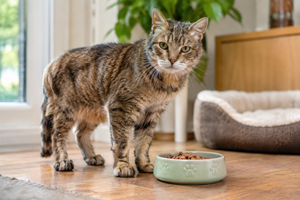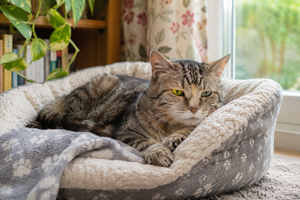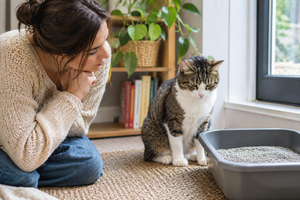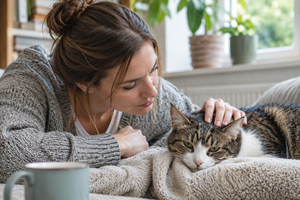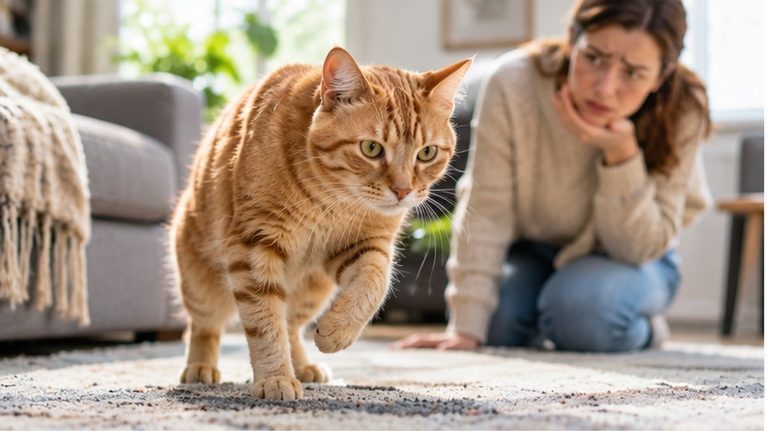
Cat limping is usually a sign that something is affecting your cat’s ability to walk comfortably. A cat may suddenly hold up one paw, avoid putting weight on a back leg or move more slowly than usual. Even when there is no visible injury, limping can indicate pain, inflammation or an underlying medical condition.
Some causes are relatively minor, such as a damaged claw or soft tissue strain. Others, including fractures, infected bite wounds and blood clots, require urgent veterinary treatment.
This guide explains why cats limp, how to recognise serious warning signs, what you can safely do at home and what treatment may involve in the UK. For more practical pet health guidance and independent insurance information, visit PetCoverHQ.
Why Is My Cat Limping?
Cat limping, also known as lameness, occurs when a cat cannot use one or more limbs normally because of pain, weakness or impaired movement.
According to PDSA’s guidance on limping and stiffness in cats, causes range from claw injuries and arthritis to fractures, abscesses and neurological problems. PDSA
Limping may appear suddenly after an injury or develop gradually over several weeks.
What Does Cat Limping Look Like?
Not every limping cat walks with an obvious hobble.
You might notice:
- Holding one paw off the ground.
- Taking shorter steps.
- Avoiding weight on one leg.
- Walking with an uneven gait.
- Hesitating before jumping.
- Difficulty climbing stairs.
- Spending more time resting.
- Licking one paw or leg repeatedly.
Cats often hide discomfort, making subtle changes in mobility especially important.
Can a Cat Limp Without Showing Pain?
Yes. Cats do not always cry or react visibly when they are uncomfortable.
A cat may continue eating, grooming and interacting with its owner while experiencing pain.
Changes in posture, movement or willingness to jump can be more useful clues than vocalisation alone.
What Are the Most Common Causes of Cat Limping?
The cause of cat limping depends on which limb is affected, how suddenly symptoms began and whether other signs are present.
1. Paw and Claw Injuries
A damaged claw, cut paw pad or foreign object between the toes can make walking painful.
Common examples include broken claws, small puncture wounds, thorns and grass seeds.
You may notice excessive licking, a raised paw or reluctance to walk on hard surfaces.
Some injuries are difficult to see beneath the fur.
2. Sprains and Soft Tissue Injuries
Cats can injure muscles, tendons or ligaments while jumping, running or landing awkwardly.
A mild strain may cause temporary discomfort, but more serious soft tissue damage can produce similar symptoms.
Without a veterinary examination, it is difficult to distinguish a sprain from a fracture or joint injury.
3. Cat Bite Abscesses
Outdoor cats sometimes develop infections following fights.
A bite wound may initially appear very small, but bacteria can become trapped beneath the skin.
An abscess may develop over the following days, causing swelling, warmth, pain and sometimes lethargy or reduced appetite.
These infections often require veterinary treatment.
4. Broken Bones and Dislocations
Falls, road accidents and other trauma can cause fractures or displaced joints.
Affected cats may refuse to bear weight, hold a limb at an unusual angle or react strongly when approached.
A fracture is not always visible externally.
Do not attempt to straighten or manipulate an injured leg.
5. Arthritis
Arthritis is a common cause of reduced mobility, particularly in older cats.
Unlike a sudden injury, arthritis often causes gradual changes.
Your cat may stop jumping onto furniture, struggle with stairs or become less interested in playing.
PDSA’s arthritis guide explains that cats frequently conceal joint pain and may show behavioural changes rather than obvious limping. PDSA
6. Neurological Problems
Conditions affecting the spine, nerves or brain can interfere with normal movement.
Signs may include weakness, dragging a limb, poor coordination or an unusual walking pattern.
These symptoms require veterinary assessment, particularly when they develop suddenly.
Cat Limping on Front Leg vs Back Leg
The affected limb can help a vet narrow down possible causes, but it cannot confirm a diagnosis.
| Observation | Possible causes | Recommended action |
|---|---|---|
| Cat limping on front leg | Claw injury, paw wound, sprain, joint injury | Contact your vet |
| Cat limping on back leg | Soft tissue injury, arthritis, fracture, neurological problem | Contact your vet |
| Sudden inability to use a back leg | Trauma, nerve injury, blood clot | Emergency veterinary care |
| Limping after a fall | Fracture, dislocation, soft tissue injury | Urgent assessment |
| Gradual stiffness in an older cat | Arthritis or another chronic condition | Arrange a veterinary appointment |
| Limping with swelling | Abscess, injury, infection | Prompt veterinary assessment |
Why Is My Cat Limping on Its Front Leg?
Front-leg limping may result from a paw injury, damaged claw or problem affecting the shoulder, elbow or wrist.
Watch for repeated licking or difficulty placing the paw on the ground.
A normal-looking paw does not rule out an injury higher up the leg.
Why Is My Cat Limping on Its Back Leg?
Back-leg limping may involve the hip, knee, ankle, muscles or nerves.
Older cats may develop arthritis, while younger cats can experience injuries following falls or awkward landings.
A sudden inability to move a hind leg is particularly concerning because it may indicate a serious neurological or circulatory problem.
When Is Cat Limping an Emergency?
Some causes of cat limping require immediate veterinary attention.
Contact an emergency vet if your cat:
- Suddenly cannot put weight on a leg.
- Has a visibly deformed limb.
- Is experiencing severe pain.
- Has suffered a road accident or significant fall.
- Is dragging one or both back legs.
- Develops sudden weakness or collapse.
- Has an open wound with significant bleeding.
- Has difficulty breathing alongside mobility problems.
PDSA recommends immediate veterinary assessment for sudden lameness, inability to bear weight or severe pain. PDSA
Sudden Back-Leg Paralysis: A Blood Clot Emergency
One particularly serious condition is feline aortic thromboembolism, sometimes called a saddle thrombus.
A blood clot can obstruct circulation to the hind limbs, causing sudden severe pain and weakness or paralysis.
Affected paws may feel unusually cold, and the cat may cry, breathe rapidly or become extremely distressed.
This is a life-threatening emergency.
Cats Protection’s first-aid guidance advises immediate veterinary attention when a distressed cat suddenly cannot move one or more legs. Cats Protection
Do not massage the legs or wait for movement to return.
Cat Limping but Acting Normal: Should You Worry?
A cat that is limping but still eating and behaving normally may have a minor injury, but normal behaviour does not mean the problem is harmless.
Cats are particularly good at hiding pain.
A mild limp may improve with rest, but the cause should not be assumed without an examination.
How Long Should You Wait Before Seeing a Vet?
Contact your vet when you first notice a limp so they can advise on urgency.
For a mild limp without other concerning symptoms, your vet may recommend short-term monitoring.
If the limp has not improved within 24 hours, arrange an examination.
Do not wait if your cat cannot bear weight, develops a sudden limp, appears painful or has experienced trauma.
This follows the general approach outlined in VCA’s first-aid guidance for limping cats. VCA Animal Hospitals
What to Do If Your Cat Is Limping
The safest first step is to reduce movement and seek veterinary advice.
Step 1: Keep Your Cat Indoors
Prevent further jumping, climbing or running.
Place your cat in a quiet, comfortable room with food, water and a litter tray nearby.
Avoid encouraging exercise to test whether the leg is improving.
Step 2: Look for Visible Injuries
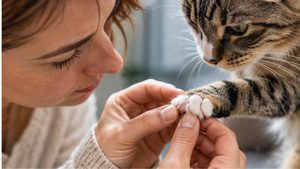
If your cat remains calm, visually inspect the affected paw.
Look for swelling, bleeding, a damaged claw or something trapped between the toes.
Stop immediately if your cat becomes distressed.
Do not squeeze swollen areas or manipulate painful joints.
Step 3: Record a Short Video
If it can be done without encouraging unnecessary movement, record a few seconds of your cat walking naturally.
This may help your vet understand the problem, especially if the limp is intermittent.
Do not make your cat walk repeatedly for the camera.
Step 4: Prepare Safe Transport
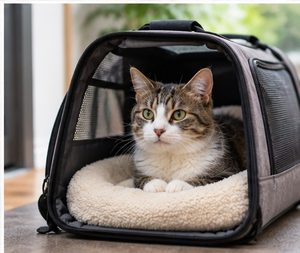
Use a secure carrier lined with a soft towel.
If a fracture is suspected, move your cat as little as possible.
A carrier with a removable top may make handling easier.
Step 5: Never Give Human Painkillers
Human medicines such as paracetamol and ibuprofen can be extremely toxic to cats.
Never give painkillers, anti-inflammatory medication or topical creams without veterinary instruction.
Cats Protection specifically warns against using human medication as a home remedy for injured cats. Cats Protection
How Do Vets Diagnose Cat Limping?
A vet will usually begin by asking when the limp started and whether your cat has experienced an injury.
They may observe your cat’s movement and examine the paws, muscles, joints and spine.
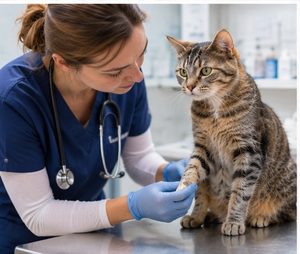
Depending on the findings, additional tests may be needed.
| Investigation | Purpose |
|---|---|
| Physical examination | Identify pain, swelling or wounds |
| Orthopaedic examination | Assess bones, joints and limb movement |
| Neurological examination | Check nerve function and coordination |
| X-rays | Investigate fractures, joint changes and some other abnormalities |
| Blood tests | Investigate selected infections or systemic illnesses |
| Ultrasound | Assess certain soft tissue injuries |
| CT or MRI | Investigate complex orthopaedic or neurological conditions |
Not every cat requires imaging.
VCA’s guide to lameness in cats explains how veterinary teams combine medical history, examination and selected diagnostic tests. VCA Animal Hospitals
How Is Cat Limping Treated?
Treatment depends on the diagnosis rather than the limp itself.
Rest and Activity Restriction
For selected minor injuries, a vet may recommend restricted movement.
The duration depends on the injury and recovery progress.
Prescription Pain Relief
Veterinary medicines may help manage pain and inflammation.
Medication must be selected and dosed specifically for cats.
Antibiotics and Abscess Treatment
An infected bite wound may require drainage, cleaning and appropriate medication.
Some cats need sedation for safe treatment.
Fracture Repair
Broken bones may require splinting, surgical stabilisation or another treatment depending on the fracture.
Not every fracture can be managed with a simple bandage.
Arthritis Management
Cats with arthritis may benefit from long-term pain management, weight control and environmental adjustments.
Your vet may also recommend changes to feeding areas, litter trays and sleeping locations.
Physiotherapy and Rehabilitation
Some cats benefit from a supervised rehabilitation plan following injury or surgery.
Exercises should only be performed when recommended by a veterinary professional.
How Much Does Cat Limping Treatment Cost in the UK?
The cost depends on the underlying cause, investigations and treatment required.
A minor claw injury may involve a consultation and simple treatment, while a fracture can require imaging, anaesthesia, surgery and follow-up appointments.
| Possible expense | Why it may be needed |
|---|---|
| Veterinary consultation | Initial assessment |
| X-rays | Checking bones and joints |
| Sedation | Safe examination or imaging |
| Wound treatment | Cleaning injuries or draining abscesses |
| Prescription medication | Pain relief or infection treatment |
| Orthopaedic surgery | Repairing selected fractures or joint injuries |
| Follow-up visits | Monitoring recovery |
| Rehabilitation | Supporting mobility after treatment |
Actual charges vary between practices and regions.
Ask your vet for an itemised estimate and discuss available treatment options.
Does Pet Insurance Cover Cat Limping?
Some UK pet insurance policies cover eligible veterinary treatment when limping results from an insured accident or illness.
However, coverage depends on the policy terms.
Important considerations include pre-existing conditions, waiting periods, annual veterinary fee limits, excesses, co-payments and chronic illness provisions.
For example, an accident-related fracture may be assessed differently from an arthritis condition documented before the policy began.
Always review your policy wording and seek veterinary treatment promptly when necessary.
How to Prevent Cat Limping and Injuries
Not every injury can be prevented, but several practical measures may reduce risk.
Maintain a Healthy Weight
Excess body weight can place additional stress on joints.
Ask your vet to assess your cat’s body condition and recommend a suitable feeding plan.
Check Claws Regularly
Overgrown or damaged claws can cause discomfort.
Older cats may need additional claw care because they may use scratching surfaces less frequently.
Make the Home Safer
Secure windows and balconies, and reduce access to unsafe heights.
Provide stable climbing furniture and avoid slippery surfaces where possible.
Support Older Cats
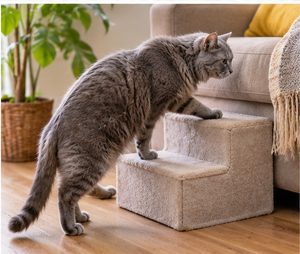
Use low-sided litter trays, accessible resting areas and ramps or steps where appropriate.
These changes can reduce unnecessary strain on painful joints.
Monitor Mobility Changes
Notice whether your cat jumps less often, avoids stairs or becomes reluctant to play.
Early veterinary assessment can help identify arthritis and other conditions before mobility deteriorates further.
A Practical Cat Mobility Monitoring Checklist
Use this checklist to describe your cat’s symptoms to the vet. It is not a reason to delay treatment.
| Observation | What to record |
|---|---|
| Affected leg | Front left, front right, back left or back right |
| Onset | Sudden or gradual |
| Weight-bearing | Normal, reduced or unable to bear weight |
| Visible injury | Swelling, wound or damaged claw |
| Movement | Difficulty jumping, climbing or walking |
| Behaviour | Hiding, vocalising or reduced activity |
| Appetite | Normal or reduced |
| Progress | Improving, unchanged or worsening |
If your cat develops sudden severe symptoms, seek emergency veterinary care rather than continuing to monitor.
Frequently Asked Questions
Why is my cat limping but not crying?
Cats often conceal pain. A cat may have a painful injury or joint condition without vocalising.
Can cat limping go away on its own?
Some minor injuries improve with rest, but limping can also indicate fractures, infections or arthritis. Contact your vet for advice, and arrange an examination if a mild limp does not improve within 24 hours.
Why is my cat limping after jumping?
An awkward landing can cause a strain, sprain or more serious injury. If your cat suddenly limps after jumping, contact your vet promptly.
Can an indoor cat develop a limp?
Yes. Indoor cats can experience claw injuries, falls, arthritis and other mobility problems.
Why is my older cat limping?
Arthritis is one possible cause, but injuries, infections and other conditions can also affect older cats.
Should I massage my cat’s injured leg?
No. Massage may worsen some injuries and can cause additional pain. Seek veterinary advice before attempting any physical treatment.
Can a cat walk with a broken leg?
Some cats may still move despite having a fracture. Being able to walk does not rule out a broken bone.
Is sudden back-leg weakness in cats dangerous?
Yes. Sudden weakness or paralysis can indicate a blood clot, neurological injury or another emergency. Seek immediate veterinary care.
Final Thoughts
Cat limping should never be dismissed simply because your cat continues eating or appears comfortable.
While some causes are relatively minor, others require urgent treatment. Recognising sudden changes in movement, severe pain, swelling or inability to bear weight can help you act quickly.
Keep your cat comfortable, restrict unnecessary movement and seek veterinary advice rather than attempting home treatment with human medication.
For more practical UK cat health information, veterinary cost guidance and independent pet insurance resources, explore PetCoverHQ.