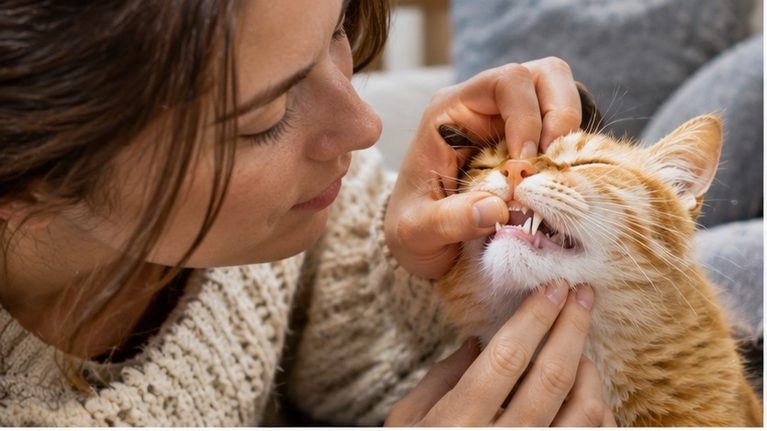
Dental disease in cats can develop quietly, even when a cat continues eating, playing and behaving normally. Bad breath, red gums or difficulty chewing may be the first signs of a painful dental problem that has been developing for months.
Dental conditions are particularly common in adult and older cats. According to Cornell University’s Feline Health Center, studies suggest that 50–90% of cats over four years old have some form of dental disease. Cornell Vet School
Understanding the warning signs can help you arrange veterinary treatment before the condition becomes more severe. This guide explains common dental problems, treatment options, UK veterinary costs and practical prevention methods. For more independent pet health information and insurance guidance, visit PetCoverHQ.

What Is Dental Disease in Cats?
Dental disease in cats refers to conditions affecting the teeth, gums and surrounding oral tissues.
The most common problems include gingivitis, periodontal disease and tooth resorption. These conditions can cause significant discomfort and, in some cases, lead to tooth loss.
A healthy cat’s gums are generally pink, although normal pigmentation varies between cats. Teeth should not have heavy tartar deposits, obvious fractures or painful-looking gum inflammation.
Dental disease can develop gradually, so owners may not notice a problem until their cat changes its eating habits.
How Common Is Cat Dental Disease?
Dental problems become more common as cats age, but younger cats can also develop gingivitis, broken teeth and other oral conditions.
Cornell identifies gingivitis, periodontitis and tooth resorption as three major feline dental diseases. Cornell Vet School
The high prevalence makes routine dental examinations an important part of preventive veterinary care.
What Are the Signs of Dental Disease in Cats?
Recognising dental disease in cats early can prevent prolonged discomfort and help owners seek appropriate treatment.
| Symptom | What you may notice | Possible explanation |
|---|---|---|
| Bad breath | Persistent unpleasant mouth odour | Plaque, gum disease or another oral problem |
| Red gums | Inflamed tissue around teeth | Gingivitis or other inflammation |
| Difficulty eating | Chewing slowly or on one side | Painful teeth or gums |
| Drooling | Excess saliva, sometimes blood-tinged | Oral pain or irritation |
| Weight loss | Gradual reduction in body weight | Difficulty eating |
| Pawing at the mouth | Repeatedly touching the face | Dental discomfort |
| Loose teeth | Teeth moving abnormally | Advanced periodontal disease or injury |
| Facial swelling | Swelling around the cheek or jaw | Possible abscess or other serious condition |
These signs can have several causes. A veterinary examination is needed to establish the diagnosis.
Can Cats Have Dental Pain but Still Eat?
Yes. Cats may continue eating despite painful dental disease.
Some swallow dry food without chewing properly, prefer softer food or chew on only one side.
Others approach their food bowl enthusiastically but suddenly stop eating after attempting to bite.
These changes should not be dismissed simply because the cat still appears hungry.
Is Bad Breath Normal in Cats?
A mild smell after eating may be temporary, but persistent strong bad breath is not something owners should ignore.
It can be associated with dental disease, oral infections or other medical conditions.
Do not attempt to mask bad breath using human mouthwash or toothpaste.
What Causes Dental Disease in Cats?
Several conditions can affect a cat’s oral health. Understanding the differences is useful because treatment varies considerably.
1. Plaque and Tartar Build-Up
Plaque is a soft bacterial film that accumulates on teeth.
If it is not removed, plaque can mineralise into tartar, which is much harder to eliminate.
Tartar accumulation near the gum line contributes to inflammation and can worsen periodontal disease.
Professional cleaning may be required once significant tartar has developed.
2. Gingivitis
Gingivitis is inflammation of the gums.
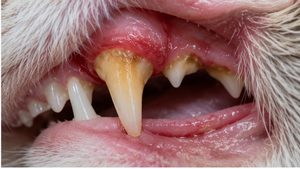
Affected gums may appear red, swollen or prone to bleeding.
Mild plaque-related gingivitis may improve with professional treatment and appropriate home care.
However, gingivitis can also be associated with infections or other inflammatory conditions.
3. Periodontal Disease
Periodontal disease affects the tissues supporting the teeth.
As the condition progresses, inflammation and infection can damage the supporting structures and lead to loose teeth.
Advanced disease may require extraction of severely affected teeth.
4. Tooth Resorption
Tooth resorption is a particularly important cause of dental disease in cats.
It occurs when the body gradually breaks down a tooth’s structure.
The condition can be extremely painful, and damage may develop beneath the gum line before it becomes visible.
According to Cornell’s guidance on tooth resorption, affected cats may tilt their heads while chewing, drop food or avoid biting with painful teeth. Cornell Vet School
Tooth resorption cannot be reversed through brushing or dietary changes.
Treatment depends on dental examination and radiographic findings.
5. Feline Chronic Gingivostomatitis
Feline chronic gingivostomatitis is a severe inflammatory condition affecting the mouth.
Cats may experience intense oral pain, drooling, difficulty eating and weight loss.
Management can involve medication and, in selected cases, extensive tooth extractions.
The condition requires veterinary diagnosis and an individual treatment plan.
6. Broken Teeth and Dental Abscesses
Cats may fracture teeth following trauma or by biting hard objects.
A damaged tooth can expose sensitive internal tissues and increase the risk of infection.
Tooth root abscesses may cause facial swelling and considerable pain.
These problems require veterinary treatment rather than home dental cleaning.
When Should You Take Your Cat to the Vet?
Contact your vet if you notice persistent bad breath, red gums, broken teeth, drooling or changes in eating behaviour.
Arrange prompt assessment if your cat has obvious mouth pain, bleeding gums or facial swelling.
Seek urgent veterinary advice if your cat:
- Cannot eat or swallow normally.
- Has severe facial swelling.
- Is bleeding significantly from the mouth.
- Appears extremely weak or distressed.
- Has experienced serious facial trauma.
- Develops breathing difficulties.
Cats that stop eating are at risk of additional health complications, so do not wait several days to seek advice.
PDSA’s dental disease guide recommends prompt veterinary attention when dental problems are suspected. PDSA
How to Check Your Cat’s Teeth at Home
A gentle visual check can help identify changes, but it cannot replace a professional dental examination.
Step 1: Choose a Calm Moment
Wait until your cat is relaxed.
Use good lighting and avoid handling the mouth when your cat is frightened or uncomfortable.
Step 2: Gently Lift the Lip
If your cat allows it, lift the upper lip slightly to look at the outer surfaces of the teeth and gums.
Do not force the mouth open.
Step 3: Look for Visible Changes
Check for redness, swelling, tartar, damaged teeth and unusual lumps.
Pay attention to any strong odour or excessive saliva.
Step 4: Observe Eating Behaviour
Notice whether your cat drops food, chews differently or avoids certain textures.
A change in eating behaviour can be an important sign of oral discomfort.
Step 5: Record Your Observations
Make a note of changes and share them with your vet.
If your cat resists examination or appears painful, stop immediately.
PDSA recommends regular home checks between veterinary dental examinations, provided the cat remains comfortable. PDSA
How Do Vets Diagnose Dental Disease in Cats?
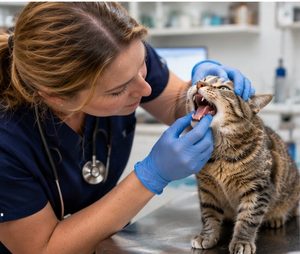
Veterinary diagnosis usually begins with an examination of the mouth and a review of the cat’s medical history.
However, many dental problems occur below the gum line and cannot be fully assessed in an awake cat.
A comprehensive dental examination may require general anaesthesia.
Dental X-Rays
Dental radiographs help identify problems affecting tooth roots and surrounding bone.
They are particularly important when tooth resorption is suspected.
The American Veterinary Dental College’s position statement explains why intraoral radiography is necessary for planning appropriate treatment of feline tooth resorption. avdc.org
Blood Tests Before Anaesthesia
Your vet may recommend blood tests to assess overall health and identify conditions that could affect anaesthetic planning.
This is especially relevant for older cats or those with existing medical problems.
Complete Oral Examination
During an anaesthetised dental procedure, the veterinary team may assess gum pockets, tooth mobility and hidden lesions.
The findings determine whether cleaning, extraction or another treatment is appropriate.
How Is Dental Disease in Cats Treated?
Treatment depends on the specific diagnosis and severity.
Professional Scale and Polish
A veterinary dental cleaning removes plaque and tartar from above and below the gum line.
It is normally performed under general anaesthesia to allow a thorough examination and safe cleaning.
An awake cosmetic cleaning cannot adequately assess or treat disease beneath the gums.
Tooth Extraction
Severely damaged or painful teeth may need to be removed.
Cats can often adapt well after appropriate extractions, particularly when the procedure relieves chronic pain.
Treatment for Tooth Resorption
Affected teeth may require extraction or another specialist surgical approach depending on radiographic findings.
The decision should be made by a veterinary professional.
Pain Relief
Veterinary-prescribed pain relief helps keep cats comfortable during treatment and recovery.
Never give human painkillers to a cat.
Antibiotics
Antibiotics may be appropriate for certain infections, but they are not a substitute for treating an infected or severely damaged tooth.
They are not routinely required for every dental procedure.
How Much Does Cat Dental Treatment Cost in the UK?
Dental treatment costs vary depending on the practice, the condition and the complexity of the procedure.
PDSA notes that treatment can cost several hundred pounds, with the total depending on the dental work required. PDSA
Rather than relying on a single national price, ask your veterinary practice for a detailed estimate.
| Potential expense | Why it may be required |
|---|---|
| Dental consultation | Initial oral examination |
| Pre-anaesthetic blood tests | Assessing health before treatment |
| General anaesthesia | Allowing a full dental procedure |
| Dental X-rays | Identifying hidden tooth and root problems |
| Scale and polish | Removing plaque and tartar |
| Tooth extraction | Treating painful or damaged teeth |
| Pain medication | Supporting recovery |
| Follow-up appointment | Checking healing and ongoing care |
Example: Why Two Dental Bills Can Be Very Different
Consider two hypothetical cats.
Cat A has tartar accumulation but no significant tooth damage. Its treatment may involve examination, anaesthesia, dental cleaning and polishing.
Cat B has several painful resorptive lesions. It may need dental radiographs, multiple extractions, additional pain management and a longer procedure.
Even if both cats initially presented with bad breath, their final treatment costs could be substantially different.
Ask whether your estimate includes dental X-rays, extractions, medication, VAT and follow-up care.
Does Pet Insurance Cover Dental Disease in Cats?
Some UK pet insurance policies include dental treatment, but coverage varies significantly.
Certain policies cover dental accidents only. Others may include dental illness, subject to conditions such as regular check-ups and recommended preventive care.
Routine cleaning and cosmetic procedures are often excluded.
What Should You Check Before Claiming?
Review the policy wording for:
- Dental accident coverage.
- Dental illness coverage.
- Routine cleaning exclusions.
- Pre-existing condition exclusions.
- Waiting periods.
- Annual veterinary fee limits.
- Excess and co-payment requirements.
- Requirements for regular dental examinations.
For example, a policy may cover an eligible fractured tooth caused by an accident but exclude routine tartar removal.
Another policy may provide dental illness benefits only when specified preventive requirements have been met.
Visit PetCoverHQ to explore more UK pet insurance guidance and understand the importance of checking exclusions before purchasing cover.
How to Prevent Dental Disease in Cats
Although not every dental condition is preventable, good oral hygiene can reduce plaque accumulation and support long-term dental health.
Brush Your Cat’s Teeth Regularly
Tooth brushing is one of the most effective ways to reduce plaque.
Use a toothbrush designed for cats and veterinary-approved cat toothpaste.
Never use human toothpaste.
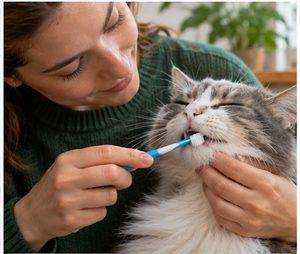
Introduce Brushing Gradually
Start by allowing your cat to become familiar with the toothpaste.
Gradually progress to touching the lips and teeth before introducing the brush.
Reward calm behaviour and keep sessions short.
If your cat shows signs of pain or bleeding, stop and consult your vet.
Consider Veterinary Dental Products
Some dental diets, treats and oral-care products can help reduce plaque or tartar.
However, not every product has the same evidence of effectiveness.
The Veterinary Oral Health Council maintains a list of products that have met its standards for plaque or tartar control.
These products should support, not replace, appropriate veterinary dental care.
Schedule Regular Dental Examinations
Ask your vet how often your cat needs an oral examination.
Older cats and cats with previous dental problems may need more frequent checks.
Monitor Changes in Eating
Watch for food dropping from the mouth, chewing on one side or sudden preferences for softer food.
These signs can appear before an owner notices obvious dental damage.
A Practical 7-Day Toothbrushing Introduction Plan
This gradual plan is intended for cats with no suspected mouth pain and whose vet considers brushing appropriate.
| Day | Suggested activity |
|---|---|
| Day 1 | Let your cat smell cat-safe toothpaste |
| Day 2 | Offer a small taste of the toothpaste |
| Day 3 | Gently touch the outside of the lips |
| Day 4 | Briefly lift the lip if tolerated |
| Day 5 | Introduce a soft cat toothbrush |
| Day 6 | Gently touch the outer tooth surfaces |
| Day 7 | Attempt a very short brushing session |
Some cats need several weeks rather than seven days.
Do not force progress. If your cat becomes distressed, return to an earlier stage or ask your vet for alternatives.
Frequently Asked Questions
Can dental disease in cats be cured?
Some problems, such as mild plaque-related gingivitis, may improve with treatment and ongoing care. Advanced periodontal damage and tooth resorption may require extraction or long-term management.
Is dental disease painful for cats?
Yes. Dental conditions can cause significant pain, even when cats continue eating normally.
Can cats live without teeth?
Many cats adapt well after necessary tooth extractions. Your vet can advise on feeding and recovery.
Does dry food clean a cat’s teeth?
Ordinary dry food is not a substitute for brushing or professional dental care. Certain specially formulated dental diets may help reduce plaque or tartar.
How often should cats have dental check-ups?
The appropriate frequency depends on age and dental history. Many cats benefit from at least annual examinations, while others require more frequent assessment.
Can dental disease cause a cat to stop eating?
Yes. Oral pain may reduce appetite or make chewing difficult. Contact your vet promptly if your cat stops eating.
Is cat tooth extraction expensive in the UK?
Costs vary depending on the number of teeth involved, radiographs, anaesthesia and procedure complexity. Request an itemised estimate from your vet.
Can tooth resorption be prevented?
There is currently no proven method of preventing feline tooth resorption. Regular examinations can help identify affected teeth and manage pain earlier.
Final Thoughts
Dental disease in cats is common, but it should never be dismissed as a normal part of ageing.
Persistent bad breath, red gums, difficulty chewing and changes in appetite can indicate painful conditions requiring veterinary treatment.
Regular dental examinations, appropriate toothbrushing and early intervention can help protect your cat’s comfort and quality of life.
For more UK-focused pet health information, veterinary cost guidance and independent pet insurance resources, explore PetCoverHQ.