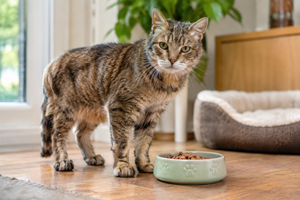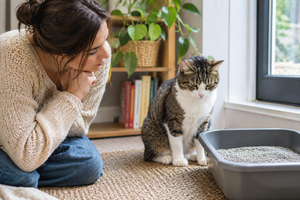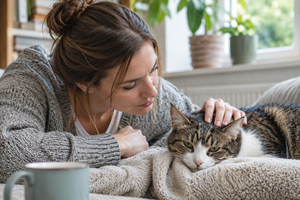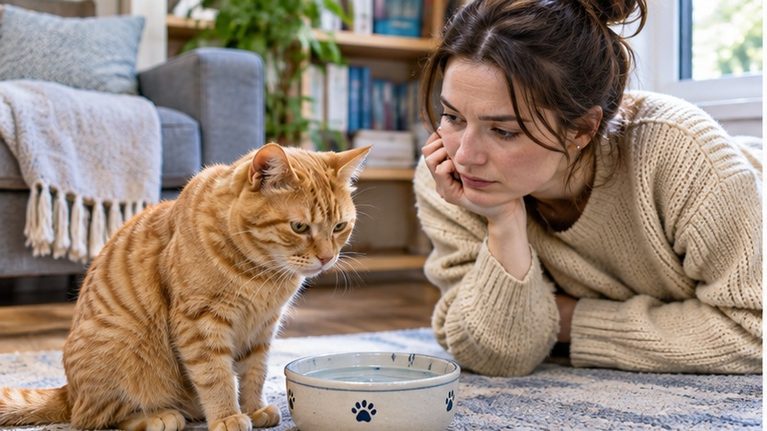
Dehydration in cats occurs when the body loses more fluid than it takes in. It can develop after vomiting, diarrhoea, illness or inadequate water intake. Although some cats show obvious symptoms, others become dehydrated gradually, making the early warning signs easy to miss.
Water is essential for maintaining circulation, regulating body temperature and supporting kidney function. When fluid levels fall too low, dehydration can affect several organs and may require urgent veterinary treatment.
This guide explains how to recognise dehydration in cats, common causes, safe hydration strategies and what to expect from veterinary treatment in the UK. For more practical cat health advice and pet insurance information, visit PetCoverHQ.

What Is Dehydration in Cats?
Dehydration happens when a cat’s body does not have enough water to maintain normal physiological functions.
Cats obtain water from both drinking and eating. Wet food contributes considerably more moisture than dry food, so drinking-bowl habits alone do not reveal total water intake.
A cat may become dehydrated because it is losing too much fluid, consuming too little or experiencing both problems simultaneously.
According to Cats Protection’s hydration guidance, changes in gum moisture, skin elasticity and eye appearance can indicate dehydration. Cats Protection
Why Is Dehydration Dangerous for Cats?
Insufficient body water can reduce effective blood circulation and interfere with normal organ function.
Severe dehydration may contribute to electrolyte disturbances, weakness and potentially life-threatening complications.
The consequences can be particularly serious for kittens, elderly cats and animals with existing kidney disease.
Dehydration is also a symptom of many underlying illnesses. Replacing fluids without identifying the cause may not solve the problem.
What Are the Signs of Dehydration in Cats?
The signs of dehydration in cats vary according to severity, age and overall health.
| Warning sign | What you may notice | What it could indicate |
|---|---|---|
| Sticky gums | Gums feel tacky rather than moist | Possible reduced hydration |
| Reduced skin elasticity | Skin returns slowly after gentle lifting | Possible dehydration |
| Sunken eyes | Eyes appear unusually recessed | Potential significant fluid loss |
| Lethargy | Less activity or unusual weakness | Illness or dehydration |
| Reduced appetite | Eating less than normal | Possible underlying disease |
| Changes in urination | Less urine or altered litter tray habits | Fluid imbalance or urinary disease |
| Cold paws | Extremities feel unusually cool | Possible serious illness or circulatory problem |
These symptoms are not specific enough to diagnose dehydration independently.
For example, lethargy may result from pain, infection or another medical condition.
Can a Cat Be Dehydrated but Still Act Normal?
Yes. A cat with early dehydration may continue grooming, eating and moving around normally.
Cats often conceal illness, so changes can be subtle.
Look for patterns rather than relying on a single observation.
If your cat is drinking less than usual, has recently been vomiting or has persistent diarrhoea, contact your vet for advice even if it remains relatively active.
How to Check a Cat for Dehydration at Home
Home observations can help you recognise possible warning signs, but they cannot accurately measure dehydration or replace a veterinary examination.
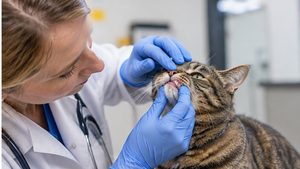
1. Check Gum Moisture
If your cat allows gentle handling, carefully lift the upper lip.
Healthy gums are usually moist.
Gums that feel unusually dry or sticky may indicate dehydration.
Do not force your cat’s mouth open or continue if it becomes distressed.
2. Observe Skin Elasticity
The skin tent test is sometimes used as a basic hydration check.
Gently lift a small fold of loose skin over the shoulders and release it.
In a well-hydrated cat, the skin generally returns promptly to its normal position.
However, the result can be misleading in older cats, underweight cats and animals with naturally loose skin.
A normal skin tent test does not rule out dehydration.
Cats Protection describes skin elasticity as one possible indicator, alongside other clinical signs. Cats Protection
3. Look at the Eyes
Severely dehydrated cats may develop sunken-looking eyes.
This is a concerning sign, particularly when accompanied by weakness or other symptoms.
Do not wait for the eyes to appear sunken before seeking veterinary advice.
4. Monitor Eating and Drinking
Notice whether your cat approaches its water bowl less often or leaves more food than usual.
Remember that cats eating wet food may naturally drink less from a bowl than cats eating predominantly dry food.
A sudden change from your cat’s normal pattern matters more than a single observation.
5. Check Litter Tray Habits
Pay attention to changes in urine output.
Reduced urination may occur with dehydration, but it can also indicate a urinary problem.
If your cat repeatedly strains and produces little or no urine, seek emergency veterinary care because urinary obstruction is potentially life-threatening.
What Causes Dehydration in Cats?
Several conditions can cause dehydration in cats. The most common mechanisms involve insufficient fluid intake or excessive fluid loss.
Vomiting and Diarrhoea
Repeated vomiting or watery diarrhoea can cause substantial fluid and electrolyte losses.
A cat experiencing both symptoms may deteriorate more quickly.
The PDSA guide to diarrhoea in cats highlights the increased dehydration risk in kittens and elderly cats. PDSA
For more information about digestive warning signs, see our cat diarrhoea guide.
Kidney Disease
Cats with chronic kidney disease may produce unusually large amounts of dilute urine.
They can become dehydrated despite drinking more water than usual.
This is particularly important in older cats.
Diabetes and Other Hormonal Conditions
Diabetes mellitus can increase urination and fluid loss.
Hyperthyroidism may also cause changes in thirst and urination.
Increased drinking does not necessarily mean a cat is adequately hydrated.
Reduced Appetite or Drinking
Dental pain, nausea, stress and other illnesses may discourage cats from eating or drinking.
Cats that stop eating wet food may lose a significant source of their normal water intake.
Hot Weather and Heatstroke
Warm weather can increase hydration needs.
Cats without access to shade or fresh water are more vulnerable, particularly when trapped in poorly ventilated environments.
Cats Protection’s heatstroke guidance explains why overheating and dehydration require prompt attention. Cats Protection
Age and Mobility Problems
Older cats with arthritis may find it uncomfortable to reach water bowls.
Kittens have smaller fluid reserves and may become unwell quickly during illness.
Water bowls should therefore be accessible to cats of different ages and abilities.
When Is Dehydration in Cats an Emergency?
Contact your vet promptly whenever you suspect dehydration.
Seek emergency veterinary care if your cat has:
- Collapse or extreme weakness.
- Repeated vomiting with an inability to keep fluids down.
- Severe or bloody diarrhoea.
- Markedly sunken eyes with other signs of illness.
- Suspected heatstroke.
- Difficulty breathing.
- Very pale gums or signs of shock.
- Little or no urine despite repeated attempts to urinate.
Cats Protection identifies collapse, severe digestive illness and dehydration among situations requiring urgent veterinary assessment. cats.org.uk
How Long Can Cats Go Without Water?
There is no safe period for deliberately withholding water from a cat.
Dehydration can develop well before an animal reaches a life-threatening state.
Cats Protection advises contacting a vet if a cat has not drunk for 24 hours, with earlier intervention for vulnerable cats or those showing additional symptoms. Blog
Do not wait 24 hours if your cat is vomiting, has diarrhoea, appears weak or may already be dehydrated.
How to Help a Dehydrated Cat Safely
If dehydration is suspected, contact your vet for guidance.
For a cat that is alert, swallowing normally and not showing emergency symptoms, you can offer water while arranging veterinary advice.
Provide Fresh Water
Place clean water in an easily accessible bowl.
Offer additional bowls in quiet locations around your home.
Do not force your cat to drink.
Offer Suitable Wet Food
If your cat is willing to eat and your vet has not advised otherwise, its usual wet food can provide additional moisture.
Avoid suddenly introducing unfamiliar foods when your cat is already unwell.
Keep Your Cat Comfortable
Provide a calm environment at a comfortable temperature.
If overheating is suspected, move your cat to a cooler location and seek urgent veterinary advice.
Avoid Force-Feeding Water
Do not squirt water into your cat’s mouth using a syringe unless specifically instructed by a vet.
Forced administration can cause choking or aspiration, particularly in weak or distressed animals.
Never Give Unprescribed Fluids or Medication
Do not administer human electrolyte drinks, intravenous fluids or subcutaneous fluids without veterinary guidance.
Cats with heart or kidney disease may require carefully controlled fluid treatment.
How Much Water Should a Cat Drink Each Day?
A cat’s total water needs depend on body weight, diet, activity, environment and health.
A commonly used general estimate is approximately 40–60 ml of total water per kilogram of body weight daily, although individual requirements vary.
This includes water obtained from food.
| Cat weight | Illustrative total daily water intake |
|---|---|
| 2 kg | 80–120 ml |
| 3 kg | 120–180 ml |
| 4 kg | 160–240 ml |
| 5 kg | 200–300 ml |
| 6 kg | 240–360 ml |
These figures are general estimates, not individual drinking targets or prescriptions. Cats with medical conditions may have different needs.
For example, a 4 kg cat eating 200 g of wet food containing 80% moisture would obtain approximately 160 ml of water from that food alone.
That means its drinking-bowl intake may be much lower than the total daily water requirement.
Cats Protection also provides practical guidance on measuring a cat’s drinking water. Blog
How to Measure Water Intake at Home
If your vet recommends monitoring:
- Measure the water placed in the bowl at the beginning of the day.
- Measure the amount remaining after 24 hours.
- Subtract the remaining amount from the starting amount.
- Account for spills, evaporation and other pets sharing the bowl.
- Record changes alongside appetite and urination.
This method measures drinking water only, not moisture obtained from food.
How Do Vets Diagnose Dehydration in Cats?
Veterinarians assess hydration using several findings rather than relying on a single home test.
The examination may include gum moisture, skin elasticity, heart rate, circulation and overall physical condition.
Additional investigations can help identify the underlying cause.
| Investigation | Purpose |
|---|---|
| Physical examination | Assess hydration and general condition |
| Blood tests | Evaluate electrolytes, kidney function and other abnormalities |
| Urine testing | Assess urine concentration and underlying disease |
| Blood pressure measurement | Investigate circulatory or systemic concerns |
| Ultrasound or X-rays | Investigate selected underlying illnesses |
| Monitoring body weight | Help assess changes during treatment |
Not every cat requires every investigation.
The veterinary team will select tests based on symptoms and clinical findings.
How Is Dehydration in Cats Treated?
Treatment depends on the severity of dehydration and the underlying cause.
Oral Fluid Support
Cats with very mild problems that can drink normally may be managed with a veterinary-approved hydration plan.
This is not appropriate for every case.
Subcutaneous Fluids
Some cats receive fluids beneath the skin.
This approach may be suitable for selected stable patients but is not an adequate substitute for intravenous resuscitation in shock or severe dehydration.
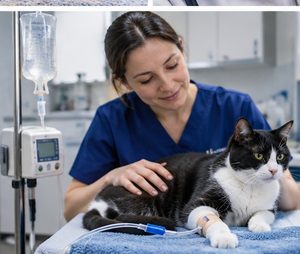
Intravenous Fluid Therapy
Cats with significant dehydration, circulatory problems or severe illness may require intravenous fluids.
The veterinary team calculates fluid requirements and monitors the response carefully.
Treating the Underlying Illness
Fluid replacement alone may not resolve dehydration if a cat continues vomiting, has uncontrolled diabetes or suffers from kidney disease.
Medication, dietary management or further investigations may be required.
Monitoring for Fluid Overload
Excessive fluid administration can be dangerous, especially in cats with heart or kidney problems.
Veterinary supervision is essential when administering medical fluid therapy.
How Much Does Cat Dehydration Treatment Cost in the UK?
Costs vary depending on the cause, severity, diagnostic tests and treatment setting.
| Potential expense | Why it may be needed |
|---|---|
| Veterinary consultation | Initial assessment |
| Blood and urine tests | Investigating fluid loss and organ function |
| Subcutaneous fluid therapy | Selected mild or stable cases |
| Intravenous fluids | More significant dehydration |
| Prescription medication | Treating the underlying condition |
| Hospitalisation | Monitoring fluid balance and recovery |
| Emergency consultation | Out-of-hours or urgent treatment |
Rather than relying on a national average, ask your veterinary practice for an itemised estimate.
Costs can rise substantially if hospitalisation or treatment of a serious underlying disease is necessary.
Does Pet Insurance Cover Dehydration in Cats?
Some UK pet insurance policies may cover eligible veterinary treatment for dehydration when it results from an insured illness or accident.
However, coverage depends on the policy.
Check:
- Pre-existing condition exclusions.
- Waiting periods.
- Annual veterinary fee limits.
- Excess and co-payment requirements.
- Diagnostic testing benefits.
- Hospitalisation coverage.
- Chronic illness provisions.
For example, dehydration related to an established kidney condition may be assessed differently from dehydration following a newly diagnosed illness.
Pet insurance should be reviewed before problems develop, rather than after symptoms appear.
How to Prevent Dehydration in Cats
Preventing dehydration in cats involves providing reliable water access, recognising illness early and adapting care to individual needs.
Use Multiple Water Bowls
Place bowls in different quiet locations.
This can help cats that avoid particular areas or share their home with other pets.
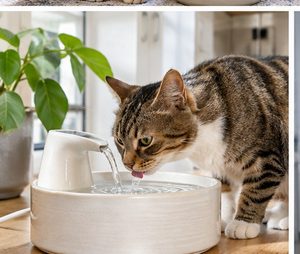
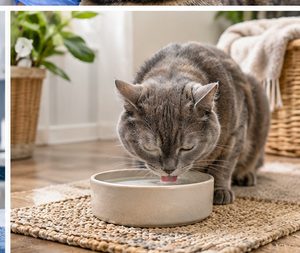
Consider a Water Fountain
Some cats prefer moving water.
A fountain may encourage drinking, although it is not necessary for every cat.
Clean fountains regularly according to the manufacturer’s instructions.
Choose Appropriate Bowls
Wide ceramic, glass or stainless-steel bowls may be more comfortable for some cats.
Avoid placing drinking water immediately beside litter trays.
Include Moisture-Rich Food
Wet food can contribute to daily water intake.
Ask your vet before changing diets if your cat has kidney disease, urinary problems or other medical needs.
Make Water Accessible to Senior Cats
Provide bowls on each floor of the home.
For cats with arthritis, choose locations that do not require jumping or climbing.
Monitor Changes in Thirst
Both increased and decreased drinking can indicate illness.
Sudden changes in drinking or urination deserve veterinary advice.
Cats Protection recommends accessible fresh water, suitable bowl placement and moisture-rich food as practical hydration measures. Cats Protection
A 7-Day Cat Hydration Monitoring Checklist
Use this checklist to establish normal habits in a healthy cat or follow a veterinary monitoring plan.
| Day | What to check |
|---|---|
| Day 1 | Record usual food type and water sources |
| Day 2 | Observe drinking frequency |
| Day 3 | Check litter tray urine patterns |
| Day 4 | Assess access to bowls and fountains |
| Day 5 | Record appetite and activity |
| Day 6 | Check for vomiting or loose stools |
| Day 7 | Review changes and discuss concerns with your vet |
This is a preventive monitoring tool, not a seven-day waiting period for a sick cat.
If dehydration is suspected, contact your vet immediately rather than completing the checklist.
Frequently Asked Questions
How can I tell if my cat is dehydrated?
Possible signs include sticky gums, reduced skin elasticity, lethargy and sunken eyes. These observations are not definitive, so veterinary assessment is needed if dehydration is suspected.
Can dehydration in cats resolve on its own?
A cat may recover from a minor temporary reduction in water intake, but suspected dehydration should not be left untreated because the underlying cause may be serious.
Can wet food help prevent dehydration?
Yes. Wet food contributes moisture to a cat’s daily water intake and may help support hydration.
Is the skin tent test reliable?
Not on its own. Age, body condition and skin characteristics can affect the result. A normal test does not exclude dehydration.
Can a cat drink water and still be dehydrated?
Yes. Cats with vomiting, diarrhoea, kidney disease or diabetes may lose more fluid than they replace.
Are kittens more vulnerable to dehydration?
Yes. Kittens can deteriorate rapidly when fluid losses occur, especially with vomiting or diarrhoea.
Can dehydration cause constipation?
Yes. Reduced body water can contribute to dry, hard stools. However, constipation can also result from several other conditions.
Should I give my cat an electrolyte drink?
Not without veterinary guidance. Human electrolyte products may be unsuitable, and some cats require carefully calculated fluid treatment.
Final Thoughts
Dehydration in cats can develop gradually or progress rapidly during illness. Recognising changes in gum moisture, behaviour, appetite and drinking habits can help owners identify potential problems earlier.
Providing fresh water, suitable food and accessible drinking locations supports daily hydration, but these measures cannot replace treatment when a cat is unwell.
If you suspect dehydration, contact your vet promptly. Severe weakness, collapse or breathing difficulties require emergency care.
For more independent UK pet health guidance, veterinary cost information and pet insurance resources, visit PetCoverHQ.