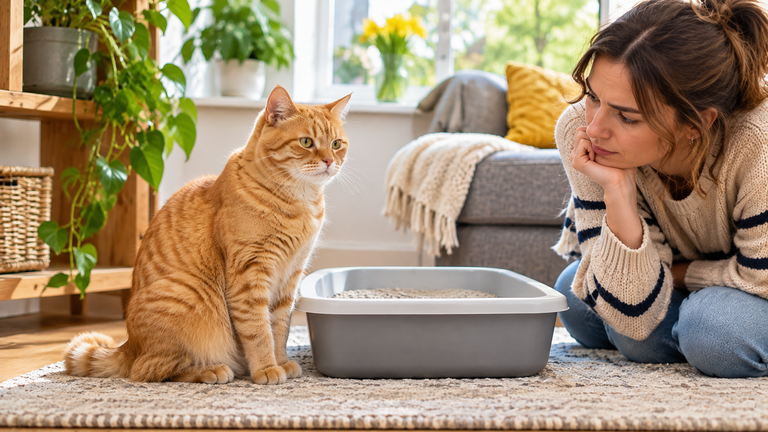
Constipation in cats occurs when a cat struggles to pass stools or produces unusually hard, dry faeces. You may notice repeated visits to the litter tray, straining, small stools or discomfort when trying to defecate.
Although occasional changes in bowel habits can happen, persistent constipation should not be ignored. Severe cases may cause dehydration, abdominal pain, vomiting and potentially serious complications.
This guide explains the causes of constipation in cats, warning signs, veterinary treatment, safe preventive measures and possible UK costs. For more practical pet health advice and insurance information, explore PetCoverHQ.
What Is Constipation in Cats?
Constipation means that faeces move through the digestive tract too slowly or become difficult to pass.
The colon normally absorbs water from waste before it leaves the body. When stools remain inside the colon for too long, more water is absorbed, making them harder and drier.
This can create a cycle in which passing stools becomes increasingly difficult.
According to PDSA’s veterinary guidance on constipation in cats, the condition is particularly common in older cats and may be associated with dehydration, pain or underlying illness. PDSA
How Often Should a Healthy Cat Poo?
Many healthy adult cats pass stools approximately once daily, although frequency varies with age, diet, activity and individual habits.
Some cats may defecate more or less often without having a medical problem.
What matters most is a noticeable change from your cat’s normal routine.
If your cat has not passed stools for 48 hours, contact your vet for advice. Seek help sooner if your cat is straining, vomiting, uncomfortable or showing other symptoms.
What Are the Signs of Constipation in Cats?
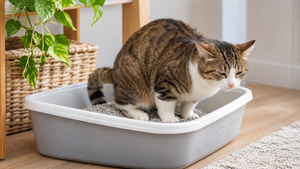
The symptoms can range from subtle changes in litter tray habits to obvious discomfort.
| Symptom | What you might notice | Why it matters |
|---|---|---|
| Hard, dry stools | Small, firm pellets | Faeces may contain too little moisture |
| Repeated litter tray visits | Frequent unsuccessful attempts | Difficulty passing waste |
| Straining | Long periods in a crouched position | Possible constipation or urinary problem |
| Crying while defecating | Vocalisation or discomfort | Pain when passing stools |
| Reduced appetite | Eating less than usual | Possible abdominal discomfort |
| Vomiting | Repeated or unexpected vomiting | May indicate significant illness |
| Lethargy | Less activity or hiding | Possible worsening condition |
| Abdominal discomfort | Hunched posture or sensitivity | Potential retained faeces or another illness |
Can a Constipated Cat Still Eat Normally?
Yes. A cat with mild constipation may continue eating and behaving normally.
However, a normal appetite does not rule out a developing problem.
If your cat has stopped passing stools or repeatedly strains in the litter tray, arrange veterinary advice rather than waiting for appetite changes.
Can Constipation Cause Diarrhoea?
Surprisingly, yes.
Small amounts of liquid faeces can sometimes pass around a mass of hardened stool, creating the appearance of diarrhoea.
The VCA guide to constipation in cats explains that this can occur when retained faeces obstruct normal bowel movements. VCA Animal Hospitals
This is one reason owners should not automatically treat every episode of loose stool as uncomplicated diarrhoea.
Cat Constipation or Urinary Blockage: How to Tell
One of the most important safety concerns is confusing constipation with a urinary obstruction.
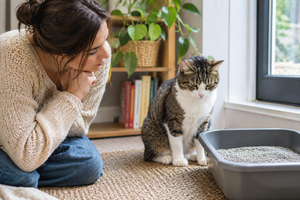
A cat struggling to urinate may repeatedly enter the litter tray and strain without producing much or any urine.
This can look very similar to difficulty passing faeces.
A blocked urinary tract is a life-threatening emergency.
| Observation | Possible constipation | Possible urinary obstruction |
|---|---|---|
| Repeated litter tray visits | Yes | Yes |
| Straining | Yes | Yes |
| Small, hard stools | Common | Not a defining sign |
| Little or no urine | Not explained by constipation alone | Major warning sign |
| Crying in litter tray | Possible | Possible |
| Vomiting or lethargy | Possible | Possible, especially as illness progresses |
| Emergency action | Prompt veterinary assessment | Immediate emergency veterinary care |
These signs overlap, so the table cannot reliably distinguish the two conditions.
If your cat is straining and you cannot confirm that it is passing urine normally, seek emergency veterinary care immediately. Do not wait to see whether it eventually passes stools.
Male cats are particularly vulnerable to urethral obstruction, but urinary problems can affect any cat.
What Causes Constipation in Cats?
Constipation in cats can result from several interacting factors. Identifying the cause is essential, especially when episodes recur.
1. Dehydration
Insufficient fluid intake can make stools dry and difficult to pass.
Dehydration may occur when cats drink too little or have an underlying illness that affects fluid balance.
Chronic kidney disease and diabetes are examples of conditions that can contribute to dehydration.
2. Low Activity Levels
Physical activity helps support normal digestive function.
Cats with limited mobility or sedentary lifestyles may be more prone to bowel problems.
Older cats with arthritis may also avoid uncomfortable postures required for defecation.
3. Pain and Arthritis
Pain around the hips, spine or pelvis can make using the litter tray uncomfortable.
An older cat may delay defecation because squatting is painful.
This can contribute to harder stools and worsening constipation.
4. Hair and Foreign Material
Swallowed fur or other indigestible material may contribute to digestive problems.
Long-haired cats may ingest more loose fur during grooming.
However, hairballs are not the cause of every episode of constipation.
5. Litter Tray Problems
Cats may avoid a litter tray that is dirty, difficult to access or placed in a stressful environment.
Some cats dislike particular litter textures or covered trays.
In multi-cat households, competition can discourage a cat from using the tray comfortably.
6. Medication and Underlying Disease
Certain medications can slow intestinal movement or contribute to dehydration.
Other causes include neurological problems, previous pelvic injuries, intestinal narrowing and masses.
The Cornell Feline Health Center’s constipation guide describes how gastrointestinal obstruction, neurological disorders and medication effects can contribute to persistent constipation. Đại học Cornell Thú y
When Is Constipation in Cats an Emergency?
Not every missed bowel movement requires emergency treatment, but some symptoms suggest a more serious problem.
Seek urgent veterinary assessment if your cat has:
- Repeated straining with no stool produced.
- Vomiting alongside constipation.
- A painful or swollen abdomen.
- Marked weakness or lethargy.
- Refusal to eat.
- Suspected ingestion of a foreign object.
- Significant blood from the rectum.
If your cat is unable to urinate, or you are unsure whether it is passing urine, seek emergency care immediately.
How Long Can a Cat Go Without Pooing?
A single missed bowel movement is not always dangerous, but the longer faeces remain in the colon, the harder they may become.
VCA recommends contacting a vet when a cat has not passed stools for 48–72 hours. VCA Animal Hospitals
For safety, contact your vet by 48 hours, or earlier if your cat is uncomfortable or behaving unusually.
Do not wait for this timeframe if your cat is vomiting, straining repeatedly or showing signs of urinary obstruction.
How to Help a Constipated Cat Safely
If you suspect constipation, contact your vet for advice before attempting treatment.
For a cat that is otherwise comfortable, several supportive measures may be appropriate while awaiting professional guidance.
Encourage Water Intake
Provide fresh water in several accessible locations.
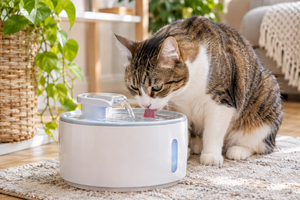
Some cats prefer wide bowls or drinking fountains.
Wet food may also help increase dietary moisture when appropriate for your cat.
Keep the Litter Tray Clean
Remove waste regularly and ensure the tray is easy to reach.
Older cats or those with arthritis may benefit from a low-sided tray.
In multi-cat households, a common recommendation is one litter tray per cat plus one extra, placed in separate locations.
Encourage Gentle Activity
Interactive play can help maintain mobility and general health.
Choose activities suitable for your cat’s age and physical condition.
Avoid forcing exercise when your cat is uncomfortable.
Do Not Give Human Laxatives
Never administer human laxatives, enemas or suppositories without explicit veterinary instructions.
Some human enema products contain sodium phosphate, which can cause life-threatening electrolyte disturbances in cats.
Do not attempt to remove retained faeces manually.
Ask Before Adding Fibre
Fibre can help some cats, but it is not appropriate for every case.
A cat with significant dehydration, obstruction or severe constipation may need a different treatment approach.
Ask your vet before adding pumpkin, psyllium or fibre supplements.
The Cats Protection digestive health guide recommends veterinary advice for cats showing digestive symptoms rather than relying on unverified home remedies. Cats Protection
How Do Vets Diagnose Constipation in Cats?
Your vet will usually ask about bowel habits, appetite, water intake, medication and recent behavioural changes.
They may examine the abdomen to assess whether faeces have accumulated in the colon.
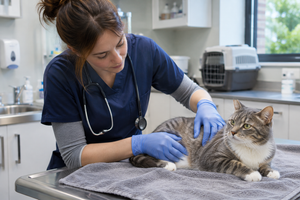
Additional investigations can include:
| Test | Purpose |
|---|---|
| Physical examination | Assess discomfort and general condition |
| Abdominal X-rays | Evaluate retained faeces and colon size |
| Blood tests | Investigate dehydration and underlying illness |
| Urine tests | Assess urinary and metabolic problems |
| Ultrasound | Investigate selected abdominal conditions |
| Rectal examination | Check for narrowing, masses or other abnormalities |
Not every cat needs every test.
Your vet will select investigations based on the severity of symptoms and examination findings.
How Is Constipation in Cats Treated?
Treatment depends on how much faecal material has accumulated and why the problem developed.
Rehydration
Dehydrated cats may require fluid therapy.
Restoring hydration can help soften retained faeces and support normal bodily function.
Prescription Laxatives
Veterinarians may prescribe medication to soften stools or encourage bowel movements.
The correct medication and dose depend on the cat’s condition.
Veterinary Enemas
Some cats require an enema administered by a veterinary professional.
This should not be attempted at home without direct veterinary instruction and training.
Removal of Impacted Faeces
Severe cases may require removal of hardened faeces under sedation or general anaesthesia.
Hospitalisation may be necessary if the cat is dehydrated or seriously unwell.
Treatment of Underlying Conditions
If constipation is associated with kidney disease, arthritis or another illness, the underlying problem may require ongoing management.
What Is Megacolon in Cats?
Megacolon is a condition in which the colon becomes abnormally enlarged and loses its ability to move faeces effectively.
Stools accumulate, becoming increasingly difficult to pass.
Cats with megacolon may experience recurring or severe constipation.
Signs of Megacolon
Symptoms may include:
- Persistent constipation.
- Repeated unsuccessful defecation attempts.
- Reduced appetite.
- Vomiting.
- Weight loss.
- Abdominal discomfort.
Can Megacolon Be Treated?
Some cats can be managed with medication, dietary adjustments and regular veterinary monitoring.
Severe or treatment-resistant cases may require surgery to remove part of the affected colon.
The Merck Veterinary Manual explains how chronic constipation can progress to obstipation or megacolon and why advanced cases sometimes require surgical treatment. Merck Veterinary Manual
How Much Does Cat Constipation Treatment Cost in the UK?
Veterinary costs vary according to the diagnosis, severity and treatment required.
A mild case may involve a consultation and prescription medication.
More serious cases may require diagnostic imaging, fluid therapy, anaesthesia or hospitalisation.
| Possible expense | Why it may be needed |
|---|---|
| Veterinary consultation | Initial examination |
| Blood and urine tests | Investigating underlying disease |
| Abdominal X-rays | Checking retained faeces and colon size |
| Prescription medication | Supporting bowel movements |
| Fluid therapy | Correcting dehydration |
| Enema or faecal removal | Treating severe constipation |
| Hospitalisation | Monitoring complicated cases |
| Surgery | Treating selected cases of megacolon |
Ask your veterinary practice for an itemised estimate.
Does Pet Insurance Cover Constipation in Cats?
Some UK pet insurance policies may cover eligible treatment when constipation results from an insured illness.
Coverage depends on the policy wording.
Important factors include pre-existing conditions, waiting periods, excesses, annual limits and chronic illness provisions.
Routine dietary products or preventive supplements may not be covered.
For a broader explanation of common exclusions, read our guide to what pet insurance does not cover.
How to Prevent Constipation in Cats
Prevention focuses on hydration, comfortable litter tray access, suitable nutrition and early recognition of changes.
Provide Fresh Water Daily
Place water bowls in quiet locations and refresh them regularly.
Cats with specific medical conditions may need an individual hydration plan.
Maintain a Suitable Diet
Feed a nutritionally complete diet appropriate for your cat’s age and health.
Avoid sudden dietary changes.
Ask your vet whether a specialist diet would be beneficial if constipation repeatedly occurs.
Support Healthy Movement
Encourage regular play and maintain a healthy body weight.
For senior cats, consider gentle activities that do not worsen joint pain.
Groom Long-Haired Cats
Regular brushing can reduce loose fur and help prevent matting around the hindquarters.
Improve Litter Tray Accessibility
Keep trays clean and away from noisy appliances or busy walkways.
Consider low-sided trays for cats with mobility problems.
Monitor Bowel Habits
Notice changes in stool frequency, consistency and the amount of time your cat spends in the litter tray.
Early veterinary advice may prevent a mild problem from becoming more serious.
A 7-Day Cat Bowel Health Monitoring Checklist
Use this checklist to monitor a cat that is passing stools normally or following a veterinary treatment plan. It is not a reason to delay care for suspected constipation.
| Day | What to record |
|---|---|
| Day 1 | Last bowel movement and stool consistency |
| Day 2 | Water intake and appetite |
| Day 3 | Litter tray visits and straining |
| Day 4 | Stool size and any signs of discomfort |
| Day 5 | Activity levels and grooming |
| Day 6 | Any dietary or medication changes |
| Day 7 | Overall bowel pattern and questions for your vet |
Contact your vet promptly if your cat stops passing stools, strains repeatedly or develops other symptoms. Do not wait until the end of the checklist.
Frequently Asked Questions
Can constipation in cats go away on its own?
Mild changes in bowel habits may occasionally resolve, but suspected constipation should be discussed with a vet because some cases worsen or have an underlying medical cause.
Can dry food cause constipation in cats?
Dry food does not automatically cause constipation. However, inadequate overall water intake can contribute to harder stools.
Can older cats become constipated more easily?
Yes. Older cats may have reduced mobility, arthritis, dehydration or medical conditions that increase the risk of constipation.
Is pumpkin safe for a constipated cat?
Small amounts of plain pumpkin may be appropriate for some cats, but fibre supplementation is not suitable for every case. Ask your vet before using it as a treatment.
Can constipation make a cat vomit?
Yes. Vomiting can occur with significant constipation, but it may also indicate an obstruction or another serious illness. Seek prompt veterinary assessment.
How do I know if my cat has megacolon?
Megacolon cannot be reliably diagnosed at home. A vet may use physical examination and abdominal imaging to evaluate colon enlargement.
Can stress cause constipation in cats?
Stress may contribute to changes in litter tray behaviour and bowel habits, but medical causes should also be considered.
Final Thoughts
Constipation in cats can range from mild difficulty passing stools to a serious condition requiring hospital treatment.
Recognising hard stools, repeated straining, reduced appetite and abdominal discomfort can help owners seek timely veterinary care.
Most importantly, never assume that a cat straining in the litter tray is simply constipated. An inability to urinate is a medical emergency.
For more practical UK cat health guidance, veterinary cost information and independent pet insurance resources, visit PetCoverHQ.