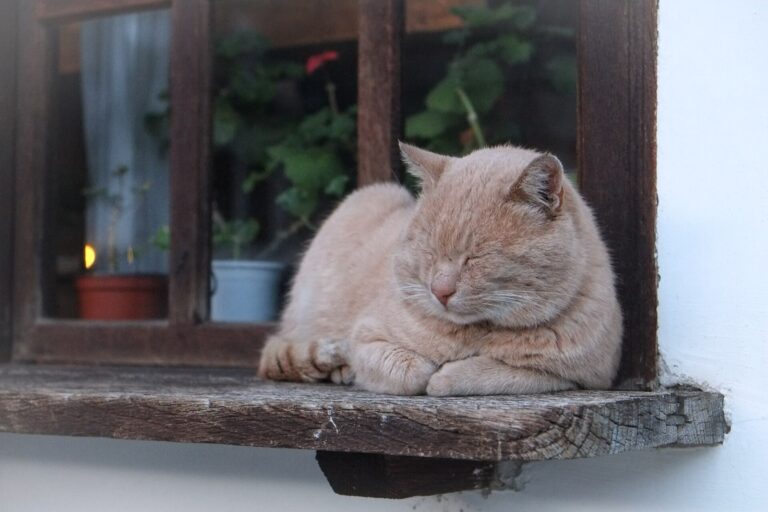
Why do cats purr? Most people associate the familiar rumbling sound with a happy, relaxed cat. However, purring is more complicated than a simple expression of contentment.
Cats also purr when asking for food, communicating with their kittens, experiencing stress or coping with discomfort.
A cat resting comfortably on your lap may produce a purr that sounds remarkably similar to one made by a cat experiencing pain.
The difference often lies in the surrounding circumstances and your cat’s body language.
According to Cats Protection and the PDSA, understanding a cat’s purr means looking at its ears, eyes, whiskers, posture and behaviour rather than relying on the sound alone.
In this PetCoverHQ guide, we explore six common meanings of cat purring, explain what scientific research has discovered about how purring works and identify situations where a change in purring may require veterinary attention.
Why Do Cats Purr?
Cats purr for several reasons, including comfort, communication, excitement and possible self-soothing.
Cats Protection explains that the meaning of a purr depends heavily on the situation.
For example, a relaxed cat lying beside its owner may purr because it feels comfortable.
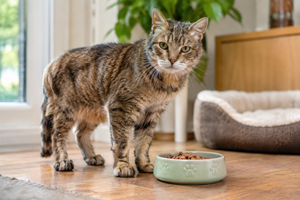
A cat standing near its food bowl may use a different type of purr to request food.
Meanwhile, an unwell cat may purr despite experiencing discomfort.
When Do Cats Start Purring?
Kittens can begin purring very early in life.
Purring during nursing may help communicate with their mother.
The mother cat may also purr during interactions with her kittens.
This early communication behaviour continues into adulthood in many cats.
However, individual cats differ in how frequently and noticeably they purr.
Some cats purr loudly, while others produce sounds that are barely audible.
Why Do Cats Purr? 6 Common Meanings
Understanding why cats purr requires observing the whole animal.
The following six situations illustrate how purring can serve different purposes.
1. Your Cat Feels Happy and Relaxed
The most familiar reason for purring is contentment.
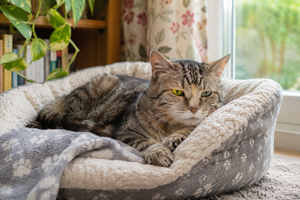
Cats often purr when resting comfortably, receiving gentle attention or settling into a favourite sleeping spot.
A relaxed cat may show:
- Soft, comfortable body posture.
- Ears in a neutral position.
- Relaxed whiskers.
- Slow blinking.
- A loosely resting tail.
- Comfortable breathing.
For example, your cat may curl up beside you on the sofa and begin purring while falling asleep.
In this situation, the sound is likely associated with relaxation.
However, a purr alone does not prove that a cat is happy.
Always consider the surrounding behaviour.
2. Your Cat Wants Food or Attention
Some cats purr when requesting something from their owners.
This is particularly noticeable around feeding time.
A cat may approach its food bowl, follow you around the kitchen or wake you early in the morning while purring.
Researchers have identified a distinctive form of communication known as the solicitation purr.
This sound can contain a higher-pitched component that makes it seem more urgent to human listeners.
Your cat may therefore use purring not only to express comfort but also to communicate a request.
3. Your Cat Is Enjoying Physical Contact
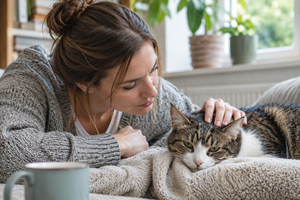
Cats sometimes purr when being stroked or cuddled.
Gentle physical contact may encourage relaxed behaviour.
Some cats also knead with their paws while purring.
However, physical contact can become overwhelming.
A cat that initially enjoys being stroked may eventually become uncomfortable.
Signs that your cat wants the interaction to stop can include:
- Tail flicking.
- Ears turning backwards.
- Sudden body tension.
- Moving away.
- Swatting or biting.
If your cat shows these signs, stop touching it and allow it to move away.
Our guide to why cats knead explains why some cats press their paws against blankets or their owners while relaxing.
4. Your Cat May Be Feeling Stressed
Although purring is commonly associated with happiness, cats may also purr during stressful situations.
For example, a cat might purr during a veterinary examination or while experiencing an unfamiliar environment.
The PDSA’s guide to cat body language explains why owners should assess several behavioural signals together.
Possible signs of stress include:
- Flattened or sideways-facing ears.
- Dilated pupils.
- Tense posture.
- Hiding or attempting to escape.
- Increased vigilance.
- Changes in normal behaviour.
If your cat is purring while displaying these signs, do not assume it is enjoying the situation.
Give it space and reduce unnecessary stress where possible.
5. Your Cat May Be Experiencing Pain
Another important explanation for why cats purr is that the behaviour sometimes occurs when a cat is unwell or in pain.
Cats Protection notes that purring is not always a reliable indicator of happiness.
An injured or sick cat may continue purring.
The exact reason is not fully understood.
One possibility is that purring may have a self-soothing function.
However, this does not mean purring is an effective treatment for illness or injury.
Look for additional warning signs, such as:
- Reduced appetite.
- Hiding more frequently.
- Difficulty moving.
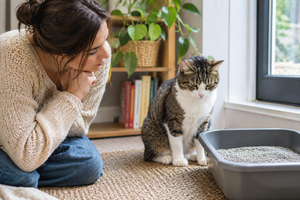
- Changes in toileting habits.
- Unusual vocalisation.
- Reduced activity.
- Sudden changes in purring behaviour.
If you suspect your cat is unwell, contact your vet.
6. Kittens Use Purring to Communicate
Purring begins early in a kitten’s life.
Young kittens may purr while feeding from their mother.
This communication can occur before kittens have developed many of their later social behaviours.
Purring may help maintain contact during nursing and other close interactions.
Adult cats retain the ability to purr, although its role becomes more varied.
If you have recently welcomed a kitten into your home, our guide to kitten insurance in the UK covers considerations when arranging early veterinary protection.
What Your Cat’s Purr Can Mean
The table below summarises common situations in which cats purr.
| Situation | Possible Meaning | Other Signs to Check |
|---|---|---|
| Resting comfortably | Relaxation or contentment | Soft posture, neutral ears |
| Being stroked | Enjoyment or stimulation | Relaxed body, slow blinking |
| Near a food bowl | Requesting food | Following you, approaching food |
| At the vet | Possible stress | Tense posture, wide pupils |
| When unwell | Possible discomfort or pain | Appetite and behaviour changes |
| During nursing | Kitten-mother communication | Feeding and close contact |
These are possible interpretations, not definitive diagnoses.
The same cat may purr for different reasons at different times.
How to Tell Whether Your Cat Is Purring Happily
If you want to understand why your cat purrs, begin by observing its body language.
Look at the Ears
Relaxed cats generally hold their ears in a comfortable, neutral position.
Flattened ears or ears turned sharply backwards may indicate discomfort or concern.
Check the Eyes
Slow blinking can be associated with relaxed social interaction.
However, pupil size also changes with lighting, so it should not be interpreted alone.
Observe the Tail
A relaxed tail may suggest comfort.
Rapid tail movement or repeated flicking can sometimes indicate irritation or increased arousal.
Watch the Body Posture
A comfortable cat may lie loosely on its side or curl up naturally.
A tense, crouched posture may suggest fear, discomfort or uncertainty.
Consider the Environment
Ask yourself what was happening before your cat began purring.
Was it resting quietly?
Did you just prepare food?
Is it in an unfamiliar place?
Context often provides more useful information than the purr itself.
What Is a Solicitation Purr?
Some cats produce a distinctive purr when asking their owners for food.
This is known as a solicitation purr.
In 2009, researchers led by Karen McComb at the University of Sussex investigated this behaviour.
Their findings were published in the scientific journal Current Biology.
The researchers studied purrs produced by domestic cats in different situations.
They identified a high-frequency vocal component within certain purrs associated with food solicitation.
This component made the sound appear more urgent to human listeners.
What Did the Study Find?
The study involved recordings from 10 cats and listening assessments involving 50 people.
Participants generally perceived food-requesting purrs as more urgent and less pleasant than other purrs.
The effect was also observed among listeners without previous cat ownership experience.
When researchers removed the high-frequency component from recordings, the perceived urgency decreased.
These findings suggest that some cats can produce purrs that are particularly effective at attracting human attention.
However, not every cat necessarily uses this communication strategy.
How Do Cats Purr?
Scientists have studied the physical mechanisms behind purring for decades.
The sound is produced in the region of the larynx, also known as the voice box.
Traditionally, researchers believed that rhythmic muscle activity controlled by nerve signals was essential for generating purring.
However, more recent research has challenged the idea that continuous active muscle contractions are always required.
What Did the 2023 Study Discover?
In 2023, researchers including Christian Herbst investigated the larynges of eight deceased domestic cats.
Their findings were published in Current Biology.
When air was passed through the isolated larynges under experimental conditions, the tissues produced low-frequency sounds within the typical purring range.
The researchers reported frequencies of approximately 25–30 Hz.
Importantly, the sounds occurred without active nerve signals or muscle contractions.
The team also identified specialised tissue structures within the vocal folds that may contribute to these low-frequency vibrations.
Does This Explain Purring Completely?
Not yet.
The study demonstrated that cat laryngeal tissue can generate purr-like sounds through passive physical mechanisms.
However, it did not establish every aspect of how living cats control purring.
Further research is needed to understand how passive tissue properties and active muscular control interact during natural purring.
Can Cat Purring Help With Healing?
You may have heard claims that a cat’s purr can promote bone healing or tissue repair.
Some researchers have suggested that the low-frequency vibrations associated with purring might have biological effects.
However, these ideas remain hypotheses.
There is not enough evidence to conclude that ordinary purring reliably heals injuries or treats disease.
Cats Protection discusses the possibility of healing-related effects but does not establish them as proven medical benefits.
If your cat is injured or unwell, veterinary treatment remains essential.
Do not delay medical care because your cat is purring.
Why Does My Cat Purr and Bite Me?
A cat that purrs while being stroked may still become overstimulated.
Some cats enjoy physical contact for only short periods.
If petting continues beyond their comfort level, they may bite or swat.
Watch for warning signs before the bite occurs.
These may include tail flicking, skin twitching, tense posture or ears turning backwards.
Stop stroking your cat when it begins showing discomfort.
Allow it to choose whether to approach again.
Avoid punishment, which may increase fear or damage trust.
Short, positive interactions are often preferable to prolonged handling.
Why Does My Cat Purr So Loudly?
Some cats naturally produce louder purrs than others.
Volume can vary depending on the individual cat, its physical characteristics and the situation.
A loud purr is not automatically a sign of happiness or illness.
If your cat has always purred loudly and otherwise appears healthy, it may simply be part of its normal behaviour.
However, a sudden change in the sound of your cat’s breathing or vocalisation should not be ignored.
If you notice noisy breathing, coughing, breathing difficulty or other concerning symptoms, contact your vet.
Why Has My Cat Suddenly Stopped Purring?
Not every cat purrs frequently.
Some cats produce very quiet purrs, while others communicate mainly through body language and other vocalisations.
However, a sudden change in your cat’s usual behaviour may be important.
If a cat that normally purrs regularly stops doing so, consider whether there are other changes in appetite, activity or social interaction.
Cats Protection advises seeking veterinary guidance when purring behaviour changes unexpectedly.
The absence of purring alone does not diagnose illness, but a noticeable change deserves attention.
When Should You Contact a Vet About Purring?
Purring is usually a normal behaviour, but certain circumstances require professional advice.
Contact your vet if your cat:
- Suddenly purrs much more than usual.
- Stops purring alongside other behavioural changes.
- Appears painful or unusually withdrawn.
- Refuses food.
- Has difficulty moving.
- Shows changes in breathing.
- Displays signs of injury or illness.
If your cat is struggling to breathe, seek emergency veterinary care immediately.
Older cats may experience changes in health and behaviour as they age.
Our guide to how long cats live in the UK explains common ageing considerations.
If you are comparing veterinary cover, our UK cat insurance buying guide explores policy features and important exclusions.
Frequently Asked Questions About Cat Purring
Why do cats purr when you pet them?
Cats may purr during gentle stroking because they feel comfortable or enjoy the interaction. However, watch their body language to ensure they are not becoming overstimulated.
Do cats only purr when they are happy?
No. Cats may also purr when requesting food, feeling stressed or experiencing pain.
Why does my cat purr and knead me?
Purring and kneading often occur together during relaxed interactions. Kneading begins during kittenhood and may continue as a familiar comfort-related behaviour.
Why does my cat purr when it sees me?
Your cat may associate your presence with comfort, attention or feeding. Observe its body language and behaviour to understand the situation.
Why does my cat bite me while purring?
Your cat may become overstimulated during physical contact. Stop stroking when you notice signs of discomfort and allow it to move away.
Why does my cat not purr?
Some cats purr quietly or infrequently. However, sudden changes in normal purring behaviour may justify veterinary advice.
Do big cats purr?
Some wild cat species, including cheetahs, cougars, lynxes and bobcats, can purr. Lions and tigers are generally described as roaring cats rather than true purring cats.
Conclusion
Why do cats purr? The answer depends on the cat and the situation.
Purring is commonly associated with relaxation and contentment, but cats also use it to communicate requests, interact with their kittens and sometimes respond to stress or discomfort.
Scientific studies have revealed fascinating details about solicitation purrs and the physical mechanisms that produce low-frequency vibrations.
However, researchers are still investigating several aspects of feline purring.
The most useful approach for owners is to observe the whole cat rather than interpreting the sound alone.
If your cat’s purring changes suddenly or occurs alongside signs of illness, seek veterinary advice.
For more cat behaviour, health and UK pet insurance information, explore PetCoverHQ.
This article provides general cat care information and does not replace advice from a qualified veterinary professional. Insurance information is general and does not constitute financial advice.